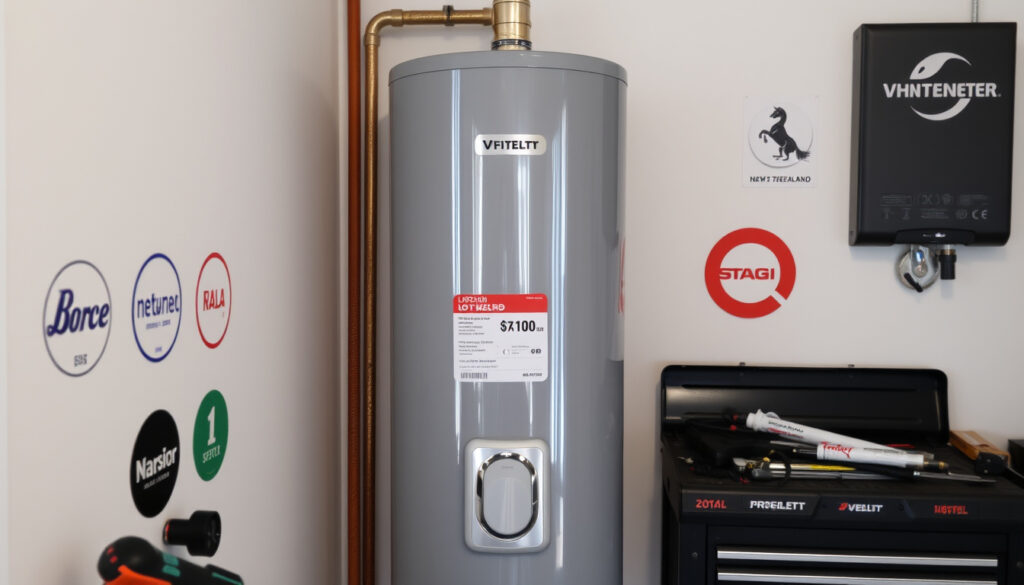
Hot Water Cylinder NZ: Costs, Lifespan & Top Brands
If you’re a New Zealand homeowner, there’s a good chance the hot water cylinder in your cupboard is working harder than you think. Between the morning rush and evening showers, it’s easy to forget this appliance is the second biggest energy user in most homes.
Average replacement cost: $3,250 – $4,050 incl. GST ·
Average lifespan: 15–25 years ·
Common sizes: 135 L to 300 L ·
Energy savings with smart tech: Up to 10% on water heating bills
Quick snapshot
- $3,250 – $4,050 incl. GST for a standard mains-pressure swap (according to Hotwatercylinders.nz (NZ installer aggregator))
- Varies by size (135 L to 300 L) and pressure type (Hotwatercylinders.nz (NZ installer aggregator))
- Includes installation and disposal of the old unit (Hotwatercylinders.nz (NZ installer aggregator))
- 15–25 years average, depending on water quality and maintenance (Level.org.nz (NZ building guidance))
- Mains-pressure cylinders: 15–20 years (according to Level.org.nz (NZ building guidance))
- Low-pressure systems can last up to 25 years with regular care (Level.org.nz (NZ building guidance))
- Rheem: stainless steel, 135 L–300 L electric cylinders (from Rheem NZ (manufacturer))
- Rinnai: smart technology with energy-saving features (from Rinnai NZ (manufacturer))
- Both widely available through NZ plumbers and retailers (Rheem NZ (manufacturer))
- DIY replacement of mains-pressure cylinders is illegal in most cases (according to South Auckland Plumbing (local practitioner))
- Licensed plumber required for safety and warranty validity (South Auckland Plumbing (local practitioner))
- Professional installation strongly recommended (South Auckland Plumbing (local practitioner))
Here is how the numbers stack up across the key specifications every homeowner should weigh.
| Average cost | $3,250 – $4,050 incl. GST (installed) |
| Typical lifespan | 15–25 years |
| Common sizes | 135 L, 180 L, 250 L, 300 L |
| Pressure types | Mains pressure (standard new), low pressure (existing older homes) |
| Energy savings (smart models) | Up to 10% on water heating |
| Energy source | Electric (standard), gas continuous-flow, or heat pump |
| Typical warranty | 5–10 years on tank (varies by brand and model) |
| Installation time | 3–5 hours straight swap; full day for pressure conversion |
How much does a new hot water cylinder cost in NZ?
Cylinder unit cost
According to Kiwi Journal (NZ home guide), common cylinder sizes are 135 L, 180 L, 250 L, and 300 L. A Rheem Optima 180 L electric cylinder retails for about $3,674.40, while the 300 L version is around $4,464.92, as listed by Chambers Plumbing (Northland supplier). A Rinnai A26 Gas Infinity unit is priced at about $3,401.02 from the same retailer.
Installation labor cost
Labor costs vary by region and complexity. Regency Plumbing (Auckland service provider) advertises a straight‑swap low‑pressure upgrade from $1,987 incl. GST. For a low‑pressure to mains‑pressure conversion, they quote packages starting at $2,987 incl. GST. In Wellington, Plumb Plumbing lists packages in the $3,050–$4,450 range.
Total replacement price range
Most NZ homeowners can expect to pay between $2,500 and $5,500 for a full replacement, depending on the system type. Kapai Plumbing (Christchurch specialists) notes that typical replacements sit around $3,500 to $5,500 excluding GST for the cylinder, materials, and installation. Heat pump systems push the cost to $4,000–$7,000+.
The implication: the gap between urban and regional pricing can be significant, so getting at least two quotes from licensed plumbers in your area is the only way to know your real cost.
What is the average life of a hot water cylinder in NZ?
Factors affecting lifespan
Water quality, pressure type, and maintenance all play a role. Level.org.nz (NZ building guidance) states that mains‑pressure cylinders typically last 15–20 years, while low‑pressure systems can reach 25 years with proper care. Kiwi Journal gives a broader average of 10–15 years, which aligns with many installer estimates.
Signs it’s time to replace
- Visible leaks around the tank or element
- Rust or corrosion on the tank exterior
- Inconsistent water temperature or reduced hot water volume
- Unusual noises (rumbling, popping) from the cylinder
- Age over 15 years – a primary indicator according to Superior Property Services (NZ property maintenance)
The implication: if your cylinder is older than 15 years and showing any of these signs, replacement is usually more cost‑effective than repeated repairs.
What is the best hot water cylinder in NZ?
Rheem hot water cylinders
Rheem offers a range of stainless steel electric cylinders from 135 L to 300 L. Rheem NZ (manufacturer) highlights their durability and compatibility with mains‑pressure systems. A Rheem Optima 180 L retails at about $3,674.40.
Rinnai smart hot water cylinders
Rinnai cylinders incorporate smart technology that can reduce water heating bills by up to 10%. Rinnai NZ (manufacturer) promotes their energy‑saving features and warranty options. The Rinnai A26 Gas Infinity unit is priced around $3,401.02.
Low pressure vs mains pressure
Most new installations in NZ are mains‑pressure, which provides stronger flow and is the standard under modern building codes. According to Level.org.nz, low‑pressure systems are still found in older homes but are gradually being phased out. The trade‑off: mains‑pressure cylinders cost more upfront but offer better performance.
One pattern, two brands:
| Feature | Rheem | Rinnai |
|---|---|---|
| Type | Electric (stainless steel) | Gas / electric (smart) |
| Capacity range | 135 L – 300 L | Up to 300 L (gas models) |
| Approx. retail price (180 L) | $3,674.40 | ~$3,400 (gas) |
| Energy savings | Standard efficiency | Up to 10% with smart features |
| Warranty | 5–10 years (vary by model) | 5–10 years (vary by model) |
The catch: Rheem is the more established electric option in NZ, while Rinnai appeals to those prioritising energy savings and gas connectivity.
Can I replace my own hot water cylinder in NZ?
Legal requirements for DIY replacement
Under New Zealand building regulations, replacing a mains‑pressure cylinder requires a licensed plumber. South Auckland Plumbing (local practitioner) advises that DIY work on mains‑pressure systems is not only illegal but also voids warranties and insurance. Low‑pressure cylinder swaps may be permitted for homeowners in some regions, but professional installation is still recommended.
Steps for replacement
- Turn off power and water supply to the cylinder.
- Drain the cylinder completely.
- Disconnect plumbing and electrical connections.
- Remove the old cylinder and dispose of it responsibly (many installers include this).
- Install the new cylinder, reconnecting pipes and wiring.
- Fill and test the system, checking for leaks.
- Have a licensed plumber sign off if required by your local council.
Why this matters: even a small mistake can lead to water damage, voided warranties, or safety hazards. For most NZ homeowners, hiring a professional is the safer and cheaper path in the long run.
When to hire a professional
Always hire a licensed plumber for mains‑pressure installations. If you’re unsure about the pressure type or the condition of your existing plumbing, a professional assessment costs a few hundred dollars but can save thousands in future repairs.
How to tell if a hot water cylinder needs replacing?
Visible leaks
Water pooling around the base or dripping from the element indicates a failing tank. According to Superior Property Services, leaks are the most common sign that replacement is urgent.
Rust or corrosion
Orange or brown stains on the outside of the cylinder, or rusty water coming from the hot taps, signal internal corrosion. Once the tank is compromised, it cannot be repaired – only replaced.
Inconsistent water temperature
If your showers alternate between scalding and cold, the thermostat or heating element may be failing. However, this can sometimes be a sign of sediment buildup rather than a dying cylinder.
Unusual noises
Rumbling, popping, or banging sounds come from sediment boiling at the bottom of the tank. This is a strong indicator that the cylinder is nearing the end of its life.
A cylinder over 15 years old with any of these signs is a ticking clock. Replacing it proactively avoids the cost of emergency call‑outs and water damage.
Replacement vs repair: the clear‑eyed comparison
Homeowners often wonder whether patching a leak or replacing a thermostat is worth it. Three factors, one trade‑off:
| Factor | Repair | Replacement |
|---|---|---|
| Upfront cost | $200 – $800 (element, thermostat, or valve) | $2,500 – $5,500 |
| Lifespan extension | 1–3 years | 15–20 years |
| Warranty validity | Voids if cylinder is old | New warranty (5–10 years) |
| Energy efficiency | No improvement | Modern insulation, up to 10% savings |
The pattern: if your cylinder is under 10 years old and the repair is minor, fixing it can be sensible. Once it passes 15 years, replacement is almost always the better investment.
Upsides
- New warranty and peace of mind
- Better energy efficiency (smart models)
- Improved water pressure (mains pressure)
- No emergency call‑out risk
Downsides
- Higher upfront cost than repair
- Installation takes 3–5 hours
- May require plumbing upgrades if converting pressure
- Disruption to hot water for a day
Step‑by‑step: what to do when you suspect a failing cylinder
- Check the age – look for a date sticker on the cylinder. If it’s older than 15 years, start planning a replacement.
- Inspect for leaks and rust – use a torch to examine the tank and pipe connections.
- Monitor temperature – if the water is inconsistent, call a plumber for a diagnostic.
- Get two quotes – ask at least two licensed plumbers for a replacement quote. Compare included services (disposal, pressure conversion, warranty).
- Choose your cylinder – decide between Rheem, Rinnai, or another brand based on budget and energy priorities.
- Schedule installation – plan for a weekday morning so you have hot water by evening.
The pattern: following this sequence turns a stressful emergency into a planned upgrade that you control.
What the evidence says – and what remains unclear
Confirmed facts
- Rheem and Rinnai are major brands available through NZ suppliers (Rheem, Rinnai).
- Mains pressure is the standard for new installations (Level.org.nz).
- DIY replacement of mains‑pressure cylinders requires a licensed plumber (South Auckland Plumbing).
What’s unclear
- Average replacement cost – quoted ranges vary significantly across NZ regions and installer sources (from $1,987 to $5,500+ depending on scope and location).
- Exact price differences between Rheem and Rinnai across all sizes and regions – prices vary by installer and location.
- Warranty length variations between installers – some offer 5 years, others 10.
- Regional labor cost differences outside Auckland, Wellington, and Christchurch – data is sparse for smaller towns.
Perspectives from the industry
“The majority of our calls are from homeowners who waited too long. A small leak becomes a flood, and then they’re paying for emergency call‑outs plus a new cylinder.”
— Company representative, Hotwatercylinders.nz
“Mains‑pressure systems are now the norm in New Zealand because they provide consistent flow and meet modern code requirements. Low‑pressure is not gone, but it’s fading.”
— Technical writer, Level.org.nz
Summary
For New Zealand homeowners, the decision between repairing and replacing a hot water cylinder comes down to age and cost. If your cylinder is under 10 years old and the repair is under $800, it’s worth fixing. Once it crosses 15 years, replacement is the only sensible move. The average cost of $3,250–$4,050 includes a new warranty, better energy efficiency, and peace of mind. For the 1.2 million NZ homes with electric cylinders, the choice is clear: replace on schedule, not in a panic.
Related reading: Hot water cylinder NZ sizing and costs guide · Hot water cylinder replacement cost NZ 2026 guide
flowpro.co.nz, cylinderdirect.nz, taupoplumbers.co.nz, cylinderdirect.nz, onparplumbing.co.nz, reddit.com
Frequently asked questions
Does a new hot water cylinder increase home value in NZ?
Yes, a modern cylinder – especially a mains‑pressure unit – can add to a home’s appeal and resale value, as buyers prefer efficient, low‑maintenance systems.
How long does it take to install a hot water cylinder in NZ?
Most professional installations take 3–5 hours, assuming no major plumbing changes are needed. Conversions can take a full day.
What permits are needed for hot water cylinder replacement in NZ?
For a like‑for‑like mains‑pressure replacement, a licensed plumber can handle the work without a separate building consent. Converting pressure types may require council inspection.
Can I install a larger hot water cylinder than the old one?
Yes, but you must ensure the space, connections, and pressure rating accommodate the larger size. A plumber can advise on feasibility.
Is it worth repairing a leaking hot water cylinder instead of replacing?
Only if the cylinder is under 10 years old and the leak is from a replaceable component (element, valve). Once the tank itself leaks, replacement is the only safe option.
What is the difference between a vented and unvented hot water cylinder in NZ?
A vented cylinder relies on a header tank (usually in the roof) and provides low pressure. An unvented cylinder connects directly to the mains supply and delivers mains‑pressure hot water. New builds almost always use unvented systems.
Do hot water cylinders come with a warranty in NZ?
Yes, most manufacturers offer 5 to 10 years on the tank, and some include parts and labour for the first year. Always check the warranty terms before purchasing.
More related posts
 How to Train Your Dragon Live-Action: Release Date, Cast, and Rumors Explained
 How Many Seconds in a Day? 86,400 and Other Time Conversions
 Best Hair Dryer for Curls: Top Diffusers Reviewed
 How to Login to Another Gmail Account
 Argentina vs New Zealand Rugby: History, Record, and How to Watch
 Seek Jobs Hawke’s Bay: Top Job Sites & Local Hiring Guide
 Enigma Return to Innocence Controversy: The Amis Chant Explained
 KiwiSaver Farm Purchase Withdrawal 2026: Rules & Steps
