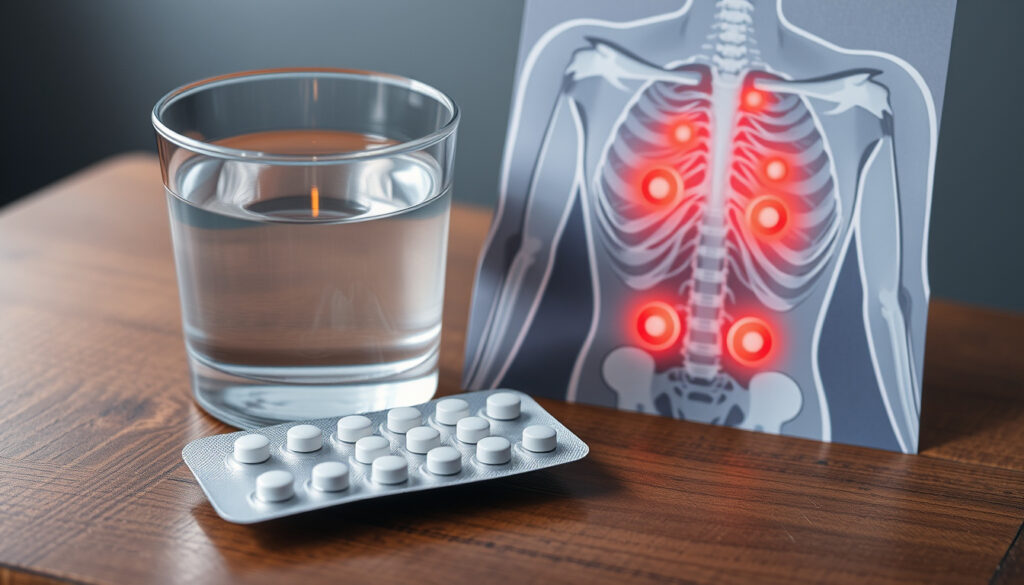
What Does Ibuprofen Do? Pain Relief and Risks
Almost everyone has a bottle of ibuprofen in a drawer, but few of us can say exactly what it does once it hits the bloodstream. It blocks an enzyme called COX, so your body stops churning out prostaglandins — the chemical messengers that crank up pain, swelling, and fever. That relief comes with a trade-off: the FDA Drug Facts label warns that non-aspirin NSAIDs increase the risk of heart attack, heart failure, and stroke. Here’s what to weigh before you reach for another one.
Standard adult dose (OTC): 200–400 mg every 4–6 hours ·
Maximum daily OTC dose: 1,200 mg ·
Time to onset: 20–30 minutes ·
Duration of action: 4–6 hours ·
Drug class: Nonsteroidal anti-inflammatory drug (NSAID) ·
Common brands: Advil, Motrin, Nurofen
Quick snapshot
- Ibuprofen is an NSAID that inhibits COX-1 and COX-2 enzymes, reducing prostaglandin synthesis (FDA prescribing information).
- OTC labels warn that non-aspirin NSAIDs increase the risk of heart attack, heart failure, and stroke (FDA Drug Facts label).
- Alcohol, anticoagulants, and other NSAIDs raise the risk of stomach bleeding and ulcers (NHS guidance).
- Whether a single low-dose tablet every day is safe for healthy people over months or years.
- The exact point where continuous use starts pushing cardiovascular risk upward.
- Pain relief typically begins within 20–30 minutes on an empty stomach (FDA prescribing information).
- Effects last about 4–6 hours, which is why the label repeats dosing every 4–6 hours (FDA prescribing information).
- Ask a doctor before combining ibuprofen with anticoagulants, daily aspirin, or three-plus alcoholic drinks a day (FDA drug-interactions guidance).
- Use the lowest effective dose for the shortest time — the instruction both FDA and NHS repeat (NHS guidance).
Key facts at a glance
Seven values, one pattern: ibuprofen acts within minutes, lasts a few hours, and carries a warning list that grows the longer you use it (values per FDA prescribing information and NHS guidance).
| Property | Value |
|---|---|
| Mechanism | Blocks prostaglandin synthesis via COX inhibition |
| Onset | 20–30 minutes |
| Duration | 4–6 hours |
| OTC max daily dose | 1,200 mg |
| Prescription max daily dose | 3,200 mg |
| Half-life | 2–4 hours |
| Contraindications | Peptic ulcer, severe renal impairment, bleeding disorders, third-trimester pregnancy |
What does ibuprofen do for your body?
Ibuprofen starts working by changing how your cells produce chemical signals, not by directly fixing injured tissue. It is the most common over-the-counter NSAID for one reason: one mechanism produces three useful effects.
How does ibuprofen block pain signals?
- Ibuprofen inhibits the enzymes COX-1 and COX-2, which your body uses to make prostaglandins (FDA prescribing information for ibuprofen).
Prostaglandins are short-lived signals released at the site of injury or infection. They sensitize nerve endings, widen blood vessels, and trigger the redness and swelling that come with inflammation. Cut their production, and pain signals quiet down.
The FDA label describes ibuprofen as “a potent inhibitor of prostaglandin synthesis in vitro” — the effect is measurable at the cellular level, not just in how patients feel (FDA prescribing information).
The same enzyme switch that removes pain also removes prostaglandins that protect the stomach lining. Pain relief and stomach vulnerability come from the same mechanism.
What role do prostaglandins play?
- Prostaglandins mediate pain, inflammation, and fever — the three targets ibuprofen hits (FDA prescribing information).
At healthy levels, prostaglandins do housekeeping: they maintain the stomach’s mucus barrier, keep blood flow to the kidneys steady, and help platelets function. When tissue is damaged, their production spikes and they become alarm chemicals.
That dual role explains the side-effect pattern. A drug that broadly suppresses prostaglandins will relieve symptoms and, at the same time, weaken some protective systems.
Does ibuprofen affect fever?
- Yes — ibuprofen has antipyretic, or fever-reducing, effects as part of its labeled profile (FDA prescribing information).
Fever is partly driven by prostaglandins acting on the hypothalamus, the brain’s thermostat. By lowering prostaglandin output, ibuprofen helps turn the thermostat back down while the underlying infection runs its course.
That distinction — symptom versus cause — is the central fact about this drug.
The pattern is consistent: one mechanism, three effects, and a family of risks that follows from the same enzyme blockade.
Does ibuprofen take inflammation down?
Yes — and this is what separates ibuprofen from plain painkillers like paracetamol. It actively reduces the inflammatory response, not just the perception of pain.
How quickly does ibuprofen reduce swelling?
- Peak blood levels arrive within 1–2 hours of an oral dose, and the anti-inflammatory effect typically begins within 30 minutes to an hour (FDA prescribing information).
For an acute injury — a sprained ankle, a swollen tendon, an arthritis flare — that timing matters. Ibuprofen reduces the fluid and immune-cell response that makes the area swollen. The visible puffiness subsides as prostaglandin levels drop.
The NHS advises taking ibuprofen with or just after food to limit stomach irritation, even though food slightly slows absorption (NHS guidance on ibuprofen).
Ibuprofen can reduce visible swelling within about an hour, but it works like a fire extinguisher, not a renovation crew — the underlying tissue damage is still there.
Is ibuprofen effective for chronic inflammation?
- For long-term conditions, NHS guidance says to use the lowest effective dose for the shortest time and to review continuing use with a doctor (NHS guidance on ibuprofen).
For chronic inflammatory conditions such as osteoarthritis, ibuprofen is best understood as a short-term bridge. Daily use raises both gastrointestinal and cardiovascular risk, and no regulator defines a “safe” continuous duration.
If you need daily anti-inflammatory cover for weeks or months, a clinician-led plan — a topical anti-inflammatory, a different prescription medicine, or physiotherapy — is the more durable route, because someone is monitoring your stomach, blood pressure, and kidneys.
Acute use and chronic use are different risk classes. The FDA warning about heart attack and stroke doesn’t care whether your knee or your habit is the problem — the risk scales with dose and duration.
How long does one ibuprofen take to kick in?
If you’ve ever stared at a tablet waiting for it to work, the honest answer is: faster than you think, but shorter than you’d like.
When should you take ibuprofen for fastest relief?
- On an empty stomach, pain relief typically begins within 20–30 minutes, with peak blood levels at 1–2 hours (FDA prescribing information).
- Taking it with food slows absorption slightly, but the NHS recommends food to reduce stomach upset (NHS guidance on ibuprofen).
The quickest route is oral, on an empty stomach, with a full glass of water, and staying upright so the tablet clears the esophagus. But fastest and gentlest are different goals: food buys stomach comfort at the cost of a slower onset.
There’s no need to lie down after taking it; the practical rule is to let the tablet reach the stomach before you settle in.
Empty stomach equals faster relief. With food equals slower but gentler. Pick based on how urgent the pain is and how sensitive your stomach is.
How long does ibuprofen stay in your system?
- The elimination half-life is roughly 2–4 hours, and the labeled dosing interval is 4–6 hours (FDA prescribing information).
- After four to five half-lives — roughly 8–20 hours — the drug is effectively cleared from the body.
Half-life math explains the dosing rhythm: half the drug is gone in 2–4 hours, so the effect fades after 4–6 hours, and the label tells people to redose on that schedule. It also explains why a single bedtime dose won’t carry into the next afternoon.
A useful practical read: if pain returns at hour seven, that’s the drug wearing off, not failing.
The timing reinforces the intended pattern of use — episodic relief, not continuous coverage.
Why don’t doctors want you to take ibuprofen?
Doctors prescribe ibuprofen all the time. What they push back on is patients taking it daily and silently, without anyone watching blood pressure, stomach, or kidney function.
What are the gastrointestinal risks?
- The FDA OTC label warns of severe stomach bleeding, and NHS guidance warns that combining ibuprofen with aspirin or naproxen raises the risk of stomach ulcers (FDA Drug Facts label; NHS guidance).
- A lot of alcohol increases the risk of side effects while you’re on ibuprofen (NHS guidance).
The stomach risk follows directly from the mechanism. Prostaglandins keep the gastric mucus barrier strong; ibuprofen suppresses them, so the barrier thins. Add alcohol, aspirin, or an anticoagulant, and bleeding risk compounds.
NSAID-related gastropathy often stays silent until it isn’t — ulcers can bleed without dramatic warning, which is why regulators put “severe stomach bleeding” on the OTC label.
Can ibuprofen increase blood pressure?
- Yes — NHS Borders’ patient group direction lists reduced antihypertensive effect and reduced diuretic effect as recognized ibuprofen interactions (NHS Borders patient group direction).
NSAIDs make the kidneys hold onto sodium and water, raising blood pressure and blunting the effect of ACE inhibitors, ARBs, and diuretics. For someone with well-controlled hypertension, a daily ibuprofen habit can quietly undo that control.
The same fluid-retention pathway is why the FDA warning covers heart failure: extra fluid makes an already struggling heart work harder.
Who should avoid ibuprofen?
- Avoid it if you have an active peptic ulcer, severe kidney disease, a bleeding disorder, or a third-trimester pregnancy (FDA prescribing information).
- People with heart disease or heart failure should ask a doctor before using a non-aspirin NSAID (per FDA Drug Facts label).
The FDA’s core warning is direct: NSAIDs, except aspirin, increase the risk of heart attack, heart failure, and stroke. The label adds that ibuprofen can reduce the cardioprotective benefit of aspirin — a poor trade for anyone taking daily aspirin after a heart event.
The enzyme ibuprofen blocks also keeps the stomach lining intact and kidney blood flow healthy. Block it daily and the warnings start stacking up: bleeding, hypertension, and heart failure are the three to watch.
None of this makes ibuprofen a bad drug. It makes it a calculated trade — and the people most at risk are exactly the ones who will never be monitored: chronic-pain self-medicators with existing heart or kidney conditions.
The message doctors repeat is not “never use it”; it’s “know what you’re trading.”
What should you never mix with ibuprofen?
The dangerous combinations aren’t obscure pharmacology — they’re everyday habits like a post-workout beer, a daily aspirin, or a prescription antidepressant.
Can you take ibuprofen with blood thinners?
- The FDA label warns that ibuprofen and anticoagulants such as warfarin have a synergistic effect on bleeding (FDA prescribing information).
- NHS lists anticoagulants as medicines that may not mix well with ibuprofen, and says not to take ibuprofen with aspirin or naproxen (NHS guidance).
- Taking ibuprofen with daily low-dose aspirin can decrease aspirin’s cardioprotective benefit (FDA Drug Facts label).
If you’re on warfarin, apixaban, rivaroxaban, or clopidogrel, ibuprofen should be a doctor-approved exception, not a routine. The FDA’s word — “synergistic” — means the combined bleeding risk is greater than the sum of the two drugs alone.
Also flagged: methotrexate, lithium, cyclosporin, mifepristone, and corticosteroids are listed in the NHS Borders patient group direction as ibuprofen-interacting medicines (NHS Borders PGD).
Is it safe to drink alcohol while on ibuprofen?
- A lot of alcohol increases the risk of side effects on ibuprofen (NHS guidance).
- The FDA advises anyone who has three or more alcoholic drinks per day to ask a doctor before taking a pain reliever, including ibuprofen (FDA drug-interactions guidance).
Alcohol irritates the stomach lining on its own; ibuprofen removes the prostaglandin protection. Together, the two reliably raise the odds of gastric bleeding, which is why the FDA sets a “three drinks a day” threshold for asking first.
The one combination regulators explicitly allow is paracetamol with ibuprofen, according to NHS inform — a useful alternative when one drug isn’t enough (NHS inform, Scotland’s national health information service).
Three-plus alcoholic drinks a day turns ibuprofen from a grab-and-go pain reliever into an ask-your-doctor-first drug. Same for warfarin, apixaban, and daily aspirin — the bleeding risk is additive.
And one more silent interaction: antidepressants. NHS guidance notes that SSRIs and other medicines do not all mix well with ibuprofen, which matters because the combination can further raise bleeding risk (NHS guidance).
What this means: the safest ibuprofen user is the one who treats the drug’s interactions as seriously as its dosing.
What’s confirmed and what’s still unclear
Separating solid evidence from open questions is the most useful thing to take away from this much warning-label language.
Confirmed facts
- Ibuprofen is an NSAID with analgesic, anti-inflammatory, and antipyretic effects (FDA prescribing information).
- Non-aspirin NSAIDs increase the risk of heart attack, heart failure, and stroke (FDA Drug Facts label).
- GI bleeding risk rises when ibuprofen is combined with alcohol, anticoagulants, or other NSAIDs (NHS guidance).
What’s unclear
- Whether a single low-dose tablet daily is safe for healthy people over long periods.
- The exact duration threshold before cardiovascular risk starts rising.
- The complete mechanism — the FDA says it is “not completely understood” (FDA prescribing information).
What this means: the confirmed facts all point the same direction — benefit for short-term symptoms, risk that grows with daily exposure. The uncertainty is exactly where daily self-medication lives.
What regulators and the NHS say
The warnings are not buried in fine print; here is the official language.
NSAIDs, except aspirin, increase the risk of heart attack, heart failure, and stroke, and these events can be fatal.
— FDA Drug Facts label (OTC ibuprofen label)
Do not take ibuprofen at the same time as other NSAIDs such as naproxen or aspirin because of the increased risk of serious side effects such as stomach ulcers.
— NHS guidance on ibuprofen for adults (NHS)
Ibuprofen can be taken with paracetamol if necessary.
— NHS inform (Scotland’s national health information service)
The regulatory position is consistent: confirm the benefit for short-term pain, and name the risk for long-term self-administered use.
What this means for you
Ibuprofen is a symptom-control drug, not a repair drug. It cuts prostaglandin production, lowers pain and swelling, and breaks a fever, but the infection, injury, or joint damage underneath runs its own course. The FDA warning on heart attack and stroke starts at OTC doses and grows with dose and duration — which is why regulators keep returning to the same instruction: lowest effective dose, shortest possible time. For the occasional headache or sprain, the standard labeled dose of 200–400 mg (NHS) is a reasonable tool. For anyone reaching for ibuprofen three or more days a week, the choice is clear: build a plan with a doctor, or accept a bleeding and cardiovascular risk that the FDA label describes as potentially fatal.
Related reading
- Kawakawa Balm at Chemist Warehouse — a topical option for readers weighing oral NSAIDs against local pain relief.
- Do I Have ADHD? — for readers tracking chronic symptoms that affect sleep, focus, and daily function.
accessdata.fda.gov, nctr-crs.fda.gov, nctr-crs.fda.gov, medicines.org.uk, accessdata.fda.gov, nhs.uk
Frequently asked questions
What is the 3-3-3 rule for ibuprofen?
The 3-3-3 rule is an informal pattern shared online, not an official FDA or NHS guideline. Common versions suggest taking 3 tablets, 3 times a day, for 3 days — which reaches 1,800 mg/day in the 200 mg tablet version, above the usual OTC ceiling of 1,200 mg/day. Follow the label instead: 200–400 mg every 4–6 hours, max 1,200 mg in 24 hours (NHS guidance on ibuprofen).
Does ibuprofen help heal or just mask pain?
It reduces inflammation, which can help tissue recover, but it doesn’t repair damage or fight infection. Ibuprofen lowers the prostaglandin signals behind pain and swelling; the underlying sprain or flare still resolves on its own timescale (FDA prescribing information).
Why should you not lay down after taking ibuprofen?
The general rule for any tablet is to swallow it with plenty of water and stay upright for a few minutes so it clears the esophagus. The NHS also advises taking ibuprofen with or just after food to reduce stomach irritation (NHS guidance on ibuprofen).
Is it harmful to take one ibuprofen every day?
It depends on the person and the duration. A single 200 mg tablet daily is often fine when a doctor knows about it, but daily use is exactly the pattern that drives stomach bleeding, blood-pressure increases, kidney strain, and cardiovascular risk. The FDA label says the risk is higher with more medicine or longer use (FDA Drug Facts label).
Can ibuprofen cause kidney damage?
Yes, especially with prolonged use, dehydration, or when combined with diuretics and blood-pressure medicines. NHS Borders’ patient group direction lists increased nephrotoxicity risk with diuretics as a recognized ibuprofen interaction (NHS Borders patient group direction).
Is ibuprofen safe during pregnancy?
Not in the third trimester: the FDA label lists third-trimester pregnancy as a contraindication. Earlier in pregnancy, use it only with medical advice, at the lowest effective dose, for the shortest time (FDA prescribing information).
More related posts
 Therica Wilson-Read: Age, Husband, Witcher Role & Movies
 Madison De La Garza: Baby Loss, Demi Lovato, and New Film Career
 ‘I Love You’ in Māori: Translation & Pronunciation
 New 2026 Toyota HiLux: Price, Specs, Release Date & Rivals
 Best Broadband Provider NZ 2025: Compare Fibre, Starlink & Cheapest Plans
 BestCasinosRank.online NZ: Verified Facts & Unclear Details
 Do I Have ADHD? Signs, Symptoms, and Self-Assessment Guide
