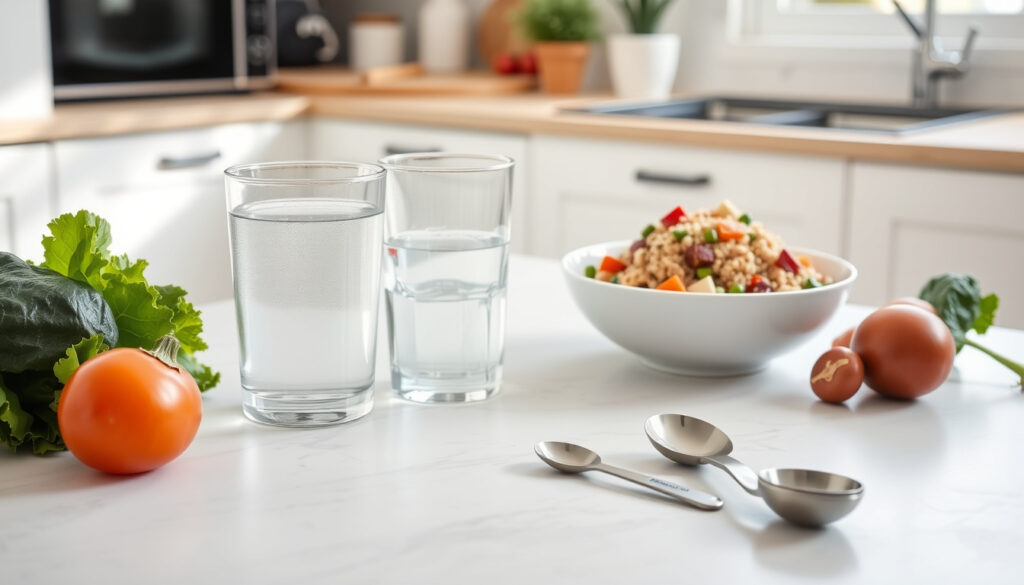
Easy Low Calorie Meals: Filling Recipes & Science-Based Tips
Anyone who’s tried to eat lighter knows the struggle: you want a plate that fills you up without piling on calories. The good news is that science backs a few simple strategies—starting with the foods you already have in your fridge.
Calories per day for moderate weight loss: 1,200–1,500 for women, 1,500–1,800 for men NIDDK (U.S. National Institute of Diabetes and Digestive and Kidney Diseases) ·
Daily calorie deficit for 1 lb loss per week: 500–1,000 calories CDC (Centers for Disease Control and Prevention) ·
Fiber intake recommended per day: 25–38 grams Academy of Nutrition and Dietetics
Quick snapshot
- Broccoli, cauliflower, spinach, bell peppers Mayo Clinic (weight management experts)
- Fiber content per 100g: 2.4–3.6g (Mayo Clinic (weight management experts))
- Calories per 100g: 25–40 (Mayo Clinic (weight management experts))
- Chicken breast, egg whites, tofu, fish PubMed Central (NIH database, meta-analysis on protein and satiety)
- Protein per 100g: 20–30g (PubMed Central (NIH database, meta-analysis on protein and satiety))
- Calories per 100g: 100–165 (PubMed Central (NIH database, meta-analysis on protein and satiety))
- Oats, quinoa, lentils, black beans Healthline (nutrition resource)
- Fiber per 100g cooked: 4–8g (Healthline (nutrition resource))
- Calories per 100g cooked: 115–150 (Healthline (nutrition resource))
- Vinegar, lemon, herbs, spices, chili EatingWell (dietitian-reviewed recipes)
- Near-zero calories (EatingWell (dietitian-reviewed recipes))
- Boost satiety via sensory satisfaction (EatingWell (dietitian-reviewed recipes))
| Metric | Value |
|---|---|
| Calories in one cup of cucumber | 16 calories |
| Protein in 3 oz grilled chicken breast | 26 grams |
| Fiber in 1 cup cooked lentils | 15.6 grams |
| Average calories in a low-calorie dinner from top recipe sites | 325–450 calories per serving |
The implication: low-calorie meals that keep you full rely on fiber-rich vegetables, lean protein, and whole grains—not deprivation.
What meals are filling but low in calories?
The secret to a filling low-calorie meal is satiety density: getting the most fullness per calorie. That means combining high-volume vegetables, lean protein, and fiber-rich carbs. Research from PubMed Central (NIH, meta-analysis of 20+ studies) shows that higher-protein diets improve satiety and support weight loss compared to lower-protein diets. A 2015 Penn State study (peer-reviewed journal) linked protein and fiber directly to increased satiety per calorie.
Best vegetables for volume and low calories
- Non-starchy vegetables like broccoli, spinach, and cauliflower have fewer than 30 calories per cup and provide fiber Mayo Clinic (weight management guidance).
- Celery (6 calories per stalk), cucumber (8 calories per 1/2 cup), lettuce (5–10 calories per cup) are among the lowest-calorie whole foods.
The implication: you can eat a full bowl of roasted vegetables for under 100 calories, leaving room for a satisfying protein portion.
Lean protein choices that increase satiety
- Chicken breast, tofu, fish, and egg whites provide 20–30g protein per 100g at just 100–165 calories EatingWell (dietitian-curated recipes).
- A review of 20 studies confirms that lean proteins increase satiety more than fat or carbs per calorie PubMed Central (NIH meta-analysis).
A 350-calorie meal built around vegetables plus lean protein can keep hunger away for 3–4 hours, making it easier to stick to a calorie budget.
Example meals: 300–400 calories that satisfy
- Grilled chicken breast (3 oz, 140 cal) + 1 cup roasted broccoli (55 cal) + ½ cup quinoa (110 cal) = ~305 cal.
- Stir-fried tofu (4 oz, 90 cal) with 2 cups mixed vegetables (70 cal) + 1 tbsp soy sauce (10 cal) = ~170 cal (add ½ cup brown rice for ~380 cal total).
- Egg white omelet (3 egg whites, 50 cal) with spinach, mushrooms, and 1 oz feta (75 cal) = ~125 cal for a high-volume breakfast.
What is the lowest calorie food for dinner?
If you want the absolute lowest-calorie dinner, the whole foods with the fewest calories per serving are non-starchy vegetables. Celery, cucumber, and lettuce provide fewer than 10 calories per cup Mayo Clinic (low-calorie food guide). But a dinner of just vegetables leaves you lacking protein and fat. The trick is to build a balanced plate that stays under 200–300 calories.
Lowest calorie whole foods for dinner
- Broth-based soups with vegetables average 50–100 calories per cup Shape Your Future Oklahoma (Oklahoma state nutrition program).
- Broccoli, cauliflower, and spinach all contain 25–40 calories per 100g.
- A full dinner using these as a base can be under 200 calories if paired with a small protein (e.g., 2 oz grilled chicken).
How to combine them into a balanced plate
- Make a big bowl of vegetable soup (1 cup broth, 1 cup mixed veggies) and add 3 oz of cooked lean chicken or tofu. Total: ~250 cal EatingWell (dietitian budget recipes).
- Try a lettuce wrap with 2 oz tuna (60 cal) and sliced cucumber: under 150 cal.
The catch: extremely low-calorie dinners (under 200 cal) are hard to sustain for most people because they lack fat and carbs for energy. Use them as occasional light meals, not a daily pattern.
What can I eat on 500 calories a day?
Very low calorie diets (VLCDs) of 500–800 calories are medically supervised programs — they are not for casual self-experimentation. The NIDDK (U.S. National Institute of Diabetes and Digestive and Kidney Diseases) advises that VLCDs are only safe under medical supervision. Still, understanding what a 500-calorie day looks like can help you plan occasional low-calorie days.
Sample 500-calorie day meal plan
- Breakfast: 1 cup sliced strawberries (50 cal) + ½ cup nonfat Greek yogurt (60 cal) = 110 cal.
- Lunch: 1 cup vegetable soup (100 cal) + 3 oz grilled chicken (140 cal) = 240 cal.
- Dinner: 1 cup roasted broccoli (55 cal) + a small apple (80 cal) = 135 cal. Total: 485 cal.
Risks and recommendations for very low calorie diets
- Without careful selection, a 500-calorie diet can cause nutrient deficiencies — lacking iron, calcium, vitamin D, and B12 Healthline (nutrition review).
- Mayo Clinic states that 1,200 calories is too low for most men and active adults Mayo Clinic (weight management experts).
A person on a 500-calorie plan for more than a few weeks risks fatigue, hair loss, and metabolic slowdown — even if they don’t feel hungry. Medical supervision is non-negotiable.
Is 1200 calories too little for one day?
For many people, 1,200 calories is a threshold below which the body struggles to get essential nutrients. The Healthline (medical review board) notes that 1,200 calories is sometimes prescribed for short-term weight loss in women under 5’4″, but it’s rarely enough for men or active women. Mayo Clinic (weight management experts) warns that dropping below your basal metabolic rate can slow metabolism and cause muscle loss.
When 1200 calories is safe vs when it isn’t
- Safe: short-term, under medical guidance, for sedentary women who are petite (under 5’4″) Healthline (nutrition resource).
- Unsafe: for men, active women, or anyone using a 1,200-calorie diet for more than a few weeks without professional oversight.
Signs your body isn’t getting enough fuel
- Constant hunger, low energy, difficulty concentrating, irritability.
- Hair thinning or brittle nails.
- Feeling cold when others are comfortable.
The catch: 1,200 calories may create a large enough deficit for rapid initial weight loss, but the risk of nutrient deficiency and metabolic adaptation makes it a poor long-term strategy for most people.
What is the 3-3-3 rule for food?
The 3-3-3 rule suggests eating 3 meals, 3 snacks, and stopping 3 hours before bed. It’s popular in some weight-loss circles but is not a medical guideline. No large-scale clinical trials validate it Healthline (nutrition analysis). However, the structure may help with portion control and preventing late-night snacking.
Origin and purpose of the 3-3-3 rule
- The rule appears on some wellness blogs and social media but has no peer-reviewed backing.
- It promotes eating every 3–4 hours, which aligns with general advice to spread protein across meals (3–5 meals per day) Jetpack Nutrition (dietitian-reviewed blog).
How to apply it to low calorie meals
- Three meals: breakfast, lunch, dinner (each 300–400 cal).
- Three snacks: options like Greek yogurt, apple, or a handful of almonds (100–150 cal each).
- Stop eating 3 hours before bed to reduce late-night calorie intake NHLBI (National Heart, Lung, and Blood Institute).
Why this matters: even if the evidence is anecdotal, the 3-3-3 rule provides a simple framework that can help people avoid overeating. The structure itself, not the rule, may be the real benefit.
Does fasting from 7pm to 7am work?
Time-restricted eating (TRE) where you eat within a 12-hour window (e.g., 7am to 7pm) aligns with circadian rhythms and may reduce late-night calorie intake. NHLBI (U.S. National Heart, Lung, and Blood Institute) notes that such patterns can help cut evening snacking. A 2020 meta-analysis in JAMA Internal Medicine (peer-reviewed medical journal) found no significant difference between time-restricted eating and daily calorie restriction for weight loss.
Evidence for time-restricted eating
- Studies show TRE (12–16 hour fast) can produce modest weight loss without explicit calorie counting JAMA Internal Medicine (2020 research).
- It may improve insulin sensitivity and blood pressure, independent of weight loss.
Practical tips for evening fasting
- Finish dinner by 7pm, then only water or herbal tea until 7am.
- If you’re hungry before bed, a small protein snack (e.g., Greek yogurt) is better than a carb-heavy snack.
The takeaway: a 12-hour overnight fast is a low-risk, evidence-adjacent practice that can help people naturally eat fewer calories without counting.
Easy low calorie meals for every lifestyle
Not everyone has the same kitchen setup, budget, or taste. Here are practical ways to make low-calorie meals work for families, tight budgets, and high-protein needs.
Low calorie meals for a family
- Bean chili: canned beans, tomatoes, peppers, and spices — under 300 cal per serving, costs about $1.50/serving Shape Your Future Oklahoma (state nutrition program).
- Vegetable stir-fry with chicken: use frozen broccoli and bell peppers, plus 1 lb chicken breast — serves 4 at ~350 cal each.
Low calorie meals on a budget
- Lentils: 1 cup cooked = 230 cal, 18g protein, 15.6g fiber, cost ~$0.20 per serving Macrofriendly Food (budget meal planning site).
- Eggs: 70 cal each, high-quality protein. Make a veggie scramble with 2 eggs (~140 cal) and 1 cup spinach (~7 cal).
- Canned tuna: 3 oz = 100 cal, 20g protein, ~$0.70 per can Healthline (cheap protein guide).
Quick low calorie high-protein meals
- Greek yogurt bowl: 1 cup nonfat Greek yogurt (100 cal, 17g protein) with berries and a sprinkle of oats.
- Grilled chicken salad: 3 oz chicken (140 cal) over 2 cups mixed greens (20 cal) with vinaigrette (45 cal) = ~205 cal, 26g protein.
- 15-minute meal prep: stir-fry 4 oz tofu with 2 cups frozen vegetables and soy sauce — about 300 cal, 25g protein Eat Bread Less (recipe blog).
The pattern: these meals use affordable, whole ingredients that maximize protein and fiber per calorie — no specialty items needed.
Easy low calorie meals: step-by-step
You don’t need complicated recipes. Follow this 4-step process to build a filling low-calorie plate every time.
- Start with volume — fill half your plate with non-starchy vegetables (broccoli, spinach, cauliflower, bell peppers). Aim for 2–3 cups. That’s about 50–100 calories but 80% of your plate’s bulk.
- Add lean protein — choose chicken breast, fish, tofu, egg whites, or legumes. A 3–4 oz portion provides 20–30g protein for 100–165 calories PubMed Central (protein and satiety meta-analysis).
- Include a small carb source — a ½ cup of cooked quinoa, lentils, or black beans adds fiber and staying power without breaking your calorie budget (80–120 calories).
- Flavor without fat — use vinegar, citrus, herbs, spices, or low-calorie sauces (soy sauce, hot sauce). Avoid heavy oils and creamy dressings.
Batch-cook proteins and frozen vegetables to assemble meals in 5 minutes. One batch of grilled chicken, one bag of frozen broccoli, and a container of cooked lentils can yield 4 different dinners under 400 calories Macrofriendly Food (batch cooking guide).
What’s confirmed and what’s still uncertain
Based on current evidence, some principles are solid while others need more research.
Confirmed facts
- Fiber and protein increase satiety (multiple meta-analyses) PubMed Central (NIH).
- Non-starchy vegetables have fewer than 40 calories per cup Mayo Clinic (weight management).
- 1,200-calorie diets can cause nutrient deficiencies without careful planning Healthline (nutrition review).
What’s unclear
- Whether the 3-3-3 rule is more effective than general portion control (no clinical trials).
- If a 500-calorie daily intake is sustainable without medical monitoring for more than 4 weeks NIDDK (medical supervision advice).
Expert perspectives on low-calorie meal science
“Choosing foods with low energy density — lots of water and fiber but few calories — helps you feel full on fewer calories. That means piling your plate with vegetables, having broth-based soups, and picking fruits over juice.”
— Mayo Clinic weight management expert
“Protein is the most satiating macronutrient. When you’re trying to control your weight, making sure you get enough protein — about 20–30 grams per meal — can make a significant difference in how hungry you feel.”
— Dr. Frank Sacks, Harvard TH Chan School of Public Health (nutrition science)
Summary
Easy low calorie meals aren’t about eating lettuce and feeling deprived. The evidence points to a clear formula: volume from vegetables, protein at every meal, fiber from whole grains and legumes, and smart flavoring. For anyone trying to lose weight or eat healthier, the choice is simple: build your plate around low-calorie, high-satiety ingredients — and skip the fad rules. Your body gets what it needs, and your taste buds don’t have to suffer.
berrystreet.co, shapeyourfutureok.com, jetpacknutrition.com, reddit.com, youtube.com, youtube.com, eatingwell.com
For those looking to keep their midday meals light, exploring low calorie lunch ideas can provide satisfying options under 400 calories.
Frequently asked questions
Can low calorie meals still taste good?
Absolutely. Using herbs, spices, citrus, vinegar, and low-calorie sauces adds flavor without loads of fat. Roasting vegetables brings out natural sweetness, and a squeeze of lemon or dash of chili can transform a plain chicken breast.
How many calories should I eat for weight loss?
The CDC (Centers for Disease Control and Prevention) recommends a deficit of 500–1,000 calories per day for 1–2 lbs of loss per week. For many women, 1,200–1,500 calories is a safe range; for men, 1,500–1,800. But individual needs vary based on age, activity, and metabolism.
What low calorie foods keep you full the longest?
Foods high in protein and fiber: lean meats, fish, eggs, Greek yogurt, lentils, beans, oats, and non-starchy vegetables. These slow digestion and trigger satiety hormones. A 2020 JAMA Internal Medicine (research) review confirms that protein plus fiber is the most effective satiety combination.
Are frozen vegetables as good as fresh for low calorie meals?
Yes — often better. Frozen vegetables are harvested at peak ripeness and flash-frozen, retaining vitamins. They’re cheaper, last longer, and are just as low in calories. Shape Your Future Oklahoma (state nutrition program) recommends frozen vegetables for budget-friendly high-protein meals.
Can I eat low calorie meals on a vegetarian diet?
Definitely. Tofu, tempeh, lentils, beans, chickpeas, eggs, and Greek yogurt are all high-protein, low-calorie options. A lentil soup with vegetables is around 200 calories and 12g of fiber. Add a side of steamed broccoli (55 cal) for a filling dinner Healthline (vegetarian protein guide).
More related posts
 Australia vs England Cricket 2025-26: Ashes Schedule & Records
 Not Equal Sign (≠): Meaning, How to Type It, and Uses Explained
 How to Stay Young: Science-Backed Anti-Aging Tips
 MPG to L/100km – Converter Formula Table Guide
 Crazy Rich Asians 2: Cast, Book, and Latest Updates
 Property for Sale Wellington: Global Guide to 4 Markets
 One Bowl and Plate: Menu, Hours & Location in Wellington
