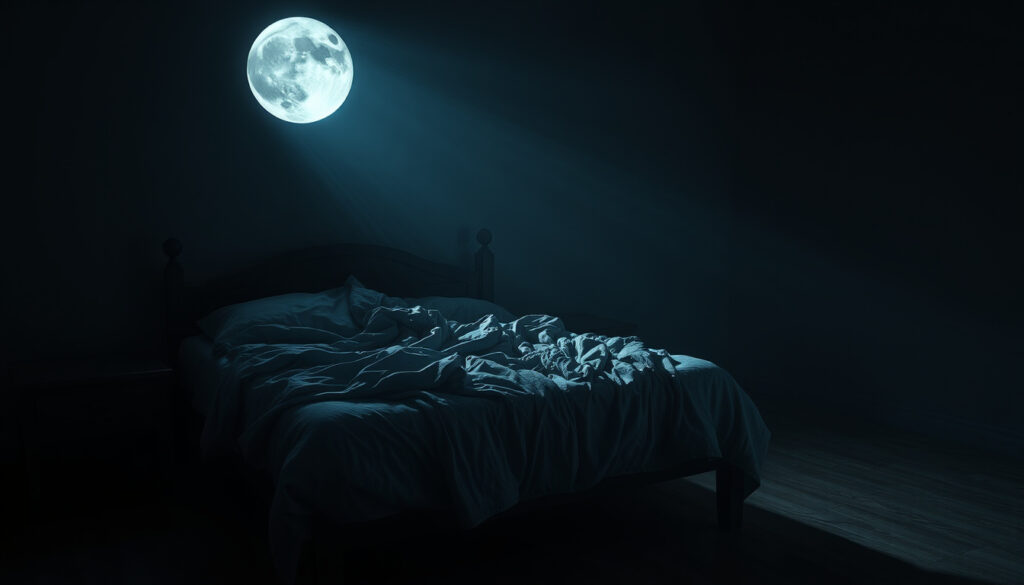
What Is Sleep Paralysis? Causes, Symptoms & Prevention
You’ve just woken up, but something is deeply wrong. You can’t move your body. A dark figure stands in the corner, watching. You try to scream, but no sound comes out. Sleep paralysis affects roughly 20% of people at some point in their lives and is often accompanied by vivid hallucinations that feel dangerously real.
Harmless?: Yes · Typical duration: Seconds to minutes · Most common experience: Once in lifetime · Triggers muscle state: REM atonia · Accompanied by: Hallucinations often
Quick snapshot
- Temporary inability to move when falling asleep or waking (Ubie Health)
- Harmless condition that doesn’t cause physical harm (CU Anschutz)
- Linked to REM sleep atonia mechanism (GWU Cashp)
- Why some people experience recurring episodes while others never do
- The precise neurological triggers that shift brain activity from paralysis to hallucination
- Why shadow figures appear more frequently in certain cultures than others
- Improved sleep hygiene typically reduces frequency (Ubie Health)
- Medical consultation recommended if episodes occur fully awake, cause injuries, or happen frequently (Ubie Health)
| Key Fact | Detail |
|---|---|
| Definition | Cannot move or speak when falling asleep or waking |
| State | Conscious but paralyzed |
| Frequency | Most experience once |
| Danger | Harmless |
| Mechanism | Brain wakes up but body stays in REM atonia |
| Hallucination rate | 75% of occasional sufferers (The Week) |
What Causes Sleep Paralysis?
Sleep paralysis occurs when the brain wakes up during REM sleep but the body remains temporarily paralyzed by normal REM atonia. This mechanism normally prevents you from acting out your dreams — but during sleep paralysis, consciousness returns while the body is still immobilized. Research from the George Washington University describes this as a malfunction in brain control of REM and NREM sleep phases.
Common triggers
- Severe sleep deprivation
- High stress or trauma
- Irregular sleep schedules
- Substance use including alcohol withdrawal or stimulants
- Sleep position — lying face-up increases risk (Sleep Foundation)
Sleep deprivation stands out as a primary trigger that makes shadow figures more likely, according to multiple accounts and clinical observations.
Link to sleep disorders
Sleep paralysis commonly associates with narcolepsy, where hypnagogic and hypnopompic hallucinations frequently appear as shadow people or the Hat Man figure. However, most episodes occur independently in people without underlying sleep disorders.
The brain essentially gets caught between sleep states. REM-related paralysis persists while waking consciousness kicks in, creating the unsettling disconnect that defines the experience.
What Are Sleep Paralysis Symptoms?
During an episode, you remain conscious while your body refuses to move. This typically happens either when falling asleep (hypnagogic) or waking up (hypnopompic). According to the NHS, the experience is frightening but ultimately harmless.
Inability to move or speak
You may feel completely frozen. Some people describe it as wearing a invisible weight pressing them into the mattress. The paralysis affects voluntary muscles while breathing and eye movements typically remain under your control.
Hallucinations
Approximately 75% of people who experience occasional sleep paralysis report hallucinations. These are brief, tied to the paralysis, and recognized as unreal afterward. The hallucinations blend dream imagery with waking awareness, creating intensely vivid experiences.
Pressure sensation
Many report a crushing weight on their chest, often described as a figure sitting on them. Shallow breathing during REM paralysis contributes to these suffocation feelings, and fear cycles can exacerbate the hallucinations. According to the Sleep Foundation, breathing changes during REM sleep play a significant role in these pressure sensations.
The combination of immobility, pressure, and visual hallucinations creates a profoundly distressing experience — even though the condition causes no physical harm.
What Do People See During Sleep Paralysis?
The hallucinations during sleep paralysis rank among the most distinctive aspects. Sufferers frequently report shadowy figures that feel dangerously present. According to The Week, 58% sense a non-human presence, while 22% see an actual person during their episodes.
Shadow Man figure
The most commonly reported figure is a dark silhouette — human-shaped, faceless, and often standing in peripheral vision. This figure frequently appears to be watching or approaching. A 2021 paper published in PubMed suggests these ghost hallucinations are mediated by right hemisphere brain activity, explaining why they so often appear as faceless shadows.
Intruder hallucinations
The “intruder” phenomenon involves a menacing presence felt in the room, sometimes accompanied by visual confirmation. According to research from George Washington University, this links to the brain’s defensive terror response — the amygdala fires as if detecting an actual threat, creating genuine fear despite knowing the experience isn’t real.
Cultural variations
Across cultures, similar phenomena appear worldwide. Shadow beings, cat-like creatures, witches, and various threatening figures have been reported globally, according to research published in PubMed. The Hat Man — a shadowy figure wearing a wide-brimmed hat — represents a specific cultural variant documented across many societies.
Why Can’t You Scream During Sleep Paralysis?
The inability to scream or vocalize during sleep paralysis directly results from REM atonia affecting the diaphragm and vocal cords. This muscle paralysis extends throughout the body, including the muscles required for speech production.
Muscle atonia
During normal REM sleep, motor neurons are actively suppressed to prevent physical movement. When consciousness returns during this phase, the suppression hasn’t yet lifted. You remain aware but paralyzed from the neck down.
Vocal cord paralysis
The vocal cords and respiratory muscles fall under the same REM atonia mechanism. Attempts to scream produce only silent, internal effort — what researchers call the “silent scream effect.” The paradox of wanting desperately to call for help while physically incapable of producing sound contributes significantly to the terror of the experience.
How Do You Get Out of and Prevent Sleep Paralysis?
While experiencing an episode, focus on small movements that can gradually break the paralysis. Prevention focuses on sleep hygiene improvements that reduce triggers.
Escape techniques
- Focus on moving fingers or toes — smaller muscle groups often regain function first
- Concentrate on eye movements — eye muscles frequently retain some control
- Deep, controlled breathing can sometimes break the cycle
- Mental self-talk affirming awareness and control
- Epicranial stimulation — attempting to tense facial muscles or produce eye movements (CU Anschutz)
Prevention steps
- Maintain consistent sleep schedules
- Avoid severe sleep deprivation — get 7-9 hours regularly
- Manage stress through relaxation techniques
- Sleep on your side rather than your back
- Limit alcohol and stimulant use, especially before bed
- Address underlying sleep disorders like narcolepsy (Ubie Health)
When to seek help
Seek medical care if episodes occur when you’re fully awake, happen frequently, result in injuries, or involve new neurological symptoms. According to Ubie Health, a healthcare provider can evaluate for underlying conditions and recommend treatment options when episodes significantly impact quality of life.
Relaxing sounds counterintuitive during terror, but consciously releasing fear actually helps break the paralysis cycle — fear maintains the REM-state lock.
Confirmed facts
- Sleep paralysis is harmless and temporary
- It’s linked to REM atonia mechanism
- Episodes last seconds to minutes, rarely exceeding 20 minutes (The Week)
- Up to 30-40% of people experience it at least once in their lifetime
- Hallucinations arise from brain producing dream imagery while awake
- Most people who experience it will have only one episode
What’s unclear
- Why some people have recurring episodes while others never do despite similar risk factors
- Exact triggers for all individual cases
- The precise neurological mechanisms causing different hallucination types
What experts say
The menacing shadowy figure that perches upon your chest… probably isn’t a nightmare come to life… It’s more likely to be a hallucination that happens along with sleep paralysis.
— Katherine Green, MD, Medical Director, University of Colorado Sleep Center (CU Anschutz)
Your brain is a prediction machine. It constantly fills in gaps based on limited information.
— Ubie Health Medical Explainer (Ubie Health)
The ‘intruder’ phenomenon in sleep paralysis involves a menacing presence, linked to brain’s defensive terror response.
— Research from George Washington University (GWU Cashp)
Summary
Sleep paralysis produces some of the most frightening waking experiences imaginable — frozen body, shadowy figures, crushing pressure, and the inability to scream. Yet the condition is fundamentally a neurological hiccup, not a supernatural encounter. Your brain wakes before REM atonia subsides, creating the illusion of a threat that your body can’t respond to. For anyone experiencing these episodes, the practical takeaway is straightforward: improve sleep consistency, reduce deprivation, and remember that the experience, however terrifying in the moment, causes no physical harm and typically resolves on its own. If episodes become frequent, severe, or interfere with daily life, a sleep specialist can evaluate for underlying conditions like narcolepsy that may benefit from targeted treatment.
Related reading: Why Am I So Tired · Best Mattress Topper NZ
Sleep paralysis most often occurs during the hazy transition into or out of the REM sleep cycle, where wakefulness clashes with lingering dream paralysis.
Frequently asked questions
Is sleep paralysis a warning?
Sleep paralysis isn’t typically a warning of serious illness in most cases. However, frequent episodes occasionally indicate underlying sleep disorders like narcolepsy, and consulting a healthcare provider can determine whether further evaluation is warranted.
Can sleep paralysis kill you?
No. Sleep paralysis cannot kill you. While the experience feels intensely threatening — particularly the chest pressure and inability to breathe — the condition causes no physical harm. Breathing continues normally despite the sensation of suffocation.
What’s the longest sleep paralysis can last?
Most episodes last seconds to a few minutes. In rare cases, episodes can extend up to 20 minutes, according to The Week’s reporting on clinical observations.
Can you blink during sleep paralysis?
Yes, eye movements including blinking are often preserved during sleep paralysis. Many escape techniques specifically recommend focusing on eye movements or attempting to wiggle the eyes as a first step toward regaining full motor control.
What is sleep paralysis demon?
“Sleep paralysis demon” describes the menacing presence or figure many people report during episodes. Across different cultures, this figure takes various forms — shadow beings, witches, or supernatural visitors. Modern neuroscience explains these as hypnagogic or hypnopompic hallucinations resulting from REM-state brain activity bleeding into waking consciousness.
What is sleep paralysis in Islam?
In Islamic tradition, sleep paralysis experiences are sometimes interpreted through spiritual frameworks. However, the phenomenon itself follows the same neurological mechanisms documented in clinical research regardless of cultural or religious context.
Is sleep paralysis dangerous?
Sleep paralysis itself is not dangerous. It’s a harmless condition that doesn’t cause physical harm or lasting effects. The main risks come from the fear and panic it can trigger, and in rare cases, people may injure themselves during thrashing episodes or by mistake.
More related posts
 Kāinga Ora Tenant Anti-Social Acts: Eviction Guide
 Rob Lowe Movies and TV Shows: Complete Filmography & Biography
 Properties for Sale in Auckland: 2025 Guide for Buyers
 How Do You Get Ringworm – Causes, Transmission and Prevention
 When Is Chinese New Year 2026? Date & Zodiac Explained
 Te Anau vs Waitomo Glowworm Caves: Which Is Better
 Bridal Veil Falls Raglan: Visitor Guide & Directions
