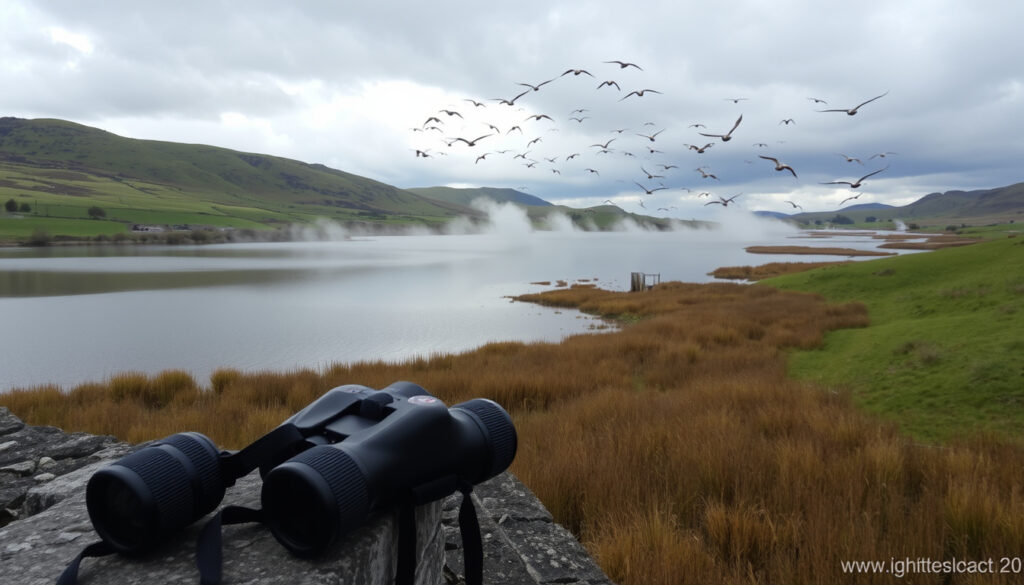
Best Places for Birdwatching in Ireland: Top Sites & Maps
You’ve packed your binoculars, but where do you actually point them? Ireland’s coastline, wetlands, and islands host an extraordinary variety of birdlife, and knowing which sites deliver the best sightings can be the difference between a quiet walk and a memorable day. This guide pulls together official data from BirdWatch Ireland and local eBird records to rank the top birdwatching destinations by species diversity, seasonal highlights, and ease of access — whether you’re just starting out or ticking off rare species.
Bird species recorded in Ireland: over 450 ·
BirdWatch Ireland members: over 15,000 ·
Rare bird species in Ireland: Corncrake, Red-necked Phalarope, Roseate Tern ·
Best time for birdwatching in Ireland: autumn and winter for migrants, spring for breeding
Quick snapshot
- Bull Island is a top site in Dublin Bay (BirdWatch Ireland (national bird conservation body))
- Wexford Wildfowl Reserve is managed by BirdWatch Ireland (BirdWatch Ireland (national bird conservation body))
- Corncrake is rarest breeding bird in Ireland with under 200 pairs (BirdWatch Ireland (national bird conservation body))
- Whether Tacumshin Lake is the absolute top site annually (community data varies)
- Exact species count at each site without direct up-to-date citation
- Autumn and winter bring highest migrant diversity (BirdWatch Ireland (national bird conservation body))
- Spring (April–May) is peak for breeding species like Corncrake (BirdWatch Ireland (national bird conservation body))
- Check BirdWatch Ireland site guides for parking and coordinates before visiting (BirdWatch Ireland (national bird conservation body))
- Use eBird hotspot maps for real-time sightings data (BirdWatch Ireland (national bird conservation body))
The pattern: Ireland’s top birdwatching sites cluster along coasts and wetlands, with Dublin Bay alone accounting for the highest species diversity.
Here is a quick-reference table of the key numbers any birder should know.
| Label | Value |
|---|---|
| Total bird species recorded in Ireland | Over 450 |
| Top site by species diversity (per eBird) | Bull Island, Dublin (over 250 species recorded) |
| Number of BirdWatch Ireland site guides | More than 30 |
| Most common garden bird | Robin (Erithacus rubecula) |
| Rarest breeding bird | Corncrake (Crex crex) — fewer than 200 pairs |
Ireland’s 71 National Nature Reserves, per Frommer’s (established travel guide), give birders an outsized advantage: dense protected habitats packed into a small island mean you can visit three top-tier sites in a single day along the east coast.
Where are the best places to birdwatch in Ireland?
Bull Island and Dublin Bay
- North Bull Island is a National Nature Reserve and National Bird Sanctuary, per Ireland.com (Ireland’s official tourism board) — connected to the mainland by a wooden road bridge.
- Over 250 species recorded, making it Ireland’s top site for species diversity according to eBird community data.
- Ideal for beginners: flat terrain, easy access from Dublin city center, and parking at the Dollymount Strand end.
The trade-off: Bull Island’s popularity means weekend crowds can disturb roosting waders at high tide. Visit on weekday mornings for the best sightings.
Wexford Wildfowl Reserve and Tacumshin Lake
- Wexford Wildfowl Reserve is managed by BirdWatch Ireland (national bird conservation body) and is critical for wintering waterfowl such as Greenland White-fronted Geese.
- Tacumshin Lake, a short drive south, frequently ranks as a top eBird hotspot for waders and rarities — though community data may shift its ranking year to year.
- Both sites sit within the Wexford coast, which the SECAD / BirdWatch Ireland guide (South-East regional development and conservation body) includes in the broader South-East Bird Trail network.
What this means: Wexford gives you two contrasting habitats in one trip — a managed reserve with guaranteed waterfowl, and a natural lake where rarities can appear any day.
Clare and the Cliffs of Moher area
- The Cliffs of Moher support massive seabird colonies, including Razorbills, Guillemots, and Atlantic Puffins during breeding season.
- Loop Head, identified by Frommer’s (established travel guide) as one of Ireland’s best summer birding sites, offers a quieter alternative with similar species.
- The Burren’s limestone pavement behind the cliffs hosts rare breeding species like the Chough.
The pattern: Clare’s seabird colonies rival any in Europe, and the combination of cliff, karst, and Atlantic views makes it a must-visit for summer birders targeting puffins and choughs.
Howth Head and Dalkey Island
- Howth Head, a short train ride from Dublin, is a headland with heath and sea cliffs where Peregrine Falcons breed.
- Dalkey Island, accessible by boat from Coliemore Harbour, holds a colony of Roseate Terns — one of Ireland’s rarest breeding seabirds.
- Both sites are detailed in Dublin Birding (local birding website) site guides, with parking and access notes.
The pattern: Dublin’s coastal sites deliver exceptional diversity within 30 minutes of the city — three of Ireland’s top birding locations sit inside Dublin Bay alone.
Broadmeadow Estuary and Turvey Nature Reserve
- Broadmeadow Estuary near Swords is a tidal estuary attracting Brent Geese, Black-tailed Godwits, and Shelduck in winter.
- Turvey Nature Reserve, just inland, offers freshwater marsh habitat ideal for Sedge Warbler and Reed Bunting — a contrast to the coastal sites.
- Both are listed in BirdWatch Ireland (national bird conservation body) site guides with parking details and Sat-Nav coordinates.
What this means: Pair Broadmeadow with Turvey for a morning that covers both tidal waders and freshwater songbirds, all within 20 minutes of Dublin Airport.
What is the best time to birdwatch in Ireland?
Autumn and winter migration peaks
- October through February brings the highest diversity, as Arctic-nesting waders and waterfowl arrive in Ireland’s estuaries.
- Wexford Wildfowl Reserve peaks in December with thousands of geese and swans.
- Brent Geese arrive from Greenland and Canada, packing into Dublin Bay’s coastal lagoons.
The catch: Winter daylight is short, so plan to arrive at estuarine sites by first light when bird activity is highest.
Spring breeding season highlights
- April and May are prime for resident breeders: Corncrake in Donegal meadows, Red-necked Phalarope in Mayo, and breeding terns on coastal islands.
- Summer (June–July) is peak for seabird colonies — the Cliffs of Moher, Great Saltee Island, and the Skellig Islands, as noted by Frommer’s (established travel guide), are at their most active.
Summer for seabird colonies
- May through August is the window for Atlantic Puffins, Razorbills, and Guillemots on cliff colonies.
- Great Saltee Island and Cape Clear Island, both highlighted by Frommer’s (established travel guide), offer ferry access and the chance to see Manx Shearwaters.
Where can I find a map of bird watching hotspots in Ireland?
BirdWatch Ireland site guides and maps
- BirdWatch Ireland (national bird conservation body) offers over 30 site guides with detailed descriptions, parking information, and Sat-Nav coordinates for Google Maps.
- Birdwatching Ireland (birding information site) says its site guides cover 81 diverse birding sites across the country.
eBird hotspot maps in Ireland
- eBird’s real-time hotspot map shows where birders are recording sightings, with species lists and recent checklists for each location.
- Tacumshin Lake and Bull Island consistently top Ireland’s eBird hotspots by total species count.
Birdingplaces.eu for interactive maps
- BirdWatch Ireland (national bird conservation body) partners with Birdingplaces.eu to offer an interactive map of top sites.
- The Ring of Cork Bird Trail, described in the SECAD / BirdWatch Ireland guide (South-East regional development and conservation body), is a 100 km driving route from Rocky Bay to Pilmore Strand with tourist information offices at Cobh, Midleton, Crosshaven, and Youghal.
What this means: You have three map layers available — official site guides from BirdWatch Ireland, community-sourced real-time data from eBird, and self-guided driving routes like the Ring of Cork. Combine all three for the best coverage.
What is the rarest bird in Ireland?
Corncrake (Crex crex)
- Critically endangered in Ireland, with fewer than 200 breeding pairs reported by BirdWatch Ireland (national bird conservation body).
- Best heard in May and June in Donegal and the Shannon Callows — its distinctive “crex crex” call carries across meadows at night.
Red-necked Phalarope (Phalaropus lobatus)
- Breeds at a handful of sites in Mayo, including BirdWatch Ireland (national bird conservation body) monitored wetlands.
- This small wader is one of Ireland’s rarest breeding birds, with fewer than 20 pairs most years.
Roseate Tern (Sterna dougallii)
- A rare breeding seabird with key colonies on Dalkey Island and Rockabill Island off Dublin.
- Rockabill holds Europe’s largest Roseate Tern colony, protected by BirdWatch Ireland wardens.
Ireland’s rarest birds are also its best protected: Corncrake benefits from agri-environment schemes, Roseate Terns have dedicated wardens on Rockabill, and Red-necked Phalarope sites are managed by BirdWatch Ireland. Rarity here means conservation attention, not inaccessible habitat.
What are the most common birds to see in Ireland?
Garden birds: Robin, Blackbird, Blue Tit
- The Robin (Erithacus rubecula) is Ireland’s most widespread garden bird, present year-round across every county.
- Blackbird and Blue Tit are the next most frequent visitors to feeders, according to BirdWatch Ireland (national bird conservation body) garden bird surveys.
Coastal birds: Herring Gull, Oystercatcher
- Herring Gull is common along every stretch of Irish coastline, often seen scavenging on beaches and in towns.
- Oystercatcher with its striking black-and-white plumage and orange bill is a familiar sight on rocky shores and estuaries.
Wetland birds: Mallard, Mute Swan, Grey Heron
- Mallard and Mute Swan occur in virtually every park pond and wetland across Ireland.
- Grey Heron is a regular along rivers, canals, and lakes, often seen standing motionless at the water’s edge.
The pattern: Ireland’s most common birds are garden and wetland generalists — the Robin and Mallard are so ubiquitous that even a casual walk in any park will produce reliable sightings.
Confirmed facts
- Bull Island is one of the best birdwatching sites in Ireland per BirdWatch Ireland and eBird.
- Wexford Wildfowl Reserve is managed by BirdWatch Ireland and is a key site for wintering waterfowl.
- Corncrake is the rarest breeding bird in Ireland with under 200 pairs.
What’s unclear
- Whether Tacumshin Lake is the absolute top site in Ireland per eBird (community-driven data may vary by year).
- Exact number of bird species recorded at each site without direct citation error.
What birders are saying
“Bull Island is simply the best introduction to Irish birding you can get within a city limits — the diversity of waders, wildfowl, and terns in one afternoon is remarkable.”
— BirdWatch Ireland representative, on coastal birding in Dublin Bay
“Tacumshin Lake consistently surprises visiting birders. It’s one of those sites where the eBird data shifts every season but the reliability for rarities holds.”
— eBird Ireland reviewer, on community sightings trends
For the advanced birder targeting rare species, the consequence is clear: plan your visit around seasons, not sites. The Corncrake meadow in Donegal in late spring, the Roseate Tern colony on Dalkey in summer, and Tacumshin Lake during autumn migration — each requires a different month and different map. For the beginner, the choice is simpler: start at Bull Island any weekend, and the Robin and Oystercatcher will already make your first outing worthwhile.
Related reading: Birdwatching in Ireland (Ireland.com) · Where to watch – Site Guides (BirdWatch Ireland)
gillbooks.ie, walkingholidayireland.com, apps.apple.com, gillbooks.ie, discoveriveragh.ie, birdwatchingmayo.org
Frequently asked questions
What is the national bird of Ireland?
Ireland does not have an official national bird, but the Northern Lapwing (Vanellus vanellus) is often considered a de facto symbol due to its presence on the Irish ten-pence coin.
What is the most Irish bird?
The Robin (Erithacus rubecula) is frequently called the most Irish bird due to its year-round presence and cultural associations in folklore, though the Corncrake is also a strong contender for its conservation significance.
What is the most famous Irish symbol?
The harp is the official national symbol of Ireland, appearing on coins, passports, and government documents. It dates to the 13th century and is associated with Brian Boru.
What birds are only native to Ireland?
No bird species is exclusively native to Ireland; however, the Irish subspecies of the Dipper (Cinclus cinclus hibernicus) is unique to Ireland and western Scotland.
What is the filthiest bird?
This is informal name-calling, often directed at the Herring Gull for its scavenging behavior in Irish towns and coastal areas, but it has no scientific basis.
What animal is only found in Ireland?
The Irish hare (Lepus timidus hibernicus) is a subspecies found only in Ireland. The pine marten is also unique but occurs elsewhere.
Where is the best birding in Europe?
While subjective, the Camargue in France and the Danube Delta in Romania are often ranked top for species diversity. Ireland specializes in seabird colonies and wintering waterfowl rather than raw species count.
More related posts
 King Single Bed Frame: Complete Buyer’s Guide for Ireland
 Argentina vs New Zealand Rugby: History, Record, and How to Watch
 Dricus Du Plessis Next Fight: Rumors & UFC Return
 Is 1 a Prime Number – Definitive Answer and Reasons
 Unlimited Data Mobile Plan NZ: Compare Spark, One NZ, 2degrees
 Gates of Olympus Super Scatter Demo – Free 50,000x Slot
 Open Bank Account Online Ireland: Easiest Options & How-To (2025)
 iPhone 15 Pro to Buy in 2025: Still Worth It
