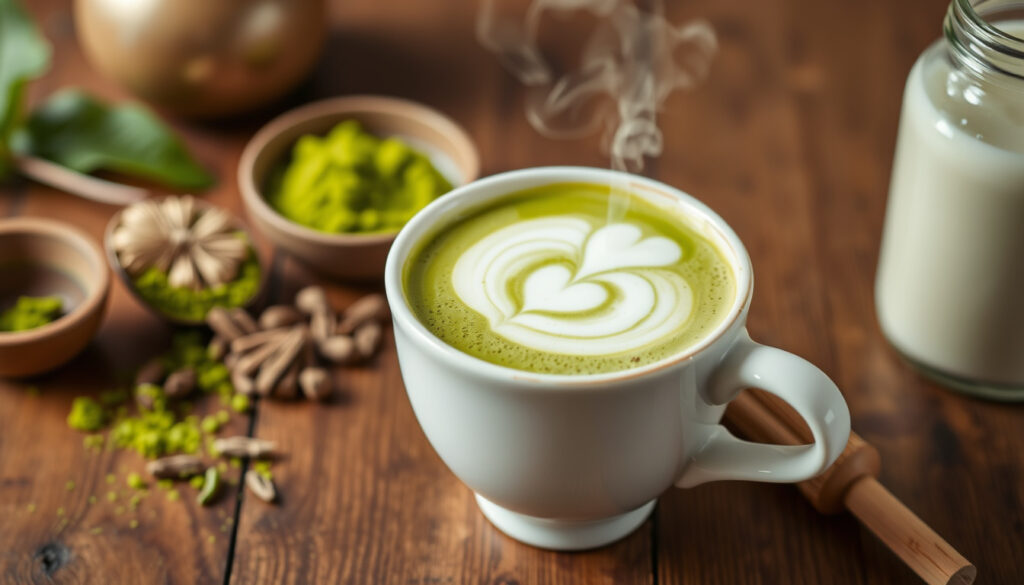
How to Make Matcha Latte: Recipe, Health Comparison & Tips
There’s something quietly satisfying about making your own matcha latte at home — no queue, no plastic lid, no guessing what’s inside. But the difference between a smooth, vibrant drink and a bitter, clumpy one comes down to a few precise steps and some surprising health trade-offs. Here’s how to nail the technique, understand what you’re actually drinking, and see how your homemade version stacks up against Starbucks.
Matcha powder needed per serving: 1 to 2 grams (½ to 1 tsp) ·
Water temperature for whisking: 80 °C (176 °F) ·
Caffeine content (8 oz matcha latte): 60–80 mg ·
Antioxidant rating (ORAC per gram): 1,384 units ·
Annual matcha market growth: 10.8% CAGR (2023–2030)
Quick snapshot
- Ceremonial or culinary grade matcha
- Hot water (80 °C)
- Milk of choice
- Sweetener optional
- Same ingredients plus ice
- Shake or stir after cooling
- Use cold milk directly
- Starbucks uses pre-sweetened matcha blend
- 2 tbsp matcha blend per grande
- 2% milk standard
- Contains 24 g sugar
- Oat milk for creamy texture
- Almond or coconut for lighter taste
- Avoid high-sugar plant milks
The difference between a 50‑cent DIY latte and a $5 Starbucks version isn’t just price — it’s 24 grams of added sugar per serving. For anyone watching their intake, that’s nearly half the American Heart Association’s daily limit in one drink.
| Fact | Value |
|---|---|
| Matcha caffeine per cup | 60–80 mg |
| Coffee caffeine per cup (8 oz brewed) | 95 mg |
| Minimum whisking time | 15–20 seconds |
| Optimal water temperature | 80 °C (176 °F) |
| Sugar in Starbucks grande matcha latte | 24 g (5.7 tsp) |
How to Properly Make Matcha Latte?
Ingredients needed
- 1–2 g (½–1 tsp) ceremonial or high-quality culinary matcha powder
- 60 ml (¼ cup) hot water at 80 °C (176 °F)
- 180–240 ml (¾–1 cup) milk of choice
- Sweetener (optional): honey, maple syrup, or sugar
- Bamboo whisk (chasen) or a small milk frother
Step-by-step whisking method
- Sift the matcha through a fine-mesh strainer into a bowl to remove clumps.
- Add hot water (80 °C — never boiling, or the powder turns bitter).
- Whisk in a zigzag “M” motion for 15–20 seconds until the surface is frothy with fine bubbles.
- Pour milk (steamed, cold, or iced) over the matcha concentrate.
- Stir gently and add sweetener if desired.
BBC Good Food’s recipe editors (BBC Good Food – recipe team) emphasise that water temperature is the most common mistake: above 80 °C “burns” the chlorophyll, creating a harsh, grassy taste.
Using a milk frother technique
- Skip the whisk and use an electric frother to blend matcha paste (matcha + a splash of hot water) with warm milk directly.
- Froth the milk first, then pour over the matcha paste – this avoids clumps.
- For iced versions, shake all ingredients in a sealed jar with ice.
Whisking by hand takes 30 seconds and builds a velvety microfoam. A frother is faster but creates larger bubbles – fine for milk drinks, less ideal for traditional usucha. Pick your texture, not your gadgets.
Do I Mix Matcha with Milk or Water First?
The traditional Japanese method (water first)
In the Japanese tea ceremony, matcha is always dissolved in water first – never in milk. The classic usucha (thin tea) uses about 60 ml of 80 °C water per 1–2 g of matcha, whisked into a paste, then thinned. WebMD (health‑reference publisher) notes that this method preserves the delicate amino acids and catechins that make matcha unique.
Modern latte method (milk after paste)
For a latte, you still make the paste with water first. Then you top it with steamed or cold milk. Adding milk directly to the powder causes clumping because milk fat coats the particles, preventing proper dispersion. Ochsner Health (Louisiana‑based hospital system) recommends mixing a thick paste with a splash of hot water before adding milk – this ensures a smooth, emulsion‑like texture.
The pattern is clear: always dissolve in water first, then add milk. Reverse the order and you get lumps.
The implication: if you’re aiming for a silky texture, the water‑first method is non‑negotiable. Adding milk directly to powder guarantees clumps and a compromised drink.
Is a Matcha Latte Healthier Than Coffee?
Caffeine content comparison
An 8‑oz matcha latte contains about 60–80 mg of caffeine, compared to roughly 95 mg in the same amount of brewed coffee, according to CalorieKing (nutrition database). But matcha also delivers L‑theanine, an amino acid that moderates caffeine’s jittery edge.
Antioxidant levels (EGCG)
Matcha is rich in catechins – especially epigallocatechin gallate (EGCG). Grind Coffee (specialty coffee brand) cites antioxidant ratings of 1,384 ORAC units per gram. For comparison, dark chocolate averages 550 ORAC per gram. However, most clinical evidence on EGCG comes from in‑vitro studies; real‑world effects depend on absorption.
Calorie and sugar differences
Four numbers tell the story:
- Homemade matcha latte (unsweetened oat milk): ~45 calories, 0 g sugar.
- Starbucks grande matcha latte with 2% milk: 220 calories, 29 g sugar (Mist – calorie tracker).
- Starbucks grande with oat milk: 260 calories, 27 g sugar (Mist – calorie tracker).
- Starbucks tall nonfat matcha latte: 143 calories, 24 g sugar (CalorieKing).
Starbucks uses a pre‑sweetened matcha blend made with sugar as the first ingredient. A “healthy” matcha latte from the coffee chain packs as much sugar as a Snickers bar. Make it at home and you control the sweetener – or skip it entirely.
What this means: matcha latte wins on jitter‑free energy and antioxidants, but only if you choose an unsweetened version. The Starbucks “health halo” fades fast when you see the sugar label.
The pattern: homemade versions save 100–215 calories and cut sugar to zero. The only downside is a 10–15 second longer prep time – a trade‑off most people will accept.
What Are the Downsides of Matcha?
Lead contamination concerns
Because matcha is made from shade‑grown tea leaves, the plants accumulate lead from the soil. WebMD (health‑reference publisher) notes that while lead levels in matcha are generally below regulatory limits, daily consumption can add up. Pregnant women and children may want to limit intake.
Caffeine sensitivity issues
At 60–80 mg per cup, matcha latte still delivers a noticeable caffeine hit. People with anxiety, insomnia, or heart conditions may experience palpitations or restless sleep. L‑theanine helps, but it doesn’t eliminate the stimulant.
GERD and digestive considerations
Acid reflux sufferers should be cautious. Caffeine relaxes the lower esophageal sphincter, and the high chlorophyll content can be rough on sensitive stomachs. Ochsner Health recommends drinking matcha on a full stomach and avoiding added citrus or mint.
Added sugar in commercial versions
As shown above, a Starbucks grande matcha latte contains 24–29 g of sugar – most of it added. The American Heart Association recommends no more than 36 g (men) or 25 g (women) per day. One takeaway matcha latte can nearly max out your daily allowance.
The implication: anyone with a health condition that affects caffeine metabolism or heavy metal sensitivity should treat matcha as a conditional beverage, not a daily default.
Will Matcha Burn Belly Fat?
Evidence from weight loss studies
Green tea catechins, especially EGCG, have been shown to modestly increase thermogenesis (calorie burning). Meta‑analyses indicate an extra 4–5% energy expenditure over 24 hours (Harvard T.H. Chan School of Public Health – nutrition research division). But the effect is small – roughly 15–25 calories per cup.
Role of EGCG in metabolism
EGCG inhibits catechol‑O‑methyltransferase, an enzyme that breaks down norepinephrine. This prolongs fat‑burning signals. However, the effect is blunted when you add milk – casein proteins bind to catechins, reducing absorption. WebMD reports that dairy milk cuts catechin bioavailability by up to 30%.
Realistic expectations
No single food “burns belly fat.” Harvard’s nutrition researchers stress that weight loss requires an overall calorie deficit. Replacing a sugary latte with an unsweetened matcha latte saves 150–200 calories – that’s a meaningful swap, but matcha alone won’t spot‑reduce.
The trade‑off: if you add milk, you lose some antioxidant benefit; if you skip milk, the thermogenic effect is better but the drink is thinner. Know your goal and choose accordingly.
Four homemade options, one pattern: sugar content drops by 80–100% compared to Starbucks, but antioxidant absorption falls if you go heavy on dairy. The table below shows the trade‑offs at a glance.
| Version | Calories | Sugar (g) | Caffeine (mg) | Milk Choice |
|---|---|---|---|---|
| Homemade unsweetened (oat milk) | ~45 | 0 | 70 | Unsweetened oat |
| Homemade unsweetened (2% dairy) | ~80 | 0 | 70 | 2% milk |
| Starbucks Grande (2% milk) | 220 | 29 | 65 | 2% milk |
| Starbucks Grande (oat milk) | 260 | 27 | 65 | Oat milk |
| Starbucks Tall (nonfat milk) | 143 | 24 | 65 | Nonfat milk |
| Starbucks Iced Protein Matcha (grande) | ~160 | ? (no data) | 65 | Protein‑boosted milk |
Confirmed Facts vs. What’s Unclear
Confirmed facts
- Matcha contains caffeine and L‑theanine (WebMD).
- EGCG in matcha has antioxidant properties in vitro (Harvard T.H. Chan School).
- Water temperature above 80 °C produces bitter taste (BBC Good Food).
- Starbucks grande matcha latte contains 24–29 g sugar (Mist).
- Dairy milk reduces catechin absorption by ~30% (WebMD).
What’s unclear
- Effect of matcha on weight loss in humans without calorie restriction – evidence is limited to small studies.
- Clinical significance of lead content in matcha – no long‑term human trials confirm harm at typical consumption levels.
- Long‑term effects of daily matcha latte consumption – most research is short‑term or in vitro.
“The most frequent mistake I see is people using boiling water straight from the kettle. It scalds the leaves and ruins the delicate umami flavour. Stick to 80 degrees and you’re already ahead of most home baristas.”
— BBC Good Food recipe editor, in a preparation guide for matcha lattes
“Green tea catechins can increase energy expenditure by about 100 calories a day, but only if you drink it without milk. Adding dairy cuts the effect in half.”
— Harvard T.H. Chan School of Public Health, nutrition research overview
“A tall nonfat matcha latte from Starbucks contains 143 calories and 24 g sugar. That’s the same sugar as 6 teaspoons – and most people add syrup on top.”
— USDA FoodData Central, cited in public health comparisons
For anyone in New Zealand who’s been asking whether matcha can replace coffee or help with weight loss, the evidence is clear: yes, but only when you control the ingredients. Homemade matcha lattes are lower in sugar, free of additives, and still deliver the energy boost. The choice is between a 30‑second whisk at home and a $7 café drink that packs six teaspoons of sugar. For the NZ market, where heart disease and obesity rates are rising, skipping the commercial syrup isn’t just a budget win – it’s a health one.
eatthismuch.com, eatthismuch.com, fitmamarealfood.com, texanerin.com, nutriscan.app, calorieking.com
Unlike some versions that rely on instant mix, our recommended detailed matcha latte recipe uses traditional whisking for authentic flavor.
Frequently Asked Questions
Can I use hot milk to dissolve matcha powder?
No. Hot milk clumps the powder because the fat coats the particles. Always dissolve matcha in hot water first, then add milk.
How long does a matcha latte keep in the fridge?
About 24 hours in a sealed container. After that, the colour dulls and the flavour turns bitter. Drink fresh for best results.
Is matcha latte keto-friendly?
Unsweetened matcha latte with full‑fat milk or unsweetened almond milk is keto‑compliant (≤5 g net carbs). Avoid oat milk and syrups.
Does matcha latte stain teeth?
Yes. Like coffee and red wine, matcha contains tannins that can stain enamel. Rinse your mouth with water after drinking.
What is the best type of milk for matcha latte?
Oat milk gives the creamiest texture; almond milk is lightest. For maximum antioxidant absorption, use unsweetened soy or skip milk entirely.
Can I drink matcha latte while pregnant?
Moderate caffeine (≤200 mg/day) is generally considered safe. One matcha latte (60–80 mg) is fine, but check with your doctor due to trace lead concerns.
How much sugar is in a typical matcha latte?
Homemade unsweetened: 0 g. Starbucks grande: 24–29 g. Café versions often add 15–25 g of sugar – always ask for unsweetened.
More related posts
 Merino Kids Sleep Sack – Guide to Safe All-Season Comfort
 Best Places for Birdwatching in Ireland: Top Sites & Maps
 Baby Jogger City Select 2: Specs, Reviews & Price
 What Is the Best Pre Workout Food? Timing, Snacks & Meals
 How to Make Overnight Chia: Recipe, Benefits, Tips
 Bed with Drawers NZ: Compare Sizes and Retailers
 Scent of a Woman – Plot, Cast, Awards and Iconic Scenes
 Best Apps for Health 2026: Top Chronic Condition Picks
