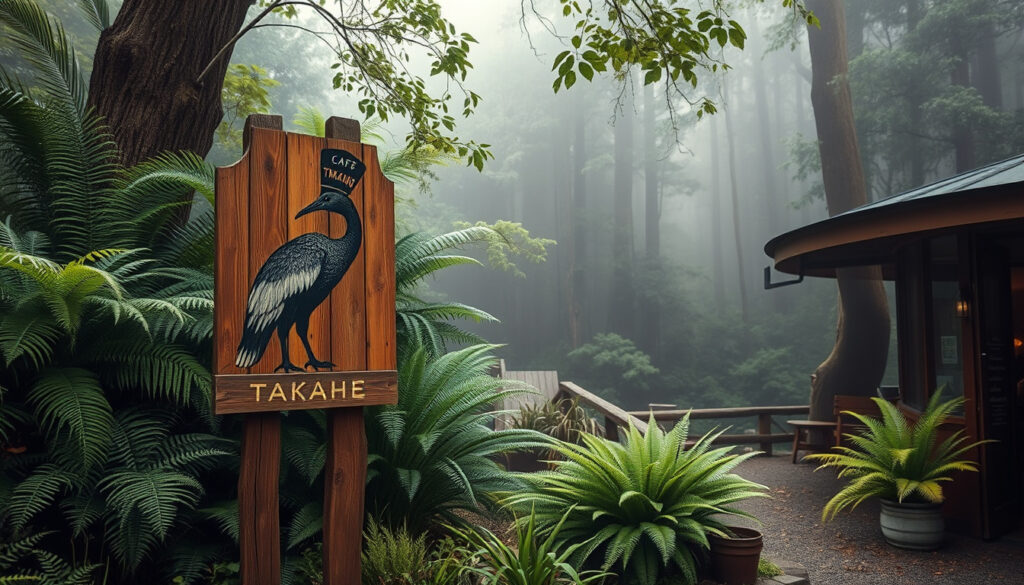
Sign of the Takahe: History, Cafe & Rare Bird Story
Most people driving up Hackthorne Road recognise the castle-like Sign of the Takahe, but few know the story behind its name — or the rare flightless bird it honours. The building, started in 1918, has survived earthquakes and become a beloved cafe and wedding venue.
Year built: 1918 · Architectural style: Neo-Gothic · Current use: Cafe and wedding venue · 2023 refresh: Lower Grounds cafe renovation
Quick snapshot
- Construction began in 1918 (Wikipedia, online encyclopedia)
- Listed as Category 1 historic place (Heritage New Zealand via Wikipedia)
- Coffee and meals served at Lower Grounds cafe (Sign of the Takahe official website)
- Exact reason for choosing the takahē name is speculated but not definitively documented.
- 1918: Construction begins (Wikipedia)
- 2011: Earthquake damage (Wikipedia)
- 2017: NZ$2.8M restoration completed (Otago Daily Times, regional newspaper)
- 2023: Lower Grounds cafe renovation (Otago Daily Times, regional newspaper)
- Continues as a working wedding and function venue (Sign of the Takahe official website)
Seven key facts about the Sign of the Takahe, one pattern: the building is a mix of heritage, hospitality, and conservation symbolism.
| Attribute | Details |
|---|---|
| Year built | 1918 (Wikipedia, online encyclopedia) |
| Architect | James G. Collins (GPSmyCity, travel guide) |
| Architectural style | Neo-Gothic (Wikipedia, online encyclopedia) |
| Heritage listing | Category 1 – Heritage New Zealand (Wikipedia, online encyclopedia) |
| Address | 200 Hackthorne Road, Christchurch 8022 (Sign of the Takahe official website) |
| Phone | 03 332 4052 (Sign of the Takahe official website) |
| Website | signofthetakahe.co.nz (Sign of the Takahe official website) |
Why is it called the Sign of the Takahe?
The building’s name origin
- The name honours the takahē, a rare flightless bird native to New Zealand (GPSmyCity, travel guide).
- Harry Ell, the Christchurch councillor and MP who began the project, is said to have chosen the name to reflect the bird’s uniqueness (Wikipedia, online encyclopedia).
Connection to the rare takahē bird
- The takahē was thought extinct for 50 years before being rediscovered in 1948 in the Murchison Mountains (Wikipedia, takahē article).
- Ell’s vision of a Dickensian-style rest house aligned with the bird’s rarity: both the building and the bird are one-of-a-kind in their own ways.
The name is a deliberate nod to New Zealand’s natural heritage, but the exact personal reason Harry Ell chose the takahē over other native birds has never been recorded.
The implication: the building’s name ties it to a species that was thought extinct — adding a layer of irony and hope.
Is there a cafe at Sign of the Takahe?
Lower Grounds cafe
- Yes, the cafe operates as Lower Grounds and underwent a refresh in 2023, described as having an “olde world feel” (Otago Daily Times, regional newspaper).
- The cafe is open for breakfast and lunch, serving coffee, cabinet food, hot meals, and a special kids’ menu (The Press, Christchurch daily newspaper).
Menu and atmosphere
- Expect a medieval castle setting: swords, armour, heraldry, and neo-Gothic stonework (Sign of the Takahe official website).
- The cafe is open to the public without reservation, making it an accessible spot for locals and tourists.
The 2023 refresh signals that the council is investing in the venue’s non-wedding appeal, turning a heritage building into a daily destination for Christchurch residents.
The pattern: the cafe renovation broadens the venue’s reach beyond weddings, making it a regular part of the city’s food scene.
What is the Sign of the Takahe House?
Building architecture
- It is a neo-Gothic stone building, originally planned as tearooms and a rest stop for tourists (Otago Daily Times, regional newspaper).
- The design by James G. Collins incorporates castle-like features: battlements, Tudor-style windows, and a grand stone entrance.
Heritage listing
- Listed as a Category 1 historic place by Heritage New Zealand (Wikipedia, online encyclopedia).
- The building is also a prominent landmark in the Port Hills area, visible from much of Christchurch.
What this means: the Sign of the Takahe is not just a pretty building — its heritage status protects it for future generations.
What is the story of the Takahe?
Rediscovery after presumed extinction
- The takahē (Porphyrio hochstetteri) was considered extinct for 50 years until rediscovered by Dr Geoffrey Orbell in 1948 in the Murchison Mountains (Wikipedia, takahē article).
- Before that, the last confirmed sightings were in 1898.
Conservation efforts
- Today the species is still critically endangered, with a population of fewer than 500 birds managed by the Department of Conservation (Wikipedia, online encyclopedia).
- Intensive predator control and translocation programmes have been key to their survival.
The rediscovery of the takahē is one of New Zealand’s greatest conservation stories — a bird that evaded extinction and now stands as a living symbol of what focused stewardship can achieve.
— Wikipedia, takahē article (online encyclopedia)
The catch: the building named after a presumed-extinct bird now celebrates a species that made a comeback.
What does the Takahe symbolize?
Māori cultural significance
- In Māori culture, the takahē represents mana (prestige) and kaitiakitanga (guardianship) (Wikipedia, takahē article).
- The bird features in traditional stories as a guardian of the forests.
Conservation symbol
- The takahē has become an emblem of New Zealand’s unique biodiversity and the success of conservation interventions (Wikipedia, online encyclopedia).
- The bird’s image appears on the Sign of the Takahe’s signage and marketing, connecting the venue directly to this national story.
The building was named after a bird that was believed extinct at the time — a name that reflected rarity, not survival. Decades later, the bird’s comeback gives the name a hopeful second meaning.
The implication: the venue’s name now carries a double meaning — rarity and resilience.
Timeline
- 1918 — Construction begins under Harry Ell (Wikipedia, online encyclopedia)
- 1920 — Part opens as Tram Terminus Rest House (Otago Daily Times, regional newspaper)
- 1934 — Harry Ell dies before the building is finished (Otago Daily Times, regional newspaper)
- 1942 — Christchurch City Council buys the building (Wikipedia, online encyclopedia)
- 1948 — Building completed; opened to the public in 1949 (Wikipedia, online encyclopedia)
- 2011 — Damaged in February Canterbury earthquake (Wikipedia, online encyclopedia)
- 2017 — NZ$2.8 million restoration completed (Otago Daily Times, regional newspaper)
- 2019 — Venue reopens after restoration (Wikipedia, online encyclopedia)
- 2023 — Lower Grounds cafe refresh (Otago Daily Times, regional newspaper)
The pattern: from a rest house to a wedding venue, the building has repeatedly adapted to survive.
Clarity assessment
Confirmed facts
- Year built: 1918 (Wikipedia, online encyclopedia)
- Architect: James G. Collins (GPSmyCity, travel guide)
- Heritage listing: Category 1 (Heritage New Zealand via Wikipedia)
- Cafe open as Lower Grounds as of 2023 (Sign of the Takahe official website)
What’s unclear
- Exact reason for choosing the takahē name (speculated but not definitively documented)
What this means: most key details are well-documented, but the name origin remains a small historical gap.
Voices on the venue
The building was intended to replicate a Dickensian inn, with its turrets, stone walls and leadlight windows evoking an old-world feel.
— Heritage New Zealand, via Wikipedia (heritage authority)
The cafe now has an ‘olde world feel’ after the 2023 renovation, with cabinet food and a warm atmosphere.
— Otago Daily Times, regional newspaper
The takeaway: both heritage experts and local journalists agree the building’s character is its strongest asset.
What this means for visitors
The Sign of the Takahe is more than a pretty building. It’s a working cafe, a wedding venue, and a living piece of conservation history — all wrapped in neo-Gothic stone. For locals considering a weekend coffee or couples planning a wedding, the choice is clear: this venue delivers atmosphere, heritage, and a story you won’t find anywhere else in Christchurch.
Related reading: Business for Sale Christchurch · Kiwi Valley Farm Park
Frequently asked questions
What is the address of the Sign of the Takahe?
200 Hackthorne Road, Cashmere, Christchurch 8022 (Sign of the Takahe official website).
What are the cafe opening hours?
Lower Grounds cafe is open for breakfast and lunch; exact hours are published on the venue’s Facebook page and official website.
Is there parking available at the venue?
Yes, on-site parking is available for guests.
Can I host a private event or wedding at the Sign of the Takahe?
Yes, the venue is regularly used for weddings and functions (Sign of the Takahe official website).
How many guests can the venue accommodate?
The indoor and outdoor spaces can accommodate up to 150 guests (Sign of the Takahe official website).
Is the cafe open to the public without a reservation?
Yes, the cafe welcomes walk-in customers.
How do I book a tour of the historic building?
Contact the venue directly via phone (03 332 4052) or email info@signofthetakahe.co.nz.
More related posts
 Bed with Drawers NZ: Compare Sizes and Retailers
 Us Dollar to Nz Dollar – Live Rate, Chart & Forecast
 When Is the Next Blood Moon NZ – Exact Date, Times, Tips
 BestCasinosRank.online NZ: Verified Facts & Unclear Details
 Best Apps for Health 2026: Top Chronic Condition Picks
 Apple Watch SE 40mm Review: Is It Worth Buying in Ireland
 Valentines Gifts for Him: Practical Ideas He’ll Actually Use
 Sugar Free Chocolate NZ: Best Picks at Countdown & More
