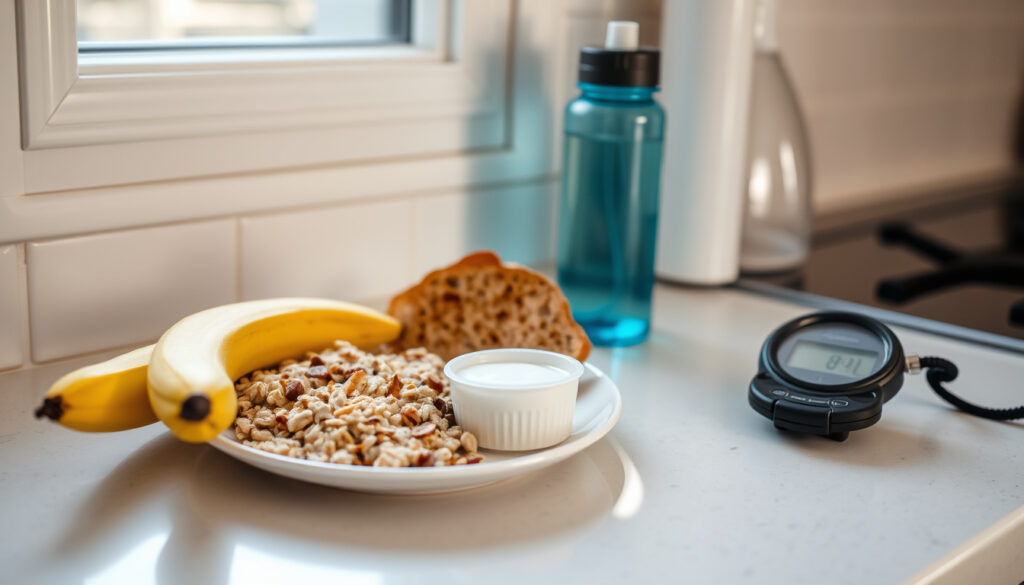
What Is the Best Pre Workout Food? Timing, Snacks & Meals
Anyone who’s ever stood in front of the fridge wondering if that banana and peanut butter will carry them through a tough workout knows the feeling. The question of what to eat before exercise isn’t just about calories—it’s about timing, composition, and your specific goal.
Optimal pre-workout eating window: 1–3 hours before exercise ·
Ideal pre-workout snack calories: 150–300 calories ·
Carbohydrate recommendation per Kg of body weight: 1–4 g/kg, 1–4 hours before ·
Protein recommendation pre-workout: 0.15–0.25 g/kg ·
Common pre-workout food: Banana with peanut butter
Quick snapshot
- Carbohydrates before exercise improve performance (Healthline (established health media))
- Protein pre-workout aids muscle protein synthesis (NIH research database)
- High-fat meals delay gastric emptying and can cause discomfort (Healthline)
- Optimal exact timing varies from 30 minutes to 4 hours (Texas Health Resources (healthcare provider))
- Whether 2 bananas are ideal depends on individual calorie needs and glucose response (Healthline)
- Effect of pre-workout caffeine on fat burn remains mixed (Healthline (established health media))
- General guideline: 1–2 g carbs per kg body weight 1–2 hours before exercise (Texas Health Resources)
- Smaller snack only 30–60 minutes before: quick carbs, minimal fat and fiber (Hammer Nutrition Europe (sports nutrition specialist))
- For weight loss: low-calorie, high-volume options like Greek yogurt with fruit (Healthline)
- For muscle gain: carb + protein combos such as oatmeal with whey protein (NIH research database)
Here are the key pre-workout nutrition figures at a glance.
| Factor | Recommendation |
|---|---|
| Ideal pre-workout eating window | 1–3 hours before exercise |
| Recommended macronutrient ratio | 3:1 or 4:1 carbs to protein |
| Pre-workout snack calorie range | 150–300 calories |
| Best single food for quick energy | Banana |
| Common mistake | Eating a large meal too close to workout |
What should I eat 30 minutes before a workout?
When you’re short on time, the key is choosing rapidly digestible carbohydrates that won’t sit heavy. The Texas Health Resources (healthcare provider) recommends 1–2 grams of carbohydrate per kilogram of body weight if you’re eating 1–2 hours out, but for just 30 minutes before, you want a smaller dose—around 15–30 grams of carbs.
What are quick pre-workout snacks?
- A medium banana (~27 g carbs) with a tablespoon of peanut butter (Healthline (established health media))
- Rice cakes with a smear of almond butter
- A small apple or a handful of dates
What foods digest quickly?
The ideal 30-minute snack has low fat and low fiber to avoid bloating. Hammer Nutrition Europe (sports nutrition specialist) emphasizes simple carbohydrates and minimal fat. Refined grains (white bread, white rice) and ripe fruit work well because they break down fast.
Can I eat fruit 30 minutes before exercise?
Yes, fruit is excellent. Bananas are the most studied pre-workout fruit because they provide steady glucose availability without a sharp insulin spike. YMCA of Middle Tennessee (community fitness organization) notes that a medium banana is “perfectly sized” for a quick energy boost before moderate activity.
Eating less than 30 minutes before high-intensity training may trigger nausea or cramping in sensitive individuals, Healthline cautions. Test your tolerance during low-stakes sessions.
The implication: For early-morning or fasted workouts, a 30-minute carb-only snack is a pragmatic choice, but it’s not sufficient for extended high-intensity sessions.
What should I eat 2 hours before my workout?
A two-hour window gives you room for a balanced meal that includes both carbohydrates and protein. According to the International Society of Sports Nutrition (ISSN) position stand (NIH research database), a meal 2–3 hours before exercise should provide 1–2 g/kg of carbohydrate and 0.15–0.25 g/kg of protein.
What is a balanced pre-workout meal?
- Grilled chicken (4 oz) with 1 cup of brown rice and steamed broccoli
- Greek yogurt (200 g) with a cup of mixed berries and a drizzle of honey
- Whole-wheat turkey sandwich with avocado slices
How much protein should I have?
The ISSN paper recommends 0.15–0.25 g of protein per kilogram of body weight in the pre-exercise window. For a 70 kg person, that’s about 10–17 g of protein—easily achieved with a serving of Greek yogurt or a scoop of whey protein.
Examples of 2-hour pre-workout meals
Texas Health Resources suggests a 400–600 calorie meal (Gymnasetips, fitness resource) that balances all macronutrients but keeps fat moderate to avoid slowing digestion.
A complete meal 2 hours out maximizes glycogen stores and provides sustained energy for sessions lasting longer than 60 minutes, as ISSN research confirms for exercise above 70% VO₂max.
The trade-off: You get better fuel but need to plan ahead. If your schedule doesn’t allow a 2-hour gap, a 30-minute snack is still far better than nothing.
Is 2 bananas good pre-workout?
Bananas are a go-to pre-workout fruit because they’re packed with carbohydrates and potassium. Two bananas supply roughly 60 g of carbs and 540 mg of potassium, supporting both energy and muscle contractions.
What nutrients do bananas provide?
A medium banana contains about 27 g of carbohydrates, 1.3 g of protein, and 422 mg of potassium. Eaten together, two bananas deliver a substantial carbohydrate load similar to a sports gel but with additional fiber and micronutrients.
Are 2 bananas too many?
For most active people, two bananas are fine. However, if you’re trying to lose weight or have blood sugar concerns, you may want to stick to one. Healthline notes that individual tolerance varies—some feel sluggish after too much fruit sugar before intense exercise.
What are alternatives to bananas?
- Apple slices with a teaspoon of peanut butter
- Medjool dates (2–3 pieces)
- A small whole-grain tortilla with honey
The pattern: Two bananas work as a solid pre-workout for moderate sessions, but they’re not a complete meal. Pair them with a protein source if your workout is resistance training.
What food to avoid before a gym?
Even with the best intentions, the wrong pre-workout meal can sabotage your performance. Digestion takes blood flow away from working muscles, and certain foods are known to cause discomfort.
Why avoid high-fat foods before exercise?
High-fat foods like fried chicken, creamy sauces, or heavy cheeses slow gastric emptying. Healthline explains that fat delays the delivery of carbs to working muscles, which can leave you feeling lethargic.
Should I skip fiber-rich foods?
Fiber is great for gut health, but too much before a workout can cause bloating and gas. Avoid large portions of legumes, raw cruciferous vegetables (broccoli, cauliflower), or bran cereals in the 2-hour window before training.
What about spicy or acidic foods?
Spicy dishes or acidic foods (tomato sauce, citrus) may trigger acid reflux or heartburn, especially during high-impact movement. If you’re prone to reflux, keep pre-workout meals neutral.
Some guides caution that eating less than 30 minutes before high-intensity training may increase nausea or cramping in sensitive individuals (Healthline).
The takeaway: The worst pre-workout foods are those that compete with your muscles for blood flow. Stick to low-fat, low-fiber, neutral-tasting options close to exercise time.
What is the best pre workout food?
The “best” pre-workout food depends on three factors: your goal (weight loss vs. muscle gain), your timing (30 min vs. 2 hours), and your personal digestion tolerance. Let’s break it down by objective.
Best pre-workout food for weight loss
- Greek yogurt (150 g) with a handful of blueberries (~150 calories)
- A small protein smoothie with spinach, half a banana, and unsweetened almond milk
- High volume, low calorie: you want satiety without excess energy.
Best pre-workout food for muscle gain
- Oatmeal (1/2 cup dry) with a scoop of whey protein (~350 calories)
- Whole-grain turkey sandwich with a banana (~400 calories)
- Emphasis on protein + carbs to support muscle protein synthesis.
Best pre-workout food for men
Men typically have higher calorie and protein needs. For bulking, a 400–500 calorie meal with 30–40 g of protein and 60–80 g of carbs is reasonable. Options include a chicken breast with sweet potato and a side of fruit.
Pre-workout meal for women aiming for weight loss
Women often benefit from portion-controlled, nutrient-dense meals. A 200–300 calorie combination of Greek yogurt (protein) and berries (carbs) provides steady energy without overloading calories.
Across all goals, the common thread is adequate carbohydrates for energy and moderate protein for muscle preservation. ISSN nutrient timing research confirms that carbohydrate intake before exercise improves performance, especially for higher-intensity sessions lasting over 90 minutes.
What this means: There is no single “best” food—only the best food for your specific combination of timing, intensity, and body composition goals.
Two timing strategies, one pattern: earlier windows allow more food volume and protein; tighter windows require simplicity.
| Factor | 30 minutes before | 2 hours before |
|---|---|---|
| Carbohydrate intake | 15–30 g (quick carbs) | 40–80 g (complex + simple) |
| Protein (for a 70 kg person) | 0–5 g | 10–17 g |
| Calorie range | 100–200 | 300–600 |
| Food examples | Banana, rice cakes, apple | Chicken & rice, Greek yogurt & berries |
| Best suited for | Morning fasted gym, short sessions | Extended endurance, heavy lifting |
| Risk of GI discomfort | Higher if overeaten or wrong foods | Lower if well-tolerated |
Upsides of pre-workout nutrition
- Improved performance and endurance (NIH research database)
- Better glycogen storage for high-intensity work
- Reduced muscle breakdown from protein intake
- Faster recovery post-exercise
Downsides of pre-workout nutrition
- Risk of GI upset if food is chosen poorly or too close to training
- Extra calories may hinder weight loss if not accounted for
- Requires planning ahead
- Some people perform better partially fasted (individual variance)
How to build your best pre-workout meal
Follow these steps to dial in your pre-workout nutrition with confidence.
- Step 1: Determine your timing. If you have 2+ hours, plan a balanced meal. If only 30 minutes, choose a small snack.
- Step 2: Pick your carb source. For quick energy, go with fruit or toast. For sustained output, use oats, rice, or whole grains.
- Step 3: Add protein. 10–20 g is enough for most. Greek yogurt, an egg, or a smoothie with protein powder work.
- Step 4: Minimize fat and fiber. Save the avocado and broccoli for your post-workout meal.
- Step 5: Hydrate. Water is non-negotiable; caffeine may help but not required.
- Step 6: Test and adjust. What works for a friend may not work for you. Experiment during low-stakes training.
What we know and what remains uncertain
Confirmed facts
- Eating carbohydrates before exercise improves performance (Healthline)
- Protein pre-workout aids muscle protein synthesis (NIH research database)
- High-fat meals delay gastric emptying and can cause discomfort (Healthline)
- Individual tolerance varies; timing and quantity must be personalized
What’s unclear
- Optimal exact timing for everyone – ranges from 30 minutes to 4 hours (Texas Health Resources)
- Whether 2 bananas are universally good – depends on individual calorie needs and glucose response
- Effect of pre-workout caffeine on fat burn is mixed
Expert perspectives on pre-workout nutrition
“A balanced pre-workout meal should include both carbohydrates and protein. You want the carbs for immediate fuel and the protein to help your muscles repair and grow.”
— UCLA Health dietitian, via Healthline (established health media)
“If you’re looking for a simple, whole-food pre-workout snack, you can’t beat a banana with a spoonful of peanut butter. It’s portable, easy to digest, and gives you sustained energy.”
— Healthline nutrition editor, via Healthline
“For most people, whole foods are perfectly adequate before a workout. Supplements like pre-workout powders can help, but they’re not necessary for great performance.”
— BBC Good Food reviewer, via Healthline
Your pre-workout meal is a tactical decision, not a routine. For the person training early in the morning with only 30 minutes to spare, a banana or rice cake beats an empty stomach every time. For the athlete preparing for a two-hour lifting session, the difference between a small snack and a full meal 2 hours out can determine whether they hit a personal record or bonk halfway through. The choice is clear: match your food to your timing and goal, and you’ll get the best out of every session.
us.myprotein.com, winsportsus.com, caloria.tech, ultrafitmealz.com, reptrackpro.org, gymnasetips.com
Frequently asked questions
How long before a workout should I eat?
Most guidelines recommend eating a full meal 2–3 hours before exercise, and a small snack 30–60 minutes before if needed (Healthline). The exact timing depends on digestion tolerance and meal size.
What is the best pre-workout snack for weight loss?
Greek yogurt with berries or a small protein smoothie (150–200 calories) provides protein and carbs without excess energy.
Can I drink coffee before a workout?
Yes, moderate caffeine (3–6 mg/kg) can enhance performance and fat oxidation. However, effects vary and avoid if it causes stomach upset.
What happens if I work out on an empty stomach?
Exercising fasted may increase fat oxidation short-term but can lead to reduced performance and muscle breakdown in longer sessions (NIH research database).
Is it okay to eat a heavy meal before lifting weights?
A heavy meal high in fat or fiber increases risk of cramping and sluggishness. Stick to moderate portions 2+ hours before heavy lifting.
What should I eat before a morning cardio session?
If you can’t eat 1–2 hours prior, a small piece of fruit or half a banana 20–30 minutes before is enough for moderate cardio.
Do I need protein before a workout?
Protein pre-workout is beneficial for muscle protein synthesis, but carbs are the primary fuel. A small amount of protein (10–15 g) can help.
More related posts
 Wellington Airport Arrivals and Departures – Live Status
 Sausages in Air Fryer NZ: Cooking Times, Tips & Common Mistakes
 Slow Roast Lamb Leg – Foolproof Timing for Tender Results
 When Is the Full Moon? 2026 Calendar & Phases (Dublin)
 TV3 on Demand NZ: Watch ThreeNow Online Abroad (2025 Guide)
 Calculate How Much House You Can Afford by Income
 The Warehouse Blenheim Road: Hours, Contact & Location
 Property Brokers Te Awamutu: Local Real Estate Guide
