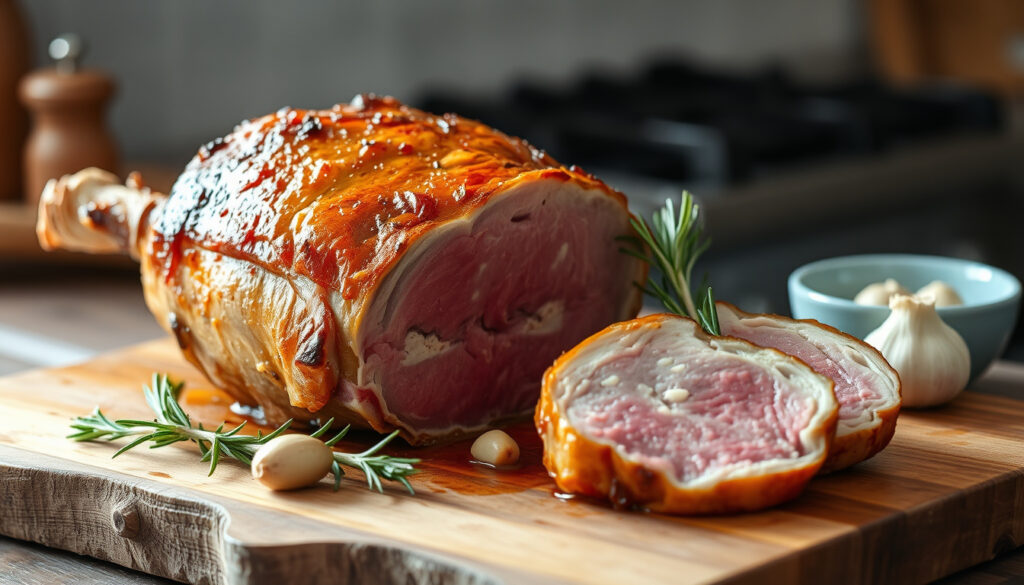
Slow Roast Lamb Leg – Foolproof Timing for Tender Results
Slow roasting transforms a bone-in lamb leg into tender, pull-apart meat with minimal effort. The low-and-slow approach breaks down connective tissue, infuses aromatic flavors throughout the cut, and yields restaurant-quality results at home.
A properly executed slow roast requires careful attention to temperature, timing, and preparation. Whether feeding a gathering of six or eight, this method delivers consistent results that justify the longer cook time.
How to Slow Roast Lamb Leg
The slow roasting method centers on patience. Rather than high heat that firms the exterior while leaving the interior raw, sustained low temperatures allow the lamb to cook evenly from edge to center. This technique proves especially effective for bone-in cuts, where the bone acts as a natural heat conductor and flavor anchor.
Begin by preheating the oven to 170°C (335°F) with fan settings adjusted to 150°C. Place whole garlic cloves, sliced onion, and rosemary sprigs directly in the roasting pan to create an aromatic foundation. The lamb sits atop these aromatics, absorbing their flavors as moisture escapes and redistributes during the extended cook.
Let the lamb rest at room temperature for one hour before roasting. This step ensures more even cooking throughout the cut and reduces total oven time needed.
Essential Equipment and Setup
A heavy-bottomed roasting pan works best to distribute heat uniformly. A food thermometer proves indispensable for monitoring internal temperature without guessing. The pan should accommodate the lamb comfortably, leaving space for roasting vegetables or gravy ingredients.
Season the exposed surfaces generously with salt and pepper. Drizzle olive oil over the lamb and rub it in thoroughly. Some cooks prefer making 25 to 30 small slits across the surface and inserting slivered garlic cloves or herb sprigs directly into the meat.
Trim excess fat if desired, but retain a layer for moisture. Bone-in legs render fat naturally during the slow cook, and this rendered fat forms the foundation for pan gravies. Boneless cuts should remain netted until fully cooked, then have the netting removed with shears.
At-a-Glance Overview
Key Insights for Best Results
- Low, sustained heat tenderizes connective tissue for pull-apart texture
- Cover tightly with foil during the first portion to retain moisture
- Uncover near the end to brown the exterior and develop caramelized crust
- Rest 30 to 90 minutes loosely covered before carving
- Use a probe thermometer to eliminate guesswork
- Bone-in cuts yield superior flavor and better gravy
Temperature and Timing Snapshot
| Weight | Time | Oven Temp | Internal Temp |
|---|---|---|---|
| 1.5–2 kg (3.3–4.4 lb) | 3.5–4 hours | 150°C fan / 170°C conventional | 63–71°C (medium to well-done) |
| 2–2.5 kg (4.4–5.5 lb) | 4–4.5 hours | 150°C fan / 170°C conventional | 79°C for fall-apart texture |
| 2.5–3 kg (5.5–6.6 lb) | 5–5.5 hours | 150°C fan / 170°C conventional | 79°C for fall-apart texture |
| 3+ kg (6.6+ lb) | 5.5–6 hours | 150°C fan / 170°C conventional | 79°C for fall-apart texture |
What Temperature and Time for Slow Roast Lamb Leg
The relationship between temperature and time determines the final texture of your lamb. Three primary temperature ranges appear consistently across reputable sources, each producing distinctly different results.
Standard Low-and-Slow Method
At 170°C (335°F) conventional or 150°C fan, plan for approximately 30 to 40 minutes per pound, which translates to 30 to 45 minutes per kilogram. A 2 to 2.5 kilogram leg reaches optimal tenderness in four to four and a half hours. RecipeTinEats confirms this timing produces consistently tender results for this weight range.
The Andy Cooks approach emphasizes starting with foil coverage for the majority of cooking, then removing it for the final 20 to 45 minutes at 200°C (390°F) to develop a browned exterior without drying the interior.
Doneness Temperature Guide
| Doneness Level | Internal Temperature | Time per Pound (at 300–325°F) | Time per Kilogram |
|---|---|---|---|
| Medium Rare | 145°F / 63°C | 20 minutes | 45 minutes |
| Medium | 160°F / 71°C | 25 minutes | 55 minutes |
| Well-Done / Fall-Apart | 175°F / 79°C | 40 minutes | 90 minutes |
For the fall-apart texture most people seek from slow roasting, target 175°F (79°C) internal temperature. Kevin Is Cooking notes that this temperature ensures safe consumption while allowing collagen to fully convert to gelatin, creating that sought-after tenderness.
Alternative: Reverse Sear Method
The reverse sear approach begins at 120°C (248°F) for two to three hours until the internal temperature reaches 55°C (131°F). This slower start tenderizes without initial browning. Finish with a high-heat sear at 200°C (390°F) for the final 20 minutes to develop a crisp, caramelized crust.
The FDA minimum internal temperature chart establishes 145°F (63°C) as the baseline for lamb safety. However, slow roasting typically aims higher for texture, with 175°F (79°C) providing an extra margin of safety while achieving pull-apart results.
Bone-In versus Boneless Timing
The Mediterranean Dish emphasizes that bone-in legs require the full time range of four and a half to five and a half hours depending on size, while boneless cuts cook slightly faster at 20 to 40 minutes per pound. The bone contributes flavor and helps render fat that bastes the meat naturally throughout cooking.
Best Seasonings and Prep for Slow Roasted Lamb Leg
Seasoning simplicity often yields the best results. The slow roasting process naturally infuses flavor from aromatics in the pan, so complex marinades prove unnecessary. Focus instead on quality salt, pepper, fat, and strategic herb placement.
Classic Herb and Garlic Preparation
Garlic serves as the cornerstone of most slow roast lamb preparations. Whole cloves pressed into slits distribute their flavor throughout the meat during the extended cook. Rosemary sprigs scattered in the pan release their oils continuously, perfuming the meat as moisture escapes and recondenses. Family Savvy suggests creating 25 to 30 strategic slits for maximum garlic and herb integration.
Salt and pepper provide the essential foundation. Apply salt generously at least 30 minutes before cooking, or ideally one hour ahead, allowing it to penetrate the surface. Pepper adds depth without competing with the lamb’s natural flavor. Some cooks add dried oregano for Greek-style variations, though this remains optional.
What About Marinades?
Traditional marinades serve less purpose in slow roasting than in quick-cooking methods. The extended time allows pan aromatics to infuse continuously without the need for pre-treatment. Olive and Mango confirms that most recipes rely on these pan-based aromatics rather than extended marination.
Acidic marinades specifically prove unnecessary. The low temperatures and covered cooking environment already produce tender results without the chemical tenderizing effect of acids. Save the acid-based treatments for quicker cooking methods where surface caramelization matters more.
Layer aromatics beneath and around the lamb: sliced onion creates a bed, whole garlic cloves add sweetness as they caramelize, and rosemary sprigs contribute herbal notes. These elements also form the foundation for pan gravy.
Room Temperature Rest Before Roasting
Allow the lamb to rest at room temperature for approximately one hour before placing it in the oven. Salt Butter Smoke identifies this step as critical for even cooking throughout the cut. A cold lamb entering a hot oven creates temperature gradient issues that affect both timing accuracy and final texture.
Why Slow Roasting Makes a Difference
The science behind slow roasting explains why this technique produces such distinct results compared to conventional roasting. Lamb leg contains substantial collagen, a connective tissue that surrounds muscle fibers. At temperatures below 200°F (93°C), collagen gradually converts to gelatin, which melts into the meat and creates that characteristic fork-tender texture.
High heat methods skip this transformation. The exterior browns quickly while the interior remains chewy because collagen never converts properly. The slow approach ensures every part of the cut reaches the temperature needed for collagen conversion while maintaining enough moisture to keep the meat succulent.
Bone-in cuts benefit particularly from slow roasting. The bone acts as a heat radiator, cooking the meat closest to it more evenly while distributing fat as it renders. This natural basting effect explains why bone-in preparations consistently outperform boneless versions in both flavor and texture tests.
Common Mistakes to Avoid
Several recurring errors undermine slow roast results, and recognizing them helps ensure success.
Skipping the thermometer: Guessing doneness based on time alone leads to inconsistent results. Weight variations, oven calibration differences, and starting temperature all affect the final outcome. A probe thermometer eliminates this uncertainty.
Removing foil too early: Exposing the lamb to direct heat before the interior reaches desired temperature causes drying. Keep it covered for the majority of cooking, then remove for the final browning phase only.
Insufficient resting time: Cutting immediately after removing from the oven causes significant juice loss. The muscle fibers need time to relax and redistribute moisture. Rest loosely covered with foil for 30 to 90 minutes minimum.
Starting at high heat: Some cooks attempt to sear first then reduce temperature. This approach prevents the even, sustained collagen conversion that slow roasting provides. Begin at low temperature throughout.
Ignoring the size: A small 1.5 kilogram leg and a large 3+ kilogram leg require substantially different cook times. Always calculate timing based on weight rather than assuming all lamb legs behave identically.
Step-by-Step Cooking Timeline
- 1 hour before cooking: Remove lamb from refrigerator, season generously with salt and pepper, let rest at room temperature
- 30 minutes before cooking: Preheat oven to 170°C (335°F) conventional or 150°C fan; place aromatics (garlic, onion, rosemary) in roasting pan
- 0 minutes: Place lamb in pan, drizzle with olive oil, insert garlic slivers into slits if desired; cover tightly with foil
- After 3–4.5 hours (depending on size): Check internal temperature with probe thermometer; remove foil when within 20–30°F of target
- Final 20–45 minutes: Increase temperature to 200°C (390°F) uncovered; monitor for desired browning
- When target temperature reached: Remove from oven, tent loosely with foil, rest 30–90 minutes
- After resting: Carve against the grain for slices, or pull apart with forks for shredded presentation
Pair the finished lamb with Easy Appetizers for Parties to round out your menu, or consider serving alongside Anti Inflammatory Diet NZ-inspired roasted vegetables for a complementary meal.
What We Know and What Remains Unclear
| Established Information | Areas of Variation |
|---|---|
| 170°C (335°F) produces consistent results for most home ovens | Convection ovens may require temperature adjustments |
| 30–40 min/lb works for fall-apart texture in the 3–5 lb range | Extremely large cuts may need proportionally longer time |
| 175°F (79°C) internal ensures safe, tender results | Altitude affects boiling points and cooking times |
| Bone-in cuts outperform boneless for flavor | Individual oven calibration varies significantly |
| Resting 30–90 minutes prevents juice loss | Optimal rest time depends on cut size and ambient temperature |
| Foil covering retains moisture during primary cook | Exact timing for foil removal varies by preference |
Nutrition Profile of Slow Roasted Lamb Leg
A slow roasted lamb leg provides substantial nutritional value. A 100-gram serving of cooked lean lamb leg contains approximately 250 calories, 25 grams of protein, 16 grams of fat (with about 7 grams saturated), and zero carbohydrates. The protein content supports muscle maintenance and recovery.
Lamb leg also delivers significant amounts of vitamin B12, zinc, and iron. These nutrients support nervous system function, immune response, and oxygen transport respectively. The slow roasting process preserves these nutrients effectively, though added oil or seasonings affect the final nutritional profile.
Fat content varies substantially based on trim level. Leaner cuts reduce fat intake while retaining protein benefits. The rendered fat during slow cooking can be used for gravy, minimizing waste while adding flavor to accompanying vegetables.
Expert Perspectives on Low-Temperature Cooking
The reverse sear method fundamentally changes how we think about slow cooking. Starting low and finishing high gives you the best of both worlds: the tenderizing benefits of long, slow exposure to moderate heat, plus the textural contrast of a properly browned exterior.
This approach aligns with findings from USDA food safety research, which emphasizes that internal temperature measurement provides the most reliable indicator of doneness and safety regardless of cooking method.
The beauty of slow roasting lies in its forgiveness. Unlike quick-searing methods that demand precise timing, slow cooking rewards patience with consistently tender results even when timing varies slightly.
Summary and Practical Takeaways
Slow roasting a lamb leg represents one of the most reliable paths to impressive results with minimal active effort. The technique requires just a few key elements: a properly preheated oven at 170°C (335°F), a probe thermometer for accuracy, generous seasoning with salt and aromatics, and patience during the extended cook time that allows collagen to transform into gelatin.
Bone-in cuts consistently produce superior flavor and texture compared to boneless options. Foil coverage through the majority of cooking retains moisture, while final uncovered exposure develops the desirable browned exterior. Resting for at least 30 minutes before carving prevents juice loss and ensures each slice remains succulent.
For those following specific dietary approaches, slow roasted lamb leg fits naturally into various eating patterns. Its high protein content and nutrient density make it suitable for Anti Inflammatory Diet NZ recommendations, while the straightforward preparation appeals to hosts seeking Easy Appetizers for Parties to serve alongside.
Frequently Asked Questions
Can I use a frozen lamb leg for slow roasting?
Thaw completely in the refrigerator before cooking. A frozen leg cannot cook evenly through the slow roasting method, and the outer portions would overcook while the center remains cold. Plan for 24 to 48 hours of thawing time in the fridge depending on size.
Is pink lamb leg safe to eat?
The USDA establishes 145°F (63°C) as the minimum safe temperature for lamb. However, slow roasted lamb intended for fall-apart texture typically reaches 175°F (79°C), which eliminates any pink appearance. Use a thermometer rather than color as your guide.
Should I choose bone-in or boneless?
Bone-in provides superior results for slow roasting. The bone enhances flavor, aids even cooking, and contributes fat rendering that creates natural basting. Boneless works but requires slightly different timing and yields less flavorful gravy.
What if my oven runs hot or cold?
Oven thermometers reveal calibration issues. If your oven runs hot, reduce temperature by 10–15°C. If it runs cold, increase by the same amount. Always verify with a probe thermometer inserted into the thickest part of the lamb.
Can I add vegetables to the pan?
Potatoes, carrots, and onions work well when added during the final two hours of cooking. They absorb rendered fat and lamb juices, becoming flavorful accompaniments. Keep pieces similar in size to ensure even cooking.
How do I make gravy from the pan drippings?
Blend the rendered fat, caramelized aromatics, and any collected juices from the pan. Add a tablespoon of flour or cornstarch if thickening is needed. Simmer while stirring until the desired consistency is reached.
Can I use a slow cooker instead of an oven?
A slow cooker works but produces different results. Set it to low (90–100°C) for four to six hours with a small amount of liquid. The crust will be softer than oven-roasted versions, though the meat remains tender and shreddable.
How long do leftovers keep?
Refrigerate within two hours of cooking. Properly stored lamb leg keeps for three to four days. For longer storage, wrap tightly and freeze for up to three months. Reheat gently at low temperature to maintain texture.
More related posts
 Gulf Harbour Ferry Timetable 2025: Current Schedule, Fares & Tips
 New Swimming Pool Christchurch: Parakiore Opening & Prices
 Cast of Mufasa: The Lion King – Full Voice Actor List
 Anus Bleaching Products in Australia: Reviews & Safety
 When Is the Full Moon? 2026 Calendar & Phases (Dublin)
 How to Refund Steam Games: Policy & Limits
 Reduced to Clear Henderson: Guide to Quality, Safety, Savings
