How to Remove Gel Nail Polish at Home: Dermatologist’s Guide
Anyone who’s tried gel nails for more than a week already knows the frustration of watching that perfect manicure start to lift. But peeling or picking at the polish—tempting as it is—can strip away layers of your nail plate, leaving them thin and brittle. The American Academy of Dermatology (AAD) recommends a simple, safe method using acetone that protects your nails while getting the job done. Here’s what you need to know to remove gel polish without causing damage.
Most effective removal agent: Acetone (100% pure) ·
Average soak time: 10–15 minutes ·
Nail damage risk from peeling: Thins and weakens nail plate ·
Regular polish remover success rate: Ineffective on gel polish ·
Dermatologist recommendation: Soak off with acetone, do not pry
Quick snapshot
- Most effective and recommended by dermatologists (AAD).
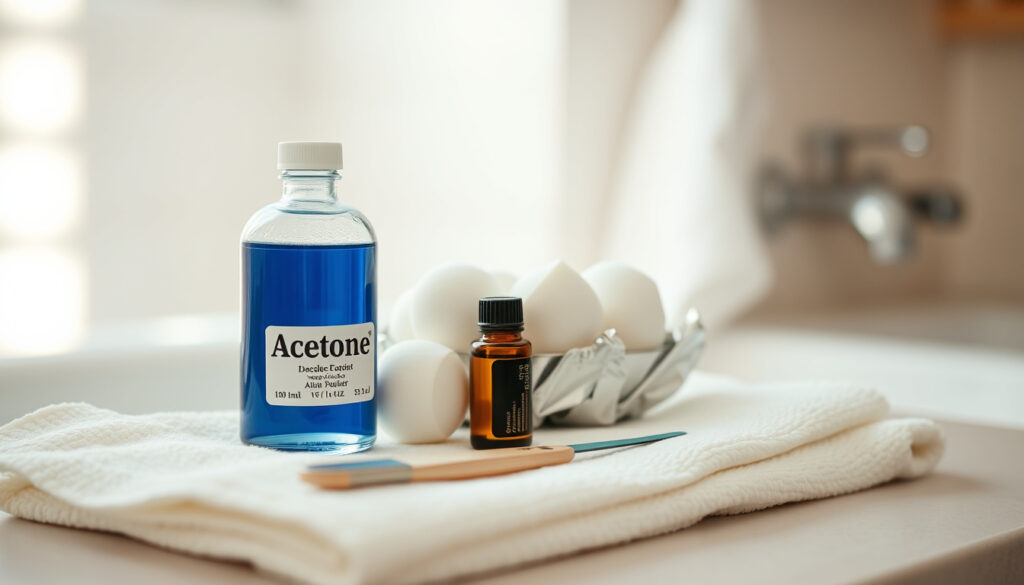
- Requires 100% acetone, cotton balls, and foil (Healthline).
- Soak for 10–15 minutes, then gently push off (AAD).
- Less effective; may require longer soaking (Healthline).
- Some use hot water or oil-based removers, but these are not reliable (Healthline).
- Risk of incomplete removal leading to scraping (BeautyNexusPro).
- Not recommended by dermatologists; only acetone is proven effective (AAD).
- Soaking in warm water may help if gel is already lifting, but does not dissolve intact polish (Healthline).
- Not reliable for full removal (Healthline).
- Vinegar, lemon juice, or toothpaste are not proven to remove gel polish (AAD).
- May damage nails or cause irritation (Healthline).
- No clinical evidence supports these methods (AAD).
The table below summarizes the key facts about gel polish removal.
| Fact | Detail |
|---|---|
| Acetone effectiveness | 100% pure acetone dissolves gel polish in 10–15 minutes (AAD). |
| Regular remover | Non-acetone removers cannot break down gel; only 5% of gel is removed (Healthline). |
| Peeling damage | Peeling off gel can remove up to 3 layers of the nail plate (AAD). |
| Dermatologist source | American Academy of Dermatology recommends acetone soak (AAD). |
| Safe frequency | Waiting 2–3 weeks between gel applications allows nails to recover (Healthline). |
How do you remove gel nail polish at home?
Step-by-step acetone soak method
- File the top layer. Gently buff the shiny top coat of each gel nail with a fine-grit file. This allows acetone to penetrate the cured polish (AAD).
- Protect your skin. Apply a thin layer of petroleum jelly around each nail—this shields cuticles and skin from acetone’s drying effects (Healthline).
- Soak cotton in acetone. Use 100% pure acetone. Dip a cotton ball or pad, then place it on the nail. Wrap each fingertip with a small piece of aluminum foil to hold the cotton in place (BeautyNexusPro).
- Wait 10–15 minutes. Set a timer. The acetone needs time to dissolve the gel. Avoid soaking longer than 15 minutes—prolonged exposure can dry out nails (AAD).
- Gently push off the gel. Remove the foil and cotton. Use a wooden cuticle stick (or a plastic pusher) to gently nudge the softened gel. If it doesn’t come off easily, rewrap for a few more minutes. Never pry or scrape (BeautyNexusPro).
- Wash and moisturize. Rinse hands with soap and water, then apply cuticle oil or a rich hand cream. Acetone strips natural oils, so hydration is crucial (Mylee).
Alternative non-acetone methods
Some products claim to remove gel polish without acetone, but they are far less effective. Healthline notes that a prolonged soak in acetone is the only reliable way to break down cured gel. Non-acetone removers may soften the top layer but leave most of the gel intact, leading to scraping and nail damage. If you have sensitive skin and want to avoid acetone, consider having gel removed professionally at a salon.
The acetone soak method is the industry standard for a reason: it works. But the real secret is patience. Rushing the process—by peeling or using metal tools—is what causes the damage, not the acetone itself.
What is the least harmful way to remove gel nail polish?
Why acetone is safe when used correctly
Acetone is a strong solvent, but UK government guidance states that low-level exposure from correct use of household products, including nail polish removers, is not expected to cause adverse health effects. When applied to the nail plate for a limited time and rinsed off, acetone is safe. The key is to limit contact to the nail itself and avoid soaking skin unnecessarily.
How to minimize damage during removal
- Use a cotton ball dipped in acetone on each nail rather than soaking fingers in a bowl—this reduces skin exposure (Healthline).
- Always protect cuticles with petroleum jelly or cuticle oil beforehand (Opal Beauty Australia).
- Never cut or peel away softened gel—use a wooden stick and gentle pressure (AAD).
- After removal, apply a nourishing cuticle oil and let nails rest for a few days before a new application (Essie UK).
The pattern: safe removal is about controlling exposure and avoiding mechanical force. Acetone is not the enemy—peeling is.
Can you remove gel polish with a regular nail polish remover?
Why regular remover fails
Regular nail polish remover (non-acetone) contains ethyl acetate or other mild solvents that can break down standard lacquer but not UV-cured gel. Gel polish is a polymer that has been hardened under a UV or LED lamp, making it chemically resistant to gentle solvents. The AAD specifically recommends acetone for gel removal—regular remover will not dissolve the gel.
When non-acetone remover might work
Some “gel polish removers” sold in stores contain a blend of acetone and other solvents, but they are often diluted and less effective. If you must use a non-acetone product, expect to soak for 30 minutes or more with minimal results. The trade-off: you risk drying out your nails without achieving full removal, then resort to scraping—which is the most damaging step.
| Factor | Acetone (100% pure) | Non-Acetone Remover | Hot Water |
|---|---|---|---|
| Effectiveness | Dissolves gel in 10–15 minutes (AAD) | Fails to break down cured gel (Healthline) | Ineffective for intact polish (Healthline) |
| Safety | Safe when used with skin protection (AAD) | Less drying but may still irritate | Low risk of chemical irritation, but no removal |
| Time required | 10–15 minutes | 30+ minutes with poor results | 15–20 minutes with no guarantee |
What this means: if you want to remove gel polish at home, acetone is the only proven option. The alternatives either waste time or damage nails.
What are common mistakes when removing gel nails?
Peeling off the gel
Peeling is the most common mistake—and the most damaging. The AAD warns that peeling off gel polish can remove layers of the nail plate, causing thinning, brittleness, and permanent damage. It’s tempting when the edges lift, but the cost is weakened nails that take months to recover.
Using metal tools aggressively
Metal cuticle pushers or scrapers can gouge the nail bed and cuticle, leading to infection and scarring. Always use a wooden cuticle stick or a plastic pusher, and never force the gel off. If it doesn’t slide, rewrap with acetone.
Skipping cuticle oil
After acetone exposure, nails are dehydrated. Skipping moisturizer leaves them dry, brittle, and prone to splitting. Opal Beauty Australia recommends applying cuticle oil immediately after removal and regularly for several days.
Rushing the process
Shortening the soak time or using a coarser file to speed up removal increases the risk of damage. The entire process should take no less than 15 minutes. Rushing leads to prying and scraping—the two actions that cause the most harm.
If you feel resistance when pushing off the gel, stop. Forcing it means the acetone hasn’t fully penetrated. Rewrap and wait another 3–5 minutes. Patience is the cheapest tool in your kit.
The lesson: every rushed removal is a gamble with your nail plate’s integrity.
Do gel nails ruin your natural nails?
Short-term vs long-term effects
Gel nails themselves do not damage the nail plate—the damage comes from improper removal. When applied correctly and removed with the acetone soak method, gel can be a safe cosmetic option. However, frequent application without breaks can lead to dehydration and thinning over time. Healthline notes that nails typically recover after a break from gel.
Role of improper removal
Over-filing during removal or peeling off the gel can strip the nail surface, causing permanent ridging or splitting. The AAD emphasizes that the removal process is the key risk factor. With proper technique, gel nails can be worn without long-term damage.
The catch: gel nails are not inherently harmful, but they demand careful maintenance. The decision to get gel is a trade-off between convenience and nail health.
Confirmed facts
- Acetone is the most effective solvent for gel polish (AAD).
- Improper removal (peeling, prying) causes nail damage (AAD).
- Soaking in acetone for 10–15 minutes is safe (AAD).
What’s unclear
- Long-term effects of repeated gel applications on nail health.
- Which alternative (shellac, dip powder, acrylic) is truly healthiest.
- Effectiveness of home remedies like vinegar or toothpaste.
- Regular nail polish remover does not work on gel – though widely accepted, some anecdotal claims suggest partial softening; more clinical data needed.
Expert and consumer perspectives
Acetone offers the most effective way to remove gel nail polish at home.
— Shari Lipner, MD, PhD, FAAD, board-certified dermatologist, via the AAD
After my first gel removal, my nails were yellow and peeled for weeks. I thought I’d ruined them, but it was the way I took it off—not the gel itself.
— Reddit user, r/IndianMakeupAddicts
Never peel or pick at gel polish. Doing so can damage the nail plate and lead to weakened nails.
— Essie UK
For anyone who loves gel nails, the choice is clear: learn the acetone soak method, or risk damaging your nails. The AAD’s guidance is straightforward, and the evidence backs it up. For the at-home enthusiast, the investment is 15 minutes and a bottle of pure acetone. For the salon-goer, the same principle applies—insist on proper removal. Your nails will thank you.
Related reading: Can Body Wash Be Used as Hand Wash? Facts & Tips · How to Stay Young: Science-Backed Anti-Aging Tips
nailicy.com, wikihow.com, scienceinsights.org, keeponhome.com
Frequently asked questions
How long does it take to remove gel nail polish?
With the acetone soak method, the process takes about 15–20 minutes total: 10–15 minutes of soaking plus a few minutes for gentle pushing off. If the gel is thick or old, you may need an additional 5 minutes.
Can I use vinegar to remove gel polish?
No. Vinegar is not a solvent for cured gel polish. There is no evidence that vinegar, lemon juice, or other kitchen ingredients can dissolve gel. Stick to acetone.
Do I need to buff my nails before removal?
Yes—lightly buffing the shiny top coat with a fine-grit file helps acetone penetrate the gel. Avoid over-buffing, which can thin the nail plate.
Is it safe to remove gel polish at home?
Yes, when done correctly. Follow the AAD’s steps: file the top layer, protect skin with petroleum jelly, use 100% acetone, soak for 10–15 minutes, and gently push off. Never peel or pry.
Can I reuse the same acetone for multiple nails?
Yes. Acetone can be reused for several fingers within the same session. However, if it becomes cloudy or contains gel residue, replace it with fresh acetone for the next use.
What should I do if my nails feel weak after removal?
Apply cuticle oil and a strengthening base coat. Let your nails breathe for a few days before reapplying gel. If weakness persists, take a longer break from all nail enhancements.
How often should I take a break from gel nails?
Dermatologists recommend a break of at least 2–3 weeks after every 2–3 applications to allow the nail plate to rehydrate and recover.
More related posts
 Moana Pasifika vs Chiefs 2026: Results, Stream & Tickets
 Stoddard Road Medical Centre: Services, Costs & Walk-In Info
 Anti Inflammatory Diet NZ – Key Foods and Benefits
 Self Raising Flour Recipe: Ratio & Grams Guide
 Toll Road Payment NZ: How to Pay Online & Avoid Late Fees
