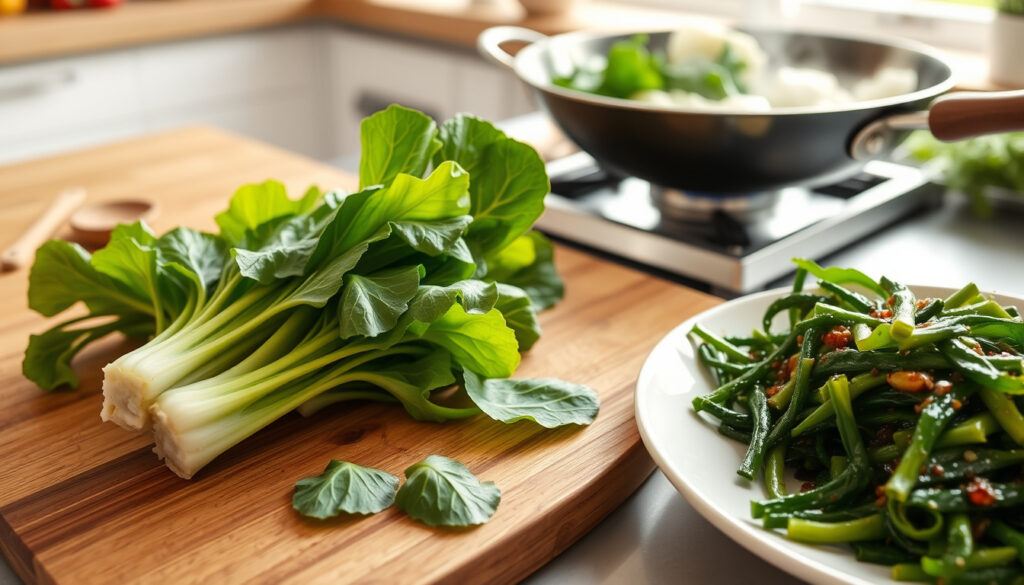
How to Cook Bok Choy: Easy Methods, Tips & Nutrition
You’ve probably stared at a bunch of bok choy at the market, wondering how to turn those crisp white stems and dark green leaves into something delicious without turning them into mush. The secret is all in the timing—most methods take under five minutes, and the difference between a perfect crunch and a limp mess is just a few seconds.
Average cooking time: 3–5 minutes ·
Calories per 100g: 13 ·
Vitamin C (per 100g): 45% of Daily Value ·
Common cooking methods: Stir-fry, steam, sauté, boil ·
Seasonal availability: Year-round
Quick snapshot
- Quick, high heat
- Preserves crunch
- Pair with garlic and ginger
- Retains most nutrients
- Tender stems
- Ready in 2-3 minutes
- Fastest method
- Leaches some nutrients
- Good for soups
- Medium heat
- Adds flavor with oil
- Works with large heads
Five facts help you shop and cook with confidence.
| Label | Value |
|---|---|
| Cooking time | 3–5 minutes |
| Calories per 100g | 13 |
| Vitamin C content | 45% of Daily Value |
| Common pairings | Garlic, ginger, soy sauce |
| Best storage | Refrigerate in a plastic bag for up to 5 days |
What are some ways to cook bok choy?
Stir-frying bok choy
- Stir-frying uses medium-high to high heat with aromatics like garlic and ginger. According to Beyond Kimchee (food blog with Korean-inspired recipes), the leaves are added last so they only wilt briefly, typically in 1 to 2 minutes.
- Another approach, shared by Cooking with Kendra (home cooking resource), recommends searing the stems first for about 2 minutes before flipping and adding the leaves and sauce.
- Some chefs use a water-assisted method: add a small splash of water or stock, then cover briefly to steam for 40 to 50 seconds, as described in Made With Lau (Chinese cooking education site).
Steaming bok choy
- Steaming keeps the vegetable tender-crisp. Livestrong (health and nutrition publisher) notes that a steamer basket over boiling water for 3 to 5 minutes is standard.
- RecipeTin Eats (popular recipe developer) suggests a much faster version: steam for just 45 seconds in a covered pan with a little water.
- Water must stay below the basket so the bok choy cooks in steam, not hot water, per Livestrong’s advice.
Boiling bok choy
- Boiling is the fastest method but risky. According to Superfood Profiles (nutrition-focused reference), the vegetable can lose texture if overcooked, and nutrients leach into the water.
- Blanching in boiling water before stir-frying is a hybrid technique used in some Chinese dishes, as noted by Woon Heng (food blog focused on Asian recipes).
Sautéing bok choy
- Sautéing over medium heat with oil adds flavor and works well for larger heads. The stems are typically cut into pieces and cooked first, then leaves added later for even tenderness, a technique highlighted by The Italian Chef (home cooking blog).
Bok choy for soup and ramen
- For soups and ramen, bok choy is often added in the last 2 minutes of cooking so the stems stay firm. Harvest to Table (urban gardening and cooking guide) notes that whole or shredded bok choy can be added directly to broth and steamed in about 4 to 5 minutes.
The difference between a perfect crunch and a soggy leaf comes down to whether you treat stems and leaves separately. Home cooks who add stems first—even by just 30 seconds—consistently get better texture.
What part of bok choy do you eat?
Edible leaves and stems
- Every part of bok choy except the root end is edible, according to Harvest to Table. Young leaves are tender and mild; thick stems are crunchy and slightly sweet.
- Bok choy can be cooked whole, halved, quartered, shredded, or separated into leaves and stalks, depending on the recipe.
Discarding the root end
- Trim about ¼ to ½ inch off the base before cooking. The root end is tough and often contains dirt, so it should always be removed.
Are the flowers edible?
- Bok choy that has bolted (gone to seed) produces yellow flowers that are also edible, with a peppery taste. They can be used as garnish or in salads, though bolted leaves are usually tougher.
The catch: the root end is the only waste. Stems store well and stay crunchy longer than leaves, so if you buy a large head, use the stems in stir-fries and the tender leaves for salads or quick wilting.
What is the healthiest way to eat bok choy?
Steaming vs. raw consumption
- According to Livestrong, steaming preserves the most vitamin C and folate compared to boiling. Raw bok choy is safe and retains all nutrients, but may cause bloating in some people due to its fiber and raffinose content.
Nutrient retention in different cooking methods
- Boiling leaches water-soluble vitamins into the cooking liquid. Stir-frying with a little oil can increase absorption of fat-soluble vitamins like vitamin K. Steaming appears to offer the best balance of retention and palatability.
Minimizing oil and sodium
- Light sautéing with healthy oils (olive, avocado) provides flavor without excessive sodium. Overloading soy sauce or oyster sauce can turn a healthy side dish into a high-sodium one. Using garlic and ginger for flavor reduces the need for salt.
Bok choy’s vitamin C is its most heat-sensitive nutrient. A steaming time of 2–3 minutes retains roughly twice as much vitamin C as 5 minutes of boiling. For maximum nutritional value, steam or lightly sauté—don’t boil for more than a minute.
The trade-off: raw gives you all the vitamins but can cause digestive discomfort. Steaming gives you the best nutrient retention for a cooked vegetable. If you’re after convenience, a quick stir-fry delivers flavor with moderate nutrient loss.
Should I soak bok choy in water before cooking?
Why soaking is recommended
- Soaking in cold water helps remove grit and sand trapped between the stems and leaves, especially in larger heads. According to Butter N Thyme (cooking instruction blog), it’s a standard step in traditional Chinese prep.
How to wash bok choy properly
- Submerge the whole head or separated stalks in a bowl of cold water for about 5 to 10 minutes. Swish gently to dislodge dirt. Avoid soaking longer than 10 minutes to prevent waterlogging, which can make the stems soggy.
- Rinse under cold running water after soaking, then shake off excess moisture or pat dry with a clean towel.
Dealing with a large head of bok choy
- Cut a large head into quarters or separate into individual stalks before washing. This ensures water reaches the inner leaves. The root end can be left attached during washing to hold the head together, then trimmed just before cooking.
What this means: soaking is about hygiene, not flavor. Skip it only if you buy pre-washed baby bok choy. For full-size heads, a quick soak followed by a rinse is the most effective grit-removal method.
Why do Chinese eat bok choy?
Cultural significance
- Bok choy (also called pak choi) is a staple in Chinese cuisine for its mild flavor, quick cooking time, and year-round availability. According to Made With Lau, it’s often served as a simple green vegetable side dish in daily meals.
Nutritional benefits
- It’s low in calories (13 per 100g) and high in vitamin C, folate, and calcium. The Chinese dietary tradition emphasizes balancing yin (cooling) and yang (warming) foods; bok choy is considered a cooling vegetable, often paired with ginger or garlic to balance it.
Common Chinese preparations
- Typical methods include quick stir-fries with garlic and soy sauce, steaming with oyster sauce, and adding to soups or wonton fillings. The vegetable is also a common ingredient in dumplings.
The implication: bok choy’s popularity isn’t accidental—its fast cooking and neutral flavor make it a practical everyday green, and its nutrient density aligns with a health-oriented cuisine.
Three cooking methods, one comparison: each method suits a different need.
| Method | Best for | Time | Texture |
|---|---|---|---|
| Stir-fry | Crunchy, glossy side dishes | 2–3 min | Stems crisp, leaves just wilted |
| Steam | Soft, tender greens with sauce | 3–5 min | Stems tender-crisp, leaves silky |
| Boil/blanch | Soups, ramen, or pre-cook for stir-fry | 1–3 min | Stems softer, leaves wilted |
Upsides
- Extremely fast cooking (under 5 min)
- Low calorie, high vitamin C
- Almost no waste (stems and leaves edible)
- Year-round availability
Downsides
- Easy to overcook into mush
- Grit between stems requires careful washing
- Boiling leaches nutrients
- Large heads need extra prep (cutting, thorough washing)
Step-by-step: how to cook bok choy in a pan (stir-fry method)
- Wash and drain bok choy. Cut off the root end and separate stalks. For large heads, cut stalks into 2-inch pieces.
- Heat a wok or large skillet over medium-high heat. Add 1 tablespoon of oil (peanut, avocado, or vegetable).
- Add minced garlic (2 cloves) and grated ginger (½ teaspoon). Cook for 2–3 seconds until fragrant.
- Add bok choy stems first. Stir-fry for 1 minute.
- Add the leaves. Continue stir-frying for 30–45 seconds until bright green and just wilted.
- Add a splash of soy sauce (1 tablespoon) or oyster sauce, and toss to coat. For a water-assisted finish, add 2 tablespoons of water or stock, cover for 30 seconds, then uncover and toss.
- Serve immediately.
For other methods: steaming uses the same prep but places bok choy in a steamer basket over boiling water for 3–5 minutes. Boiling requires a pot of salted water; add bok choy and cook for 1–2 minutes, then drain. Sautéing follows the stir-fry steps but at medium heat with a little more oil.
What’s confirmed and what’s unclear
Confirmed facts
- Bok choy is a cruciferous vegetable (Livestrong)
- Low in calories (13 per 100g)
- Contains vitamin C (45% DV) and folate
- All parts except root stem are edible
What’s unclear
- Optimal cooking time for maximum nutrient retention may vary by method and individual stove performance
- Exact fiber content can differ between baby bok choy and mature varieties
What experts say
Steam bok choy for 45 seconds in a covered pan with a little water. The result is crisp-tender stems and perfectly wilted leaves.
Sear bok choy cut-side down in a hot skillet for a caramelized flavor. Then flip and finish with a splash of soy sauce.
Love and Lemons (popular food blog focusing on seasonal vegetables)
For the home cook who wants a reliable green vegetable side dish, bok choy delivers speed, nutrition, and low waste—but only if you respect the timing. Overcook it and you lose the crunch that makes it special. The choice is clear: treat stems and leaves as separate ingredients, use high heat for short bursts, and never let the leaves sit on the heat longer than 30 seconds after they turn bright green.
the99centchef.blogspot.com, iheartumami.com, cooksimply.co.uk, superfoodprofiles.com
Frequently asked questions
Can I eat bok choy raw?
Yes, raw bok choy is safe to eat. Young leaves are tender and work well in salads or as a crunchy wrap. However, raw bok choy contains raffinose, a complex sugar that can cause gas or bloating in some people.
How do you store bok choy?
Store unwashed bok choy in a plastic bag in the refrigerator. It stays fresh for up to 5 days. Avoid washing until ready to use, as moisture speeds up spoilage. Wrap the root end in a damp paper towel for longer crispness.
Is bok choy keto-friendly?
Yes, bok choy is very low in carbohydrates—approximately 1.5g net carbs per 100g—making it an excellent choice for ketogenic diets.
How to cut bok choy?
Trim about ¼ inch off the root end to separate the stalks. For a quick chop: cut crosswise into 1-inch pieces, keeping stems and leaves together for even cooking. For stir-fries, cut stems into bite-sized pieces and leaves into wider strips.
Can you freeze bok choy?
Freezing is not recommended for raw bok choy because the high water content creates a mushy texture upon thawing. However, blanched bok choy can be frozen for up to 3 months for use in soups or stir-fries.
Does bok choy cause gas?
Yes, like other cruciferous vegetables, bok choy contains raffinose and fiber that can cause gas in people with sensitive digestion. Cooking breaks down some of these compounds and usually reduces bloating.
What is the difference between baby bok choy and regular bok choy?
Baby bok choy is simply a younger, smaller plant (typically 4–6 inches). It has more tender leaves and thinner, more delicate stems than mature bok choy, and cooks in about half the time. Both have the same mild flavor.
More related posts
 Foods High in Protein: Best Sources, Vegetables, & Drinks
 South Africa vs England Rugby – 29-20 Springboks Win Report
 When Is Spring in New Zealand? Seasons by Month Guide
 Woolworths Te Atatū Supermarket Closure: What Residents Need
 How to Use ChatGPT Effectively: Tips and Best Practices (2026)
 12 Inches in CM – Exactly 30.48 cm with Formula
 Otago Daily Times Quiz: Today’s Questions & Answers
 NZ News Latest Today – North Island Braces for Cyclone Vaianu
