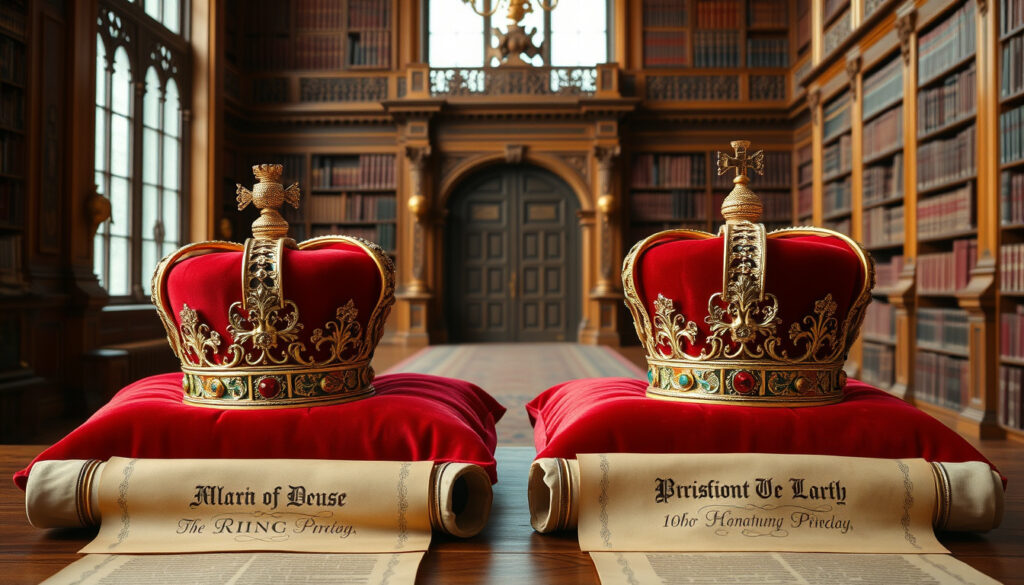
Prince Archie and Princess Lilibet Titles Explained
When Meghan Markle launched $64 candles bearing her children’s royal titles, Buckingham Palace called it an “outrageous use of their titles.” The Sussex children, Prince Archie, 6, and Princess Lilibet, 4, acquired their prince and princess styles when King Charles ascended the throne in September 2022.
Archie’s age: 6 · Lilibet’s age: 4 · Lilibet’s place in line of succession: 7th · Titles granted upon: King Charles III’s accession
Quick snapshot
- Archie, 6, and Lilibet, 4, were made HRH when King Charles ascended the throne (OK Magazine)
- Titles appeared in Meghan’s As Ever candle marketing (OK Magazine)
- Whether official HRH styling is used in practice for day-to-day purposes
- Full details of King Charles’ April 20 statement
- 2026: Candle launch and palace response mark the latest chapter in ongoing title disputes (Geo TV)
- Whether the trademarks signal future commercial use of royal styles remains to be seen (OK Magazine)
Key facts about Archie and Lilibet’s royal status are outlined in the table below.
| Field | Detail |
|---|---|
| Full names | Archie Harrison Mountbatten-Windsor; Lilibet Diana Mountbatten-Windsor |
| Current titles | Prince Archie of Sussex; Princess Lilibet of Sussex |
| Parents | Prince Harry and Meghan, Duchess of Sussex |
| Grandfather | King Charles III |
| Recent event | Meghan’s $64 candles promo using titles |
What titles do Archie and Lilibet have?
Officially, Archie is styled as Prince Archie of Sussex and Lilibet as Princess Lilibet of Sussex. These designations come with the territorial element “of Sussex,” the same ducal title held by their father, Prince Harry. When King Charles became monarch in September 2022, the grandchildren of the sovereign automatically became entitled to the title of Prince and Princess under the 1917 Letters Patent issued by George V.
Before that date, Archie had no prince or princess title. He was born simply Archie Harrison Mountbatten-Windsor in May 2019 — a departure from the tradition of announcing royal births at the Lindo Wing of St Mary’s Hospital in London. The couple announced his birth privately, and no official palace announcement followed.
Prince Archie of Sussex
Born in 2019, Archie Harrison Mountbatten-Windsor spent his first three years without a prince title. When his grandfather ascended the throne, the 1917 Letters Patent automatically conferred prince and princess styles on all children of the monarch’s sons. He is now 6 years old and stands further back in the line of succession.
Princess Lilibet of Sussex
Lilibet Diana Mountbatten-Windsor was born in June 2021, meaning she was born after the couple had stepped back from royal duties. However, as a child of a son of King Charles, she too became entitled to the princess title when her grandfather became monarch. She is now 4 years old and sits seventh in line to the British throne.
HRH status post-Charles accession
Technically, Archie and Lilibet are also entitled to the style “His/Her Royal Highness.” However, whether this styling is actively used in correspondence or official documents remains unclear. Buckingham Palace has not published updated protocols specifically addressing how the Sussex children’s titles appear in practice. Time reported in 2020 that palace officials were working through title implications after the Megxit agreement, noting that removing the HRH would leave Meghan with only the divorced-royal tier of the duchess title (Time).
The palace has not published updated official protocols clarifying how the Sussex children’s HRH styling appears in practice — a gap that the recent controversy has exposed.
The implication is that without clear palace guidance, the children’s full royal styles remain ambiguous in official usage.
Can Meghan Markle still use the title Duchess of Sussex?
Yes. The title Duchess of Sussex was conferred upon Meghan upon her marriage to Prince Harry in 2018 and does not depend on whether Harry remains a working royal. Unlike the HRH style, which was stripped from Harry and Meghan in the January 2020 Megxit agreement, the dukedom and its feminine form remain with the couple regardless of their status within the institution.
What has changed is the formal usage rights. The January 18, 2020 agreement explicitly stated that Harry and Meghan would “not use HRH styles” and would “no longer be working members” of the royal family (Wikipedia). Buckingham Palace confirmed on February 19, 2021, that Harry and Meghan would not return as working royals and relinquished their patronages.
Title retention after stepping back
Despite stepping back, Meghan continued to be addressed as Meghan, Duchess of Sussex in certain contexts. The couple retained the Sussex dukedom, meaning Meghan holds a peerage title distinct from the HRH style. This distinction became central to the April 2026 controversy: Meghan used the children’s full prince and princess designations in commercial marketing, a move palace insiders found problematic in ways that her own Duchess title is not.
Ongoing usage in branding
Meghan’s brand, As Ever, has incorporated the Sussex name from the start. The Duchess of Sussex title functions as a brand identifier in a way that the children’s royal styles do not. The candle controversy centered not on Meghan calling herself Duchess of Sussex — that is established and uncontested — but on her using Archie and Lilibet’s newly acquired prince and princess titles to sell products priced at $64 each.
Why was Meghan Markle’s name removed from Archie’s birth certificate?
In November 2022, it emerged that Meghan Markle’s name had been removed from Archie’s birth certificate and replaced with her first name only. The original certificate listed “Meghan Markle” while the amended version shows just “Meghan.” This change occurred approximately three years after Archie’s birth in May 2019.
Initial listing
Archie’s birth certificate, filed in June 2019, originally recorded Meghan’s full name as “Meghan Markle” in the maternal field. At the time, Meghan was still a working member of the royal family and had not yet stepped back from official duties. The certificate reflected her public-facing name during her period as a senior royal.
Amendment reasons
The amendment to remove “Markle” aligned with Meghan’s broader transition away from her pre-marriage identity. She legally adopted the surname Mountbatten-Windsor after marrying Prince Harry, though she continued to use “Meghan Markle” in some professional contexts. The certificate change was administrative, reflecting her updated legal name, but it drew scrutiny given the timing — coming months after the couple’s Oprah interview and amid ongoing tensions with the royal family.
The birth certificate amendment was a legal formality reflecting Meghan’s updated surname, but the timing fueled speculation about her distancing from her pre-royal identity.
Why on earth would Meghan still want to be called the Duchess of Sussex?
The question surfaces periodically in public discourse, often from critics who argue that someone who stepped back from royal life should not continue to benefit from its trappings. But from a practical standpoint, Meghan’s retention of the Duchess title reflects the structure of British peerage: she holds the title by marriage, and peerage titles are not automatically forfeited upon stepping back from institutional duties.
Commercial benefits
The Duchess of Sussex title carries name recognition that Meghan leverages in her business ventures. Her lifestyle brand As Ever operates commercially under the Sussex umbrella. The title functions as a marketing asset — recognizable, prestigious, and tied to the global attention the couple received during their years as working royals. Critics argue this commercial use while simultaneously rejecting royal duties represents an inconsistency; supporters note that Meghan earned the title through marriage and has a right to use it.
Public perception
Public opinion remains divided. YouGov polling has consistently shown that Meghan and Harry’s favorability ratings in Britain lag behind other royals, with the couple facing higher levels of criticism than support. The candle controversy intensified these divisions. A palace source described Meghan’s use of Archie and Lilibet’s titles as “an outrageous use of their titles” — language that reflects institutional frustration rather than legal objection. The distinction matters: the palace can express displeasure but cannot unilaterally revoke the children’s prince and princess styles.
Buckingham Palace called Meghan’s move “outrageous” but lacks the legal mechanism to strip the children’s titles — the dispute is about protocol, not power.
Who asked what color Harry’s baby would be?
During the Oprah interview in March 2021, Prince Harry and Meghan made a bombshell allegation: a member of the royal family had expressed concern about the color of their baby’s skin before Archie’s birth. The accusation sparked outrage and became one of the most-discussed moments of the interview.
Oprah interview context
Speaking with Oprah Winfrey in March 2021, Meghan revealed that during Meghan’s pregnancy with Archie, “there were concerns from someone about how dark his skin might be when he was born.” Harry confirmed being part of the conversation but declined to name the individual. The implication was that the concern stemmed from Archie’s mixed heritage — Meghan is of mixed race — and reflected either racism or racial insensitivity within the royal household.
Royals book allegations
Multiple books have since addressed the skin-color conversation. Author Omid Scobie’s reporting in Finding Freedom named the late Queen Elizabeth II and King Charles as having been present during the conversation, though neither directly asked the question. The book claims Prince Harry corrected a misunderstanding about royal protocols, not a racial slur. The palace has never formally responded to the specific allegations.
The same royal family that granted Archie and Lilibet their prince and princess titles remains implicated in allegations of having questioned their skin color — a tension the palace has never directly addressed. For more information on the royal family’s response to these allegations, see our Nova Scotia missing children updates.
What this means is that the royal family’s silence on the skin-color allegations contrasts sharply with its vocal outrage over commercial title usage.
Timeline of events
Five years of negotiations, announcements, and escalations define the Sussex title story.
| Date | Event |
|---|---|
| May 2019 | Archie born; no prince title, family declines traditional announcement |
| January 8, 2020 | Harry and Meghan announce Megxit on Instagram |
| January 13, 2020 | Sandringham Summit: royal family meeting on the Sussexes’ future |
| January 18, 2020 | Agreement: no HRH, no working royal status |
| March 31, 2020 | Duties cease |
| February 19, 2021 | Buckingham Palace confirms no return as working royals |
| September 2022 | Lilibet born |
| September 2022 | King Charles accession; Archie and Lilibet gain prince/princess titles |
| April 20, 2026 | King Charles’ office issues statement after Meghan’s title use |
| April 21, 2026 | As Ever candle launch with children’s titles |
The pattern that emerges is a family navigating title protocols reactively rather than proactively. Each escalation — Megxit, the Oprah interview, Charles’s accession, the candle controversy — has forced the institution to address questions it preferred to leave unresolved.
Confirmed versus unclear
Not every claim in this controversy can be treated equally. Some facts are documented; others remain contested or simply unknown.
Confirmed
- Archie and Lilibet hold prince/princess titles since King Charles’ accession in 2022
- Titles appeared in Meghan’s As Ever candle marketing
- A palace source called the move “outrageous”
- The children were trademarked
- Buckingham Palace issued a statement on April 20, 2026
Unclear
- Whether official HRH styling is used in daily practice
- Full text of King Charles’ April 20 statement
- Whether Harry and Meghan plan further commercial use of royal styles
- Legal status of the trademarks in practice
The pattern shows that while factual claims about title grants are verifiable, the practical application and commercial intentions remain opaque.
“outrageous use of their titles.”
— Palace source, speaking to OK Magazine about Meghan’s candle marketing
“It’s not about safeguarding the children — that’s understandable. It’s what you plan to do with [the trademarks] that is the key.”
— Anonymous insider, defending the trademark filings
Harry described ‘Megxit’ as a misogynistic term aimed at Meghan.
— Prince Harry, Duke of Sussex
The quotes illustrate the gap between institutional frustration and the Sussex family’s framing. Palace insiders see exploitation; Meghan’s team frames trademarking as child protection. Harry has separately framed the entire Megxit narrative as a gendered attack on his wife.
Summary
For British royal-watchers and the palace itself, the 2026 candle controversy is the latest symptom of a structural problem never resolved during Megxit: Harry and Meghan left the working royal fold but retained the titles, recognition, and commercial opportunities that come with being members of the royal family. Archie and Lilibet’s prince and princess designations were automatic — a consequence of Charles becoming king that no one in the family seems to have anticipated monetizing. Buckingham Palace can express outrage. It cannot, however, strip those titles. The trade-off the institution faces is clear: either tolerate commercial use of royal styles by non-working royals, or find a legal mechanism — which does not currently exist — to limit how former working royals deploy family titles in business ventures.
Related reading: Elon Musk’s Secret Third Child · How Old Is Brad Pitt
Amid ongoing title debates for Archie and Lilibet, facts on Prince Harrys childrendetail their confirmed births and family updates within Sussex royal context.
Frequently asked questions
Are Archie and Lilibet entitled to HRH?
Technically yes. Under the 1917 Letters Patent, children of the monarch’s sons are entitled to the style His/Her Royal Highness. However, whether this styling appears in official documents or correspondence is unclear — Buckingham Palace has not published updated protocols.
When did Archie and Lilibet become prince and princess?
When King Charles ascended the throne in September 2022, the Letters Patent automatically conferred prince and princess styles on all children of his sons. This took effect immediately, though it was not publicly announced.
Did Meghan remove titles from product descriptions?
Reports indicate that titles were initially included in As Ever product listings for the Mother’s Day 2026 launch but were subsequently removed following the palace backlash and public criticism.
What is the line of succession for Lilibet?
Princess Lilibet is currently seventh in line to the British throne, behind her brother Archie, their cousins George, Charlotte, and Louis, and her uncle Prince William.
Has Prince Harry commented on his children’s titles?
Harry has not made a public statement specifically addressing Archie and Lilibet’s titles in the context of the 2026 candle controversy. His known public positions include describing the term “Megxit” as misogynistic and defending Meghan against media criticism.
Why no trademark on Archie and Lilibet names?
Actually, trademark applications for Archie and Lilibet’s full titles, emails, and social media handles have been filed — reportedly defended by insiders as safeguarding the children’s identities. However, the commercial application of those trademarks in the candle launch raised questions about intent.
What titles do Sussex children use officially?
Officially: Prince Archie of Sussex and Princess Lilibet of Sussex. Whether “His/Her Royal Highness” precedes these styles in formal correspondence is not publicly confirmed.
More related posts
 NZEI Primary School Teachers Strike: Pay Offer Rejected
 Northern Explorer Train: Wellington to Auckland Guide
 Wellington Airport Long Term Parking: Rates, Booking & Tips
 Otago Daily Times Quiz: Today’s Questions & Answers
 Basic Portuguese for Travel: Essential Phrases and Etiquette
 Car Theft Karangahape Road Auckland: Incident Details
 Secondary School Teachers Strike: Pay, Closures & Updates
