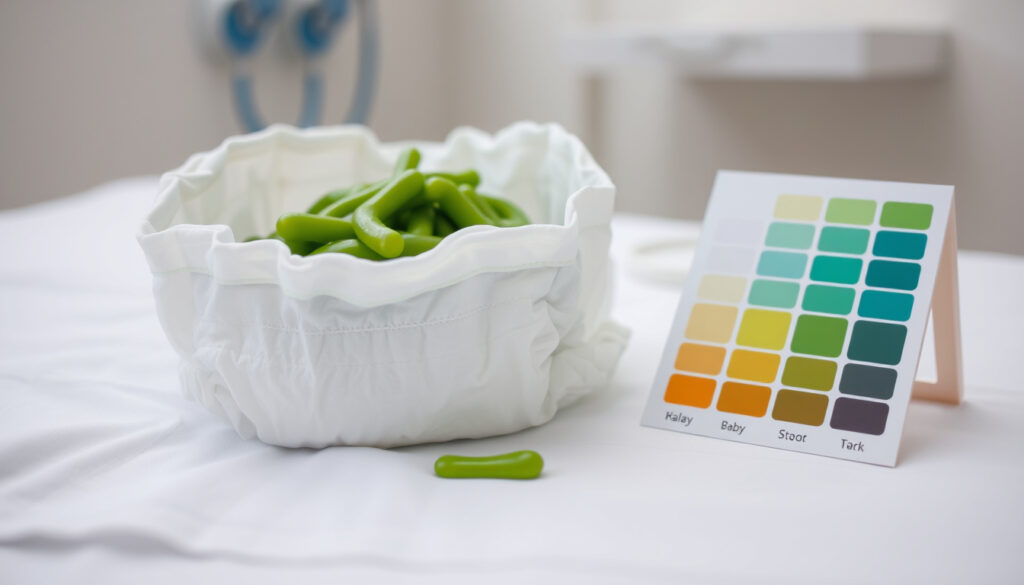
Green Poop in Baby: What It Means and When to Worry
Few things make new parents worry like a sudden change in their baby’s diaper, but according to the American Academy of Pediatrics (HealthyChildren.org), green stool is considered a normal color variation in healthy infants. This guide will help you tell the difference between harmless green and a sign that needs a doctor’s call — so you can focus on what really matters: your baby’s comfort and health.
Green poop is normal in most newborns: Affects up to 50% of breastfed babies in the first weeks ·
Common cause in breastfed babies: Foremilk/hindmilk imbalance (lactose overload) ·
When to call a doctor: Green poop with fever, blood, or poor feeding
Quick snapshot
- Green poop is normal in healthy newborns and breastfed infants (HealthyChildren.org).
- Foremilk/hindmilk imbalance causes green, frothy stool (Breastfeeding Support).
- Iron-fortified formula turns stool dark green (UnityPoint Health).
- Exact prevalence of green poop from milk allergy vs. lactose overload is not well-studied.
- Whether green poop alone (without other symptoms) ever indicates a serious problem is uncertain; most sources say no, but individual variations exist.
- Day 0–3 after birth: Meconium (black/dark green sticky stool) is normal (Similac).
- Week 1–2: Transitional green-brown stool; foremilk imbalance may appear (Breastfeeding Support).
- Month 1–3: Peak of green poop from lactose overload; may be frothy (Australian Breastfeeding Association).
- 4–6 months: Introduction of solids may change stool color; green from purees is normal (UnityPoint Health).
- Monitor baby’s feeding and bowel movements for pattern changes (HealthyChildren.org).
- Watch for red-flag symptoms: fever, blood, mucus, lethargy, poor feeding (Northwestern Medicine).
- Consult pediatrician if green poop persists beyond a few days or is accompanied by other concerns (BabyCenter).
Four key facts to keep in mind about green baby poop, from age prevalence to iron content.
| Fact | Value |
|---|---|
| Most common green poop age | 0–3 months |
| Green poop frequency in breastfed newborns | Up to 50% in first 2 weeks (Children’s Hospital Colorado) |
| Average stools per day (green poop cluster) | 4–8 per day for breastfed, 1–4 for formula-fed |
| Iron content in standard formula | 12 mg/L (can cause dark green stool) (NHS Children’s Health) |
What does it mean when a baby’s poop is green?
Normal causes vs. signs of lactose overload
- Green baby poop is often normal, especially in breastfed infants (1–2 months) due to foremilk/hindmilk imbalance (Australian Breastfeeding Association via Breastfeeding Support).
- Dark green poop is usually from bile, not a problem (Children’s Hospital Colorado).
- Green stool is considered an acceptable color variation in babies.
- Introducing solid foods, especially green vegetables, can turn stool green (UnityPoint Health).
Parents who see green poop and panic may switch formulas or cut nursing sessions unnecessarily. Understanding that green is often a sign of healthy digestion — bile doing its job — can prevent costly and stressful changes that don’t help the baby.
Why foremilk-hindmilk imbalance leads to green stool
When a breastfed baby gets a high proportion of foremilk (the watery, low-fat milk at the start of a feed) instead of the richer hindmilk, milk moves through the gut too quickly. Bile doesn’t have time to break down fully, giving stool a green, frothy appearance. According to parent reports on Reddit, this pattern is common in the early weeks.
The implication: If your baby is otherwise happy and gaining weight, green frothy poop is usually a feeding pattern issue, not a medical problem.
Can overfeeding cause green poop?
Lactose overload from oversupply
- Overfeeding can cause lactose overload, which leads to green, frothy, explosive poops (Breastfeeding Support).
- Green poop alone is not a sign of overfeeding, but green frothy poop with gas may be.
- A baby who gains weight well and has 6+ wet diapers per day is likely getting enough milk, even if stool is green.
How to manage green poop from feeding imbalance
For breastfeeding mothers, offering one breast completely before switching to the other ensures the baby gets more hindmilk. La Leche League International advises that if one breast is drained, the baby naturally reaches the higher-fat milk. Parents who suspect oversupply can also try block feeding (nursing from the same side for two to three feedings) to reduce foremilk intake.
Cutting feeds or restricting a baby’s access to the breast can make matters worse — underfeeding leads to dehydration and poor weight gain. Always consult a lactation consultant before changing your feeding routine.
The pattern: Green poop from oversupply is common in early weeks and usually resolves with feeding adjustments; it’s not a sign of illness.
When should I worry about green poop?
Red flags: fever, blood, mucus, poor feeding
- Green poop with fever, blood, or lethargy requires a call to the pediatrician (Northwestern Medicine; BabyCenter).
- Green poop alone, without other symptoms, is usually harmless (HealthyChildren.org).
- Hirschsprung’s disease is a rare condition that causes stool to become stuck, but it is diagnosed mainly in babies and young children (NHS). Its symptoms include constipation, not green poop with normal frequency.
Green poop that lasts more than a few days
If green stool persists for more than 3–4 days without other symptoms, it’s still likely a feeding issue or diet color. However, if the stool becomes watery, foul-smelling, or contains blood, the cause may be an intestinal infection. Medical News Today notes that green stool can be associated with diarrhea or an underlying health condition when combined with other signs.
The pattern: Green poop that doesn’t go away but is accompanied by a happy, feeding baby is usually benign. The moment fever, blood, or fussiness joins in, it’s time to call the doctor.
Does green poop mean milk allergy?
Distinguishing milk allergy from lactose overload
- Green poop can be a symptom of cow’s milk protein allergy, but more often it’s lactose overload (American Pregnancy Association).
- Milk allergy typically includes blood, mucus, rash, or poor growth — not just green stool.
- Lactose overload is common in the first 2–3 months and resolves as the baby matures or feeding pattern adjusts.
Other allergy symptoms beyond green stool
If your baby has green poop plus eczema, vomiting, or bloody stools, a milk protein allergy is a possible cause. The Similac baby poop color chart lists green as normal, but notes that green with blood is a warning sign. A pediatrician may recommend an elimination diet for the breastfeeding mother or a switch to hypoallergenic formula.
Assuming milk allergy too quickly can lead to unnecessary dietary restrictions and formula changes. The vast majority of green stool is from harmless causes. Only pursue elimination if other allergy symptoms are present.
What this means: Milk allergy is possible but unlikely when the only symptom is green poop.
How to stop green poop in babies
Foremilk management for breastfed babies
- Drain one breast fully before switching sides (La Leche League International).
- Try block feeding if oversupply is suspected (nurse from same breast for 2–3 feedings).
- Check baby’s latch — a poor latch can cause the baby to take in excess air and foremilk.
When to switch formula or adjust feeding
- If formula-fed, green poop from iron is harmless; do not change formula without pediatric advice (UnityPoint Health).
- Ensure formula is prepared correctly — over-concentration can cause green, hard stools.
- If green poop is accompanied by gas and discomfort, try a formula labeled “gentle” but only after consulting a doctor.
One step you can take: keep a stool diary for 3 days, noting color, consistency, frequency, and the baby’s mood. This gives your pediatrician concrete data.
For a convenient diaper change setup, check out our guide on Baby Bunting Change Table with Drawers: Guide & Safety.
What we know and what we don’t
Confirmed facts
- Green poop is normal in healthy newborns and breastfed infants (American Academy of Pediatrics).
- Foremilk/hindmilk imbalance causes green, frothy stool (Breastfeeding Support).
- Iron-fortified formula turns stool dark green (UnityPoint Health).
- Green poop with fever, blood, or poor appetite requires medical evaluation (Northwestern Medicine).
What’s unclear
- Exact prevalence of green poop from milk allergy vs. lactose overload is not well-studied.
- Whether green poop alone (without other symptoms) ever indicates a serious problem is uncertain; most sources say no, but individual variations exist.
- The long-term effects of persistent green poop without symptoms are unknown.
The bottom line: Most green baby poop is benign, but when accompanied by fever, blood, or poor feeding, it warrants a call to your pediatrician.
Expert perspectives on green baby poop
“Green frothy poop is a classic sign of lactose overload from oversupply. It usually resolves with simple feeding adjustments.”
— Australian Breastfeeding Association (via Breastfeeding Support)
“Dark green poop is usually from bile, not a problem. It just means the stool moved through the intestines quickly.”
— Children’s Hospital Colorado (pediatric hospital)
“Green poop can also be from mom’s diet, antibiotics, or baby’s medication. It’s rarely a cause for alarm by itself.”
— La Leche League International (lactation support organization)
For parents worried about green poop, the decision is clear: trust your instincts but rely on the evidence. If your baby is feeding well, gaining weight, and has no fever or blood, green is usually just a color — not a crisis.
While green poop in babies is usually harmless, the same can often be said for green poop in adults, though the causes may differ slightly.
Frequently asked questions
Is green poop in babies always a sign of something bad?
No. Most green poop in babies is harmless and related to diet, bile, or feeding patterns. It only becomes a concern when accompanied by fever, blood, mucus, or poor feeding.
Can teething cause green poop?
Teething itself does not cause green poop. However, increased drooling and swallowing of extra saliva can speed up digestion, which may produce green stool. If it persists or includes fever, consult a doctor.
Does green poop mean my baby is not getting enough milk?
Not usually. Green poop is more often a sign of foremilk/hindmilk imbalance or rapid transit. If your baby has enough wet diapers (6+ per day) and is gaining weight, milk supply is likely sufficient.
How long does green poop last in newborns?
Green poop from meconium lasts 2–3 days after birth. If it continues beyond the first week, it’s usually due to feeding patterns and can last weeks to months. It often resolves on its own as the baby matures.
Can a baby have green poop from a virus?
Yes. A stomach virus can cause green, watery stool due to rapid transit time. If green stool is accompanied by vomiting, diarrhea, or fever, a viral infection is possible. Keep the baby hydrated and call your pediatrician.
What is the difference between green poop and yellow poop in breastfed babies?
Yellow, seedy poop is the classic normal stool for breastfed babies. Green poop means the stool moved faster through the intestines (bile didn’t fully break down). Both are normal colors; green is more common when the baby gets more foremilk.
Is dark green poop in formula-fed babies dangerous?
No. Dark green stool in formula-fed babies is often due to iron in the formula. It’s safe and normal. If the stool is hard or pellet-like, the baby may be constipated, but the green color itself is not a worry.
For more health insights, see also our article on What Does BV Discharge Look Like? Gray, Thin, Fishy Odor.
More related posts
 What’s On in Wellington This Weekend: Events Guide
 My Little Pony Test: Which Character Are You? (2025 Guide)
 Unlimited Data Mobile Plan NZ: Compare Spark, One NZ, 2degrees
 Merino Kids Sleep Sack – Guide to Safe All-Season Comfort
 6 Weeks From Today: Date, Days & Milestones
 Harbourside Ocean Bar Grill Closing: End of an Era
 Leicester City vs Manchester United F.C. Predicted Lineups: Team News and Key Absences
 Westpac to ANZ Transfer Time in NZ: Processing Guide
