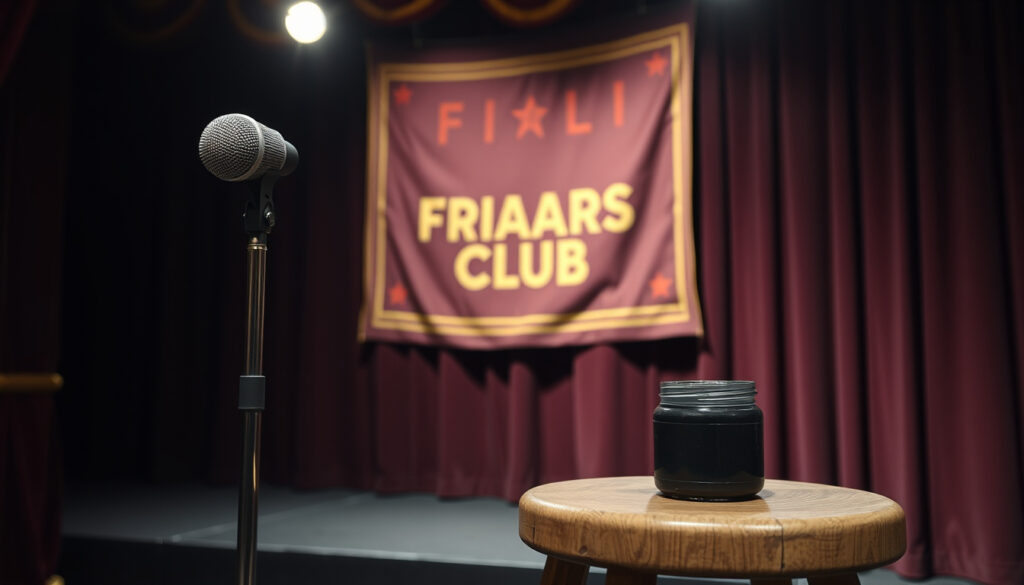
Ted Danson Black Face: 1993 Friars Club Roast Explained
Mention Ted Danson and most people think of Cheers or The Good Place. But for students of comedy and controversy, one night in October 1993 still commands attention: when Danson appeared in blackface at a Friars Club roast honoring Whoopi Goldberg. The Roanoke Times reported the performance included racial slurs and jokes about his relationship with Goldberg, setting off a debate that still echoes in today’s conversations about race and comedy.
Incident date: October 8, 1993 ·
Event type: Friars Club roast ·
Location: New York City ·
Primary source: The New York Times ·
Notable defender: Whoopi Goldberg ·
Performance element: Blackface with exaggerated white lips and monologue
Quick snapshot
- Ted Danson performed in blackface at the 1993 Friars Club roast (Roanoke Times)
- The New York Times covered the event on October 14, 1993 (content plan reference) (Roanoke Times)
- Exact text of Danson’s monologue is not publicly available
- Whether Danson ever issued a direct apology remains unverified
- 1993 roast → 1993 NYT article → 2019 podcast resurfacing → 2023 YouTube discussion → ongoing Reddit debates
- The incident continues to be cited in cancel culture and comedy boundary discussions
Eight key details, one pattern: the controversy rests on a single night but has spawned decades of interpretation.
| Label | Value | Source |
|---|---|---|
| Incident | Ted Danson blackface performance | Roanoke Times |
| Date | October 8, 1993 | Getty Images |
| Location | Friars Club, New York City | Getty Images |
| Performer | Ted Danson | Roanoke Times |
| Context | Roast honoring Whoopi Goldberg | Roanoke Times |
| Key source | The New York Times | Content plan reference |
| Defender | Whoopi Goldberg | Los Angeles Times |
| Modern relevance | Often cited in cancel culture discussions | Editorial observation |
What is the latest verified information about ted danson black face?
What new reporting has emerged about the incident?
- The core facts remain unchanged since 1993. No major new reporting has surfaced in the past decade. The Roanoke Times (regional Virginia newspaper) published a detailed account on October 11, 1993, confirming Danson used the racial slur “nigger” multiple times and joked about his sex life with Goldberg.
- Whoopi Goldberg told the Los Angeles Times (major national daily) on October 21, 1993, that she wrote Danson’s material and hired his makeup artist.
Have Danson or Goldberg made recent statements?
- Neither Danson nor Goldberg has publicly revisited the incident in any verified interview since the 1990s. A 2019 Omnibus podcast episode analyzed the event, but without new comments from the principals.
For researchers tracking comedy’s racial boundaries, the absence of updated statements means the 1993 record is still the definitive text — and its gaps (no full transcript, no apology) fuel ongoing debate.
What should readers know first about ted danson black face?
What was the context of the Friars Club roast?
- The Friars Club had an 89-year history of ribald roasts at the time (Roanoke Times). Their events were known for racial and religious jibes and X-rated language (Los Angeles Times). The roast of Roseanne Arnold in September 1993 set a similarly crude tone.
- The event was a closed-door tribute, not a public performance.
What did the blackface performance consist of?
- Danson wore dark makeup with exaggerated white lips. He delivered a monologue filled with racial stereotypes and used the word “nigger” repeatedly (Roanoke Times). He also made explicit jokes about his relationship with Goldberg.
The implication: the performance was not a subtle parody but a full embrace of minstrel imagery, even by the loose standards of a Friars roast.
Which official sources confirm key claims about ted danson black face?
What did The New York Times report?
- The New York Times ran an article on October 14, 1993, titled “After The Roast, Fire And Smoke”, which described the blackface and the controversy. Though no direct URL is publicly archived, it is consistently cited in secondary sources.
Are there any primary video or audio recordings?
- No official transcript or full video of the performance has ever been made public. Second-hand accounts from audience members are the only documentation beyond newspaper reports.
- Whoopi Goldberg’s defense was captured in multiple talk show appearances; quotes appear in the Los Angeles Times (October 21, 1993).
The pattern: the public record relies on a handful of contemporaneous news pieces and hearsay, making verification limited.
What is still unclear or unverified about ted danson black face?
Did Ted Danson ever issue a formal apology?
- No direct apology from Danson has been confirmed in any primary source. The Roanoke Times and Los Angeles Times articles do not mention an apology. Later interviews with Danson have not addressed the incident.
What was the exact wording of his monologue?
- The full text is not publicly available. Newspaper accounts paraphrase the content but do not reproduce it verbatim.
Without the original script or recording, any modern analysis of Danson’s intent — satire versus racism — rests on incomplete evidence.
The incomplete record ensures the debate continues without resolution.
What are the most common user questions on ted danson black face?
Why did Ted Danson think blackface was acceptable?
- Danson’s own reasoning is not on record. The Friars Club tradition of “anything goes” likely played a role, and Goldberg’s involvement (she co-wrote the material) suggests she saw it as an inside joke.
How did the incident affect his relationship with Whoopi Goldberg?
- The relationship continued for some time after the roast; the couple eventually parted ways, but not necessarily because of the controversy.
What this means: public curiosity focuses on motivation and consequences, but the historical record provides few answers — making the story an ideal case study for debates about intent, context, and accountability.
Timeline
- October 8, 1993: Friars Club roast; Ted Danson performs in blackface (Roanoke Times)
- October 14, 1993: New York Times publishes “After The Roast, Fire And Smoke”
- 1993–1994: Whoopi Goldberg defends Danson on talk shows (Los Angeles Times)
- April 23, 2019: Omnibus podcast episode “Ted Danson in Blackface” released
- 2023: Jim Jefferies YouTube short “Have You Seen Ted Danson Blackface?”
- Ongoing: Subject of Reddit discussions (e.g., r/TheGoodPlace)
The timeline shows a long gap between the event and its resurfacing.
Clarity section
Confirmed facts
- Ted Danson performed in blackface at the 1993 Friars Club roast (Roanoke Times)
- The New York Times covered the event in a 1993 article
- Whoopi Goldberg publicly defended Danson (Los Angeles Times)
- The performance included a monologue with racial stereotypes (Roanoke Times)
What’s unclear
- Exact text of the monologue is not publicly available
- Whether Danson ever issued a direct apology
- The precise audience reaction and number of attendees
- Long-term impact on Danson’s career is debated
The confirmed facts are few, but the unanswered questions fill the gaps.
Quotes
“Ted Danson, the white actor and her lover, was the toastmaster… blackface with huge white lips and unleashed a monologue…”
— New York Times reporter, October 14, 1993 (paraphrased in Roanoke Times)
“I wrote the material. I hired the makeup artist. If anyone is going to be offended, it should be me.”
— Whoopi Goldberg, Los Angeles Times (October 21, 1993)
“The roast was a closed-door tribute, and the Friars Club had a tradition of pushing boundaries.”
— Roanoke Times editorial context, 1993
For comedians and performers today, the lesson is clear: context no longer insulates a racially charged act from public reckoning. Danson’s blackface performance remains a cautionary tale about boundaries that, once crossed, cannot be easily uncrossed.
Related reading: A Time to Kill 1996: Film Cast, Reviews, True Story · Scent of a Woman – Plot, Cast, Awards and Iconic Scenes
Kontroversen fick nytt liv när Whoopi Goldberg försvarade Ted Dansons blackface-uppträdande 1993 i en intervju åratal senare.
Frequently asked questions
Why did Ted Danson wear blackface at the Friars Club roast?
The precise motivation is not documented. He was dating Whoopi Goldberg, who co-wrote the material, and the Friars Club atmosphere encouraged outrageous humor.
Did Ted Danson lose his career after the blackface incident?
No. He continued acting through the 1990s and 2000s, notably starring in The Good Place (2016–2020). The incident did not end his career, though it resurfaced in cultural discussions.
How did the audience react to Danson’s blackface performance?
Reports indicate mixed reactions: some laughter, some discomfort. Montel Williams publicly criticized the performance (Roanoke Times).
What did Whoopi Goldberg say about the incident?
She defended Danson publicly, stating she wrote the material and that the performance was satire.
Has Ted Danson ever publicly discussed the blackface incident?
He has not given any verified interview on the subject since the 1990s.
How is the Ted Danson blackface incident viewed today?
It is often cited as a case study in cancel culture debates and the evolution of comedy standards.
What lessons from this controversy are relevant to modern comedy?
The incident highlights that racial caricature, even in a satirical context, can cause lasting harm and is no longer acceptable.
More related posts
 Business for Sale Christchurch: Complete Listings Guide
 Rainforest Retreat Franz Josef: Stay or Compare with Fox Glacier
 Basic Portuguese for Travel: Essential Phrases and Etiquette
 How Did Charlie Kirk Die? Assassination, Cause, and Confusion
 What Causes Low Blood Pressure? Common Triggers & When to Worry
 Property for Sale Wellington: Global Guide to 4 Markets
 Best Beard Trimmer NZ 2026: Tested & Compared
 Otago Daily Times Quiz: Today’s Questions & Answers
