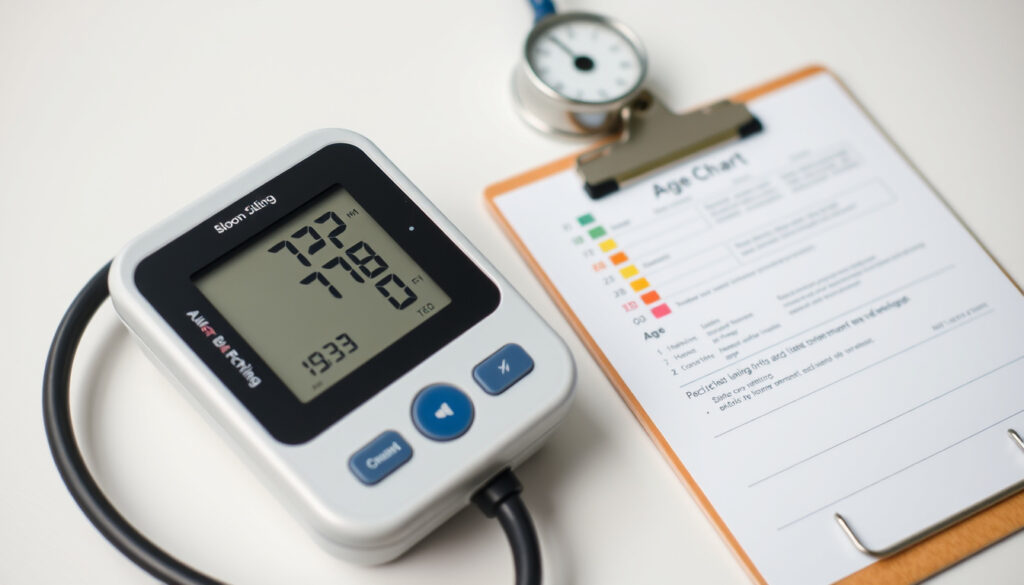
Blood Pre ure by Age: Normal Range and Guideline
Few numbers are as personal — or as confusing — as the two that appear on a blood pressure monitor, and understanding what those digits mean for your age can be the difference between peace of mind and unnecessary worry. This article breaks down the latest guidelines from Ireland and international health bodies, with clear ranges for every stage of life, so you know when a reading is just a number — and when it’s a warning.
Normal blood pressure for adults: <120/80 mm Hg ·
Elevated blood pressure: 120-129/<80 mm Hg ·
Hypertension stage 1: 130-139/80-89 mm Hg ·
Hypertension stage 2: ≥140/90 mm Hg ·
Adults with hypertension worldwide: Over 1.28 billion (WHO)
Quick snapshot
- Blood pressure increases with age due to arterial stiffness (Heart Research Institute (Australia, cardiovascular research))
- Ideal reading for most adults: <120/80 mm Hg (HSE (Ireland’s health service))
- High blood pressure is ≥140/90 mm Hg (Irish Heart Foundation (heart health charity))
- Optimal target for adults 80+ without comorbidities (140-150 vs <130) (HSE (Ireland’s health service))
- Whether aggressive treatment in elderly reduces stroke risk as much as in younger patients (Irish Heart Foundation (heart health charity))
- The interaction between blood pressure targets and other cardiovascular risk factors (Heart Research Institute (Australia, cardiovascular research))
- Consistency of home monitoring versus clinic readings across age groups (HSE (Ireland’s health service))
- Blood pressure naturally rises throughout adulthood; average systolic for 60+ is 133-139 mm Hg (Heart Research Institute (Australia, cardiovascular research))
- 2017 ACC/AHA guidelines lowered hypertension threshold to 130/80, changing risk classification for millions (HealthHero Ireland (digital health provider))
- More personalised targets based on frailty and comorbidities are expected in future guidelines (Ubie (medical AI symptom checker))
- Increased focus on home monitoring and ambulatory blood pressure measurement (HSE (Ireland’s health service))
The table below organises the standard blood pressure categories used by most clinical guidelines — one pattern, from ideal to crisis.
| Category | Systolic (mm Hg) | Diastolic (mm Hg) |
|---|---|---|
| Normal / Ideal | <120 | <80 |
| Elevated | 120–129 | <80 |
| Hypertension stage 1 | 130–139 | 80–89 |
| Hypertension stage 2 | ≥140 | ≥90 |
| Hypertensive crisis | ≥180 | ≥120 |
The catch: these thresholds are general. Age, sex, and existing health conditions shift the picture considerably.
What is a good blood pressure for my age?
Understanding systolic and diastolic numbers
Blood pressure is recorded as two numbers: systolic (the pressure when your heart beats) and diastolic (the pressure between beats). The Irish Heart Foundation (Ireland’s heart health charity) defines the ideal as less than 120/70 mm Hg. The HSE (Ireland’s national health service) considers 90/60 to 120/80 to be the normal adult range.
Normal ranges by decade
Age influences what is considered “normal.” For young adults (18–39), the Heart Research Institute (Australian cardiovascular research body) reports an average of 119/70 for men and 110/68 for women. By ages 40–59, averages rise: men typically reach 124/77, women 122/74. For those 60 and older, averages climb further — 133/69 for men and 139/68 for women. HealthHero Ireland (Ireland’s digital health platform) notes that adults over 60 may have systolic readings closer to 130–140, which is still acceptable as long as other risk factors are managed.
Children and adolescents
Children’s blood pressure norms are based on percentile charts that account for age, sex, and height. The Heart Research Institute provides sample ranges: newborns up to 1 month average 60–90/20–60, while adolescents (13–19) range from 112–128/66–80. These values shift as children grow, so a single number is less reliable than a percentile comparison.
A “normal” reading for a 70-year-old can be hypertensive for a 30-year-old. Age-normed targets prevent over-treatment in older adults and under-treatment in younger ones.
The pattern: blood pressure naturally rises with age, but what is acceptable at 70 may be a warning at 30.
Quick take: For healthy adults under 60, the ideal is below 120/80. Children and teens require percentile-based evaluation. The key is knowing where you fall on the age curve, not just the absolute number.
What’s an average blood pressure for a 70 year old?
Typical readings for ages 60–79
The Heart Research Institute data shows that the average 70-year-old woman has a systolic around 139 mm Hg and diastolic around 68 mm Hg; for men it is 133/69. HealthHero Ireland puts the typical systolic range for over-60s at 130–140 mm Hg. This rise is driven by arterial stiffness that naturally accompanies ageing.
Guidelines for over-70
The HSE (Ireland’s health authority) sets a treatment target for patients over 80 at below 150/90 mm Hg (or below 145/85 at home). The Irish Heart Foundation holds that the ideal remains under 120/70, but acknowledges that many older adults cannot reach this without side effects. The 2017 ACC/AHA guidelines (noted by HealthHero Ireland) recommend a target of <130/80 for healthy older patients and <140/90 for those with comorbidities.
Differences between men and women
Women tend to have lower blood pressure than men until menopause, after which their average systolic may exceed men’s. The Heart Research Institute data shows that for adults 60+, women average 139/68 while men average 133/69. This gap partly explains why women face higher stroke risk after age 65.
A 70-year-old with frailty may benefit from a systolic target of 140–150 to avoid falls from low pressure, while a healthy 70-year-old may need stricter control to protect their heart. There’s no one-size-fits-all.
What this means: treatment targets must be personalised, especially for the elderly, balancing cardiovascular protection against the risk of overtreatment.
Quick take: The average 70-year-old sits around 135–140 systolic, but the ideal target depends on health status. The HSE aims for under 150/90 for the very old; the Irish Heart Foundation holds 120/70 as the gold standard.
Is 140-90 BP normal for 40 years?
What 140/90 means
A reading of 140/90 mm Hg meets the HSE’s definition of high blood pressure (≥140/90). The Heart Research Institute classifies it as stage 2 hypertension under the ACC/AHA framework (≥140/90). At age 40, a single high reading does not necessarily mean hypertension, but if it persists, it signals elevated cardiovascular risk.
Risk by age
The HealthHero Ireland platform notes that for most adults, consistently staying above 140/90 is unhealthy and linked to increased risk of heart attack and stroke. The Irish Heart Foundation advises that blood pressure of 140/90 or more should be addressed with lifestyle changes and possibly medication.
When lifestyle changes are recommended
The HSE recommends that anyone with repeated readings above 140/90 adopt the DASH diet, reduce sodium intake, increase physical activity, and limit alcohol. If readings remain high after three months, medication is typically considered.
“The 2017 ACC/AHA guideline lowered the threshold for hypertension to 130/80 mm Hg, reclassifying millions of people as hypertensive — and making early intervention more likely.”
— American Heart Association (AHA) (via HealthHero Ireland)
The implication: a single high reading at age 40 warrants follow-up, not panic, but persistent 140/90 demands action.
Quick take: For a 40-year-old, 140/90 is not normal. It meets the threshold for stage 2 hypertension and requires lifestyle changes or medication. Early intervention is key to preventing long-term damage.
What is stroke level blood pressure?
Emergency thresholds
A reading of 180/120 mm Hg or higher is considered a hypertensive crisis, according to Ubie (medical AI symptom checker). At this level, the risk of stroke and other acute organ damage escalates sharply. The Heart Research Institute data shows that even sustained levels above 160/100 mm Hg significantly increase stroke risk.
Hypertensive crisis
Hypertensive crisis is divided into urgency (no immediate organ damage) and emergency (organ damage present). The HSE advises that anyone with a reading of 180/120 or higher and symptoms like severe headache, chest pain, or shortness of breath should call 112 or 999 immediately.
When to call 911
Call emergency services if blood pressure is 180/120 or higher AND accompanied by chest pain, vision changes, difficulty speaking, numbness, or severe headache. For asymptomatic high readings, contact your GP — do not wait in a queue.
A patient with systolic 160–179 and no symptoms is still at risk. The Irish Heart Foundation stresses that stroke risk increases continuously with pressure — there is no single “stroke level” number, but the danger grows above 160/100.
The catch: stroke risk increases continuously, so any sustained high reading demands attention, not just a specific number.
Quick take: Readings above 180/120 are a medical emergency. Even 160/100 raises stroke risk. If you have symptoms with high numbers, seek immediate care; otherwise, see your doctor promptly.
What is the new blood pressure for seniors?
Updated ACC/AHA guidelines
The 2017 ACC/AHA guidelines (highlighted by HealthHero Ireland) lowered the hypertension threshold from 140/90 to 130/80 mm Hg. For seniors, this means many previously considered “normal” readings now require closer monitoring. The Heart Research Institute notes that for patients aged 80+ with no comorbidities, a systolic target of 140–150 mm Hg may be appropriate to avoid over-treatment.
JNC 8 and 2017 changes
The JNC 8 guidelines (2014) recommended a target of <150/90 for those over 60. The 2017 ACC/AHA guidelines lowered this to <130/80 for most, but retained flexibility for older adults. The HSE currently uses the older threshold for treatment targets in patients over 80: below 150/90.
Individualized targets for over 80
The Irish Heart Foundation recommends that targets for people over 80 be individualised based on frailty, kidney function, and risk of falls. The European Society of Cardiology suggests <140/90 for those under 80 and <150/90 for those over 80. Ubie (medical AI) summarises: “For very old patients, the best target is still being debated.”
“For people over 80, a systolic target of 140–150 mm Hg may be appropriate to prevent side effects from overly aggressive treatment.”
— NIH National Institute on Aging (cited in Ubie)
What this means: there is no one-size-fits-all target for seniors; guidelines continue to evolve, and individualised care is essential.
Quick take: The 2017 ACC/AHA guidelines set 130/80 as the hypertension threshold, but for older adults, especially those over 80, targets may be relaxed to 140–150 systolic depending on health. The debate continues.
Clarity check
Confirmed facts
- Blood pressure increases with age due to arterial stiffness (Heart Research Institute).
- Hypertension is defined as ≥130/80 mm Hg by the ACC/AHA (2017) (HealthHero Ireland).
- A reading of 180/120 mm Hg or higher requires emergency care (Ubie).
- Ideal adult blood pressure is <120/80 (HSE).
What’s unclear
- Optimal blood pressure target for adults aged 80+ without comorbidities is debated (140-150 vs <130) (Irish Heart Foundation).
- Whether aggressive treatment in elderly reduces stroke risk as much as in younger patients (Heart Research Institute).
- Interaction between blood pressure targets and other cardiovascular risk factors (Heart Research Institute).
- Consistency of home monitoring versus clinic readings across age groups (HSE).
“The ideal blood pressure is less than 120/70. High blood pressure is 140/90 or more for most people.”
— Irish Heart Foundation (Irish Heart Foundation website)
The message from all three organisations is consistent: blood pressure rises with age, but the target should be as low as safely achievable. For a healthy 70-year-old in Ireland, that means aiming for under 130/80, while an 85-year-old with frailty may reasonably stay at 145/85. For the Irish healthcare system, the implication is clear: invest in early detection and home monitoring, or face the cost of preventable strokes.
cpraedcourse.com, ubiehealth.com, pmc.ncbi.nlm.nih.gov, health.harvard.edu
Frequently asked questions
Can stress cause high blood pressure?
Yes, acute stress can temporarily raise blood pressure. Chronic stress may contribute to sustained hypertension through hormonal and behavioural pathways. The Irish Heart Foundation recommends stress management techniques as part of a comprehensive approach.
Does caffeine affect blood pressure?
Caffeine can cause a temporary spike in blood pressure, especially in non-regular drinkers. The HSE advises limiting caffeine if you have high blood pressure.
What is the best time to measure blood pressure?
The HSE recommends measuring in the morning before eating or taking medications, and again in the evening, using the same arm each time.
Is low blood pressure dangerous?
Occasional low readings (below 90/60) may cause dizziness but are rarely dangerous. However, persistently low pressure with symptoms like fainting requires investigation. The Irish Heart Foundation notes that low pressure is usually less concerning than high.
How often should I check my blood pressure?
The HSE advises yearly checks for those over 40, and every five years for healthy adults 18–39 with no family history. If you have known hypertension, daily monitoring is recommended.
Can exercise lower blood pressure immediately?
Single sessions of aerobic exercise can temporarily lower blood pressure for up to 24 hours (post-exercise hypotension). Regular exercise is one of the most effective non-drug treatments, as noted by the Heart Research Institute.
More related posts
 How Do You Get Ringworm – Causes, Transmission and Prevention
 New Zealand Fraudsters List: Notable Cases & Convictions
 Auckland Motorway Crash Today: Live Traffic & Safety Guide
 Yellow Bellied Sea Snake: Venom Potency, Bite Risk, and Safety Facts
 Viral Fruit Ice Cream: Where to Buy, Cost, and How to Make It
 Lawn Mowing Business for Sale: Pricing & Evaluation Tips
 Ted Danson Black Face: 1993 Friars Club Roast Explained
 Rose Park Hotel Auckland: Reviews, Location & Free Parking
